Nothing Ear (3a) vs Seeed Studio reSpeaker Flex XVF3800 Circular-4 USB Mic Array
Standardized 5-pillar engineering audit, thermal telemetry, verified longevity metrics, and complete technical specification diff.
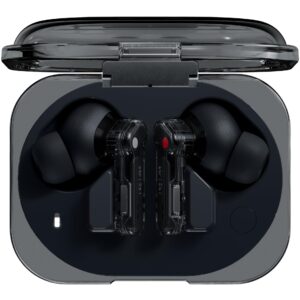
The Nothing Ear (3a) pairs capable 12mm dynamic drivers and an innovative 32MB onboard recording buffer with Bluetooth 6.0, though intense LDAC power draw and case lid ergonomics temper overall refinement.
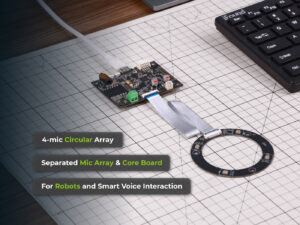
A modular far-field audio DSP array combining XMOS XVF3800 processing and a 10W speaker amp, offset only by rear-facing mic inlets and minor OS driver quirks.
Mizex Comparative Audit Verdict
5-Pillar Engineering Telemetry
Detailed comparison across standardized normalized 1.0 – 5.0 engineering pillars.
Nothing Ear (3a): Strengths & Caveats
- Upgraded 12mm dynamic drivers featuring Sony LDAC high-resolution codec support
- Integrated 32MB onboard flash storage facilitating local call recording and 60-second Audio Snapshots
- Adaptive active noise cancellation providing up to 45dB of ambient attenuation
- Extended battery endurance offering up to 10 hours standalone and 42 hours total with case
- Earbud runtime drops to approximately 4.5 hours under simultaneous LDAC and ANC operation
- Charging case omits Qi wireless charging support
- Smooth case lid lacks a finger grip notch, complicating one-handed opening
Seeed Studio reSpeaker Flex XVF3800 Circular-4 USB Mic Array: Strengths & Caveats
- Modular split-board design isolates the 44 mm circular mic array from the DSP core via a 24-pin locking FPC cable.
- Hardware-accelerated XMOS XVF3800 DSP provides onboard AEC, DoA tracking, beamforming, and noise cancellation.
- Built-in TI TPA3139D2 Class-D amplifier delivers up to 10W output into 4Ω external speakers via 12V auxiliary power.
- Dedicated surface-mount footprint enables direct solder integration of a Seeed Studio XIAO ESP32S3 module.
- Microphone acoustic ports are located on the rear face of the satellite PCB, demanding careful alignment and gasket sealing in custom enclosures.
- Outputting the full 10W speaker power requires auxiliary 12V terminal block wiring rather than standard 5V USB bus power.
- Post-DFU firmware updates on Windows can trigger device enumeration drops, while Linux defaults to low ALSA PCM output levels.
Technical Specification Comparison
Side-by-side spec alignment. Rows highlighted with subtle shading denote differing specifications.
| Specification | Nothing Ear (3a) | Seeed Studio reSpeaker Flex XVF3800 Circular-4 USB Mic Array |
|---|---|---|
| Brand DIFF | Nothing | Seeed Studio |
| Model DIFF | Ear (3a) | reSpeaker Flex XVF3800 Circular-4 USB Mic Array |
| Driver Type DIFF | Dynamic driver | — |
| Driver Size DIFF | 0.47 in (12 mm) | — |
| Bluetooth Version DIFF | 6.0 | — |
| Supported Audio Codecs DIFF | LDAC, AAC, SBC | — |
| Multipoint Pairing DIFF | Yes (dual device) | — |
| Active Noise Cancellation DIFF | Adaptive ANC (up to 45 dB reduction) | — |
| ANC Modes DIFF | Adaptive ANC, Transparency Mode | — |
| Spatial Audio DIFF | Static Spatial Audio | — |
| Microphone Array DIFF | 6 directional microphones (3 per earbud with AI noise reduction) | — |
| Internal Flash Storage DIFF | 32 MB | — |
| Audio Recording Capabilities DIFF | Call recording, Audio Snapshot (up to 60s total with 30s buffer) | — |
| Battery Life (Earbuds, ANC Off) DIFF | Up to 10 hours | — |
| Battery Life (Earbuds, ANC On) DIFF | Up to 6 hours | — |
| Battery Life (Earbuds, LDAC + ANC) DIFF | Up to 4.5 hours | — |
| Total Battery Life (with Case) DIFF | Up to 42 hours | — |
| Wireless Charging DIFF | No (wired USB-C only) | — |
| Ingress Protection Rating DIFF | IP54 | — |
| Controls DIFF | Pinch / touch-sensitive stem controls | — |
| Battery Indicator DIFF | Glyph Bar LED indicator | — |
| Ear Tip Sizes Included DIFF | XS, S, M, L | — |
| Total Weight (with Case) DIFF | 1.80 oz (51 g) | — |
| Companion Software DIFF | Nothing X (iOS & Android) | — |
| Audio Processor DIFF | — | XMOS XVF3800 |
| Audio Codec DIFF | — | Texas Instruments TLV320AIC3104 |
| Speaker Amplifier DIFF | — | Texas Instruments TPA3139D2 Class-D (up to 10W at 4Ω) |
| Microphone Count DIFF | — | 4 |
| Microphone Type DIFF | — | PDM MEMS |
| Array Geometry DIFF | — | Circular 4-microphone array (44 mm spacing) |
| Pickup Pattern DIFF | — | 360° omnidirectional |
| Voice Pickup Range DIFF | — | Up to 5 m |
| Supported Sampling Rates DIFF | — | 16 kHz, 48 kHz |
| Dsp Algorithms DIFF | — | Acoustic Echo Cancellation (AEC), beamforming, Direction of Arrival (DoA), Automatic Gain Control (AGC), Voice Activity Detection (VAD), noise suppression, de-reverberation |
| Usb Interface DIFF | — | USB Type-C (UAC 2.0, DFU firmware upgrade, 5V power) and PH2.0 locking connector |
| Mic Array Interface DIFF | — | 24-pin 0.5 mm pitch FPC interface with locking latch |
| Audio Outputs DIFF | — | 3.5 mm AUX stereo headphone jack, 2-pin JST speaker connector |
| Expansion Interfaces DIFF | — | Seeed Studio XIAO ESP32S3 solder footprint, XMOS I2C/I2S/GPIO pin headers, XMOS XTAG4 debug footprint |
| Power Inputs DIFF | — | 5V DC (USB-C / PH2.0), 12V DC (external terminal block) |
| Mounting Provisions DIFF | — | Core board: 4 × M3 mounting holes; Circular array board: 3 × M3 mounting holes |
| Operation Modes DIFF | — | USB UAC 2.0 mode (2-channel / 6-channel) and I2S host mode |
Need to evaluate a different configuration?
🔍 Compare Other Hardware