NextSilicon Maverick-2 vs MSI GeForce RTX 5060 Ti 8G Shadow 2X OC Plus
Standardized 5-pillar engineering audit, thermal telemetry, verified longevity metrics, and complete technical specification diff.
A purpose-built TSMC 5nm reconfigurable dataflow accelerator delivering exceptional FP64 scientific simulation throughput and memory bandwidth across enterprise PCIe and OAM server deployments.
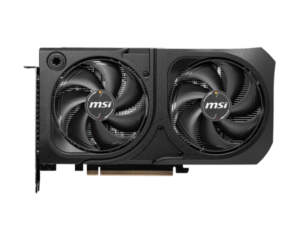
Efficient dual-fan Blackwell GPU pairing solid 180W thermals and standard 8-pin power with an 8GB memory limitation.
Mizex Comparative Audit Verdict
5-Pillar Engineering Telemetry
Detailed comparison across standardized normalized 1.0 – 5.0 engineering pillars.
NextSilicon Maverick-2: Strengths & Caveats
- Delivers up to 4x performance-per-watt efficiency compared to conventional GPUs
- Native 64-bit floating-point dataflow architecture optimized for scientific HPC simulations
- Massive memory capacity up to 192GB HBM3e on dual-die OAM and 96GB on single-die PCIe
- Direct kernel mapping eliminates instruction fetch, decode, and writeback bottlenecks
- Inefficient execution on branch-heavy and control-dependent code paths
- Substantial fabrication costs stemming from massive physical die sizes on TSMC 5nm
- Requires external host CPU orchestration for system and operating system tasks
MSI GeForce RTX 5060 Ti 8G Shadow 2X OC Plus: Strengths & Caveats
- Standard single 8-pin PCIe connector avoids 12V-2x6/12VHPWR adapter wear and cable bending risks.
- Compact 8.90-inch (226 mm) dual-slot chassis fits virtually all small-form-factor and mini-ITX cases.
- Modern display output array supporting triple DisplayPort 2.1b and HDMI 2.1b up to 8K resolution.
- Zero Frozr acoustic profile ensures completely silent operation during idle and low-load desktop tasks.
- 8GB GDDR7 frame buffer creates texture caching constraints in modern ray-traced AAA titles.
- Electrical PCIe 5.0 x8 bus interface may introduce slight throughput penalties on older PCIe Gen 3 host systems.
Technical Specification Comparison
Side-by-side spec alignment. Rows highlighted with subtle shading denote differing specifications.
| Specification | NextSilicon Maverick-2 | MSI GeForce RTX 5060 Ti 8G Shadow 2X OC Plus |
|---|---|---|
| Brand DIFF | NextSilicon | MSI |
| Model DIFF | NextSilicon Maverick-2 | GeForce RTX 5060 Ti 8G Shadow 2X OC Plus |
| Architecture DIFF | 64-bit Reconfigurable Dataflow Engine | — |
| Fabrication Process DIFF | TSMC 5nm | — |
| Form Factors DIFF | Single-die PCIe, Dual-die Open Accelerator Module (OAM) | — |
| Memory Type DIFF | HBM3e | — |
| Memory Capacity DIFF | 96GB (PCIe) / 192GB (OAM) | — |
| Supported Precisions DIFF | FP64, FP16, FP8, INT8 | — |
| Max Power Consumption DIFF | 300W (PCIe) / 600W (OAM) | — |
| Target Workloads DIFF | High-Performance Computing (HPC), Scientific Simulation, AI | — |
| Host Interconnect DIFF | Host CPU required (x86 / RISC-V) | — |
| GPU Architecture DIFF | — | NVIDIA Blackwell (GB206) |
| CUDA Cores DIFF | — | 4,608 Units |
| Boost Clock DIFF | — | 2,602 MHz (2,617 MHz Extreme via MSI Center) |
| Memory Configuration DIFF | — | 8 GB GDDR7 |
| Memory Bus Width DIFF | — | 128-bit |
| Memory Bandwidth / Speed DIFF | — | 28 Gbps |
| Bus Interface DIFF | — | PCIe 5.0 x16 (Electrical x8) |
| Display Outputs DIFF | — | 3x DisplayPort 2.1b, 1x HDMI 2.1b |
| Maximum Digital Resolution DIFF | — | 7680 x 4320 (8K) |
| Power Consumption (TGP) DIFF | — | 180 W |
| Recommended System Power DIFF | — | 600 W |
| Power Connector DIFF | — | 1x 8-pin PCIe |
| Form Factor DIFF | — | Dual-Slot |
| Dimensions DIFF | — | 8.90 x 4.96 x 1.61 in (226 x 126 x 41 mm) |
| Weight DIFF | — | 1.22 lbs (553 g) |
| Cooling Solution DIFF | — | MSI Shadow 2X Dual STORMFORCE Fans with Zero Frozr |
| Power Stages DIFF | — | DrMOS Integrated Power Delivery |
Need to evaluate a different configuration?
🔍 Compare Other Hardware