Microsoft Surface Laptop (2026) vs ASUS ProArt P16
Standardized 5-pillar engineering audit, thermal telemetry, verified longevity metrics, and complete technical specification diff.
A well-crafted, highly efficient ARM laptop with exceptional battery runtime and chassis rigidity, tempered by soldered memory and proprietary port selection.
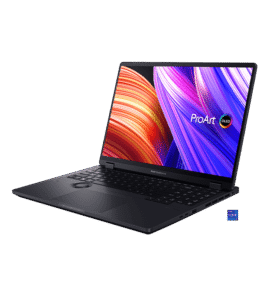
Sophisticated creative workstation marrying a class-leading OLED panel and dedicated workflow tools with a compact, thermally dense chassis.
Mizex Comparative Audit Verdict
5-Pillar Engineering Telemetry
Detailed comparison across standardized normalized 1.0 – 5.0 engineering pillars.
Microsoft Surface Laptop (2026): Strengths & Caveats
- Up to 19–20 hours of battery life powered by efficient Qualcomm Snapdragon X2 silicon
- Bright 600-nit PixelSense IPS touchscreen with zero PWM flicker
- Rigid, premium unibody construction from 100% recycled aluminum alloy
- Modern connectivity featuring dual USB4 ports and Wi-Fi 7 wireless
- Soldered LPDDR5X RAM completely prevents aftermarket memory upgrades
- Retains proprietary Surface Connect port over an additional standard USB-C interface
- Lacks an integrated SD or microSD card reader
ASUS ProArt P16: Strengths & Caveats
- High-efficiency AI and compute performance via AMD Ryzen AI 9 HX 370 with 50 TOPs NPU
- Factory-calibrated 16-inch 120Hz Lumina OLED touchscreen with 100% DCI-P3 coverage
- Integrated physical DialPad control surface tailored for creative application workflows
- Comprehensive full-size creator I/O including USB4, HDMI 2.1, and SD Express 7.0
- Pronounced chassis heat buildup under sustained heavy rendering workloads
- Nano Black exterior surface is prone to visible fingerprints and skin oils
- Restricted display hinge opening angle limits lap and elevated stand ergonomics
Technical Specification Comparison
Side-by-side spec alignment. Rows highlighted with subtle shading denote differing specifications.
| Specification | Microsoft Surface Laptop (2026) | ASUS ProArt P16 |
|---|---|---|
| Brand DIFF | Microsoft | ASUS |
| Model DIFF | Surface Laptop (2026) | ASUS ProArt P16 |
| Processor DIFF | Qualcomm Snapdragon X2 Plus (10-core, X2P-64-100) / Qualcomm Snapdragon X2 Elite (12-core) | — |
| Graphics DIFF | Qualcomm Adreno X2-45 | — |
| Display Size DIFF | 13.8 in (351 mm) / 15.0 in (381 mm) | — |
| Display Type DIFF | PixelSense IPS touchscreen | — |
| Display Resolution DIFF | 2304 x 1536 (13.8-inch) | — |
| Aspect Ratio DIFF | 3:2 | — |
| Display Brightness DIFF | 600 nits | — |
| Pixel Density DIFF | 262 ppi (15-inch) | — |
| PWM Flicker DIFF | None (flicker-free) | — |
| Memory DIFF | 16GB LPDDR5X (soldered) | — |
| Storage DIFF | 512GB / 1TB SSD | — |
| Ports DIFF | 2x USB-C (USB4), 1x Surface Connect port | — |
| Wireless DIFF | Wi-Fi 7 | — |
| Chassis Material DIFF | 100% recycled aluminum alloy | — |
| Battery Life Rating DIFF | Up to 19–20 hours | — |
| Model Number DIFF | — | H7606 |
| Processor DIFF | — | AMD Ryzen AI 9 HX 370 |
| Npu Performance DIFF | — | Up to 50 TOPs |
| Graphics Options DIFF | — | NVIDIA GeForce RTX 5070 / RTX 5090 Laptop GPU |
| Memory DIFF | — | 64GB |
| Storage DIFF | — | 2TB NVMe SSD |
| Display DIFF | — | 16.0-inch ASUS Lumina OLED Touchscreen (2880 x 1800, 120Hz, 16:10, 100% DCI-P3, 400 nits HDR) |
| Battery Capacity DIFF | — | 90 Wh (4-cell Li-ion) |
| Cooling Architecture DIFF | — | Tri-Fan cooling system with vapor chamber and liquid metal compound |
| Audio DIFF | — | 6-speaker stereo array certified by Harman Kardon with Dolby Atmos |
| Camera DIFF | — | FHD camera with IR sensor for Windows Hello |
| Input Hardware DIFF | — | Backlit chiclet keyboard, large touchpad with integrated ASUS DialPad |
| Networking DIFF | — | Wi-Fi 7, Bluetooth |
| Ports DIFF | — | 1x USB4 Gen 3 Type-C, 1x USB 3.2 Gen 2 Type-C, 2x USB 3.2 Gen 2 Type-A, 1x HDMI 2.1 FRL, 1x SD Express 7.0, 1x 3.5mm combo audio |
| Dimensions DIFF | — | 0.68 x 14.0 x 9.7 inches |
| Weight DIFF | — | Sub-2 kg (4.41 lbs) |
Need to evaluate a different configuration?
🔍 Compare Other Hardware