Logitech G Pro X2 Superstrike vs LILYGO T-Display-P4 Standalone Keyboard Expansion Module
Standardized 5-pillar engineering audit, thermal telemetry, verified longevity metrics, and complete technical specification diff.
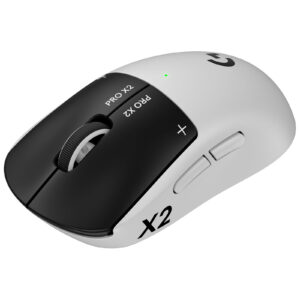
High-performance 8,000Hz wireless mouse featuring innovative inductive triggers and an exceptional HERO 2 sensor, held back by slick shell ergonomics and inconsistent auxiliary button feel.
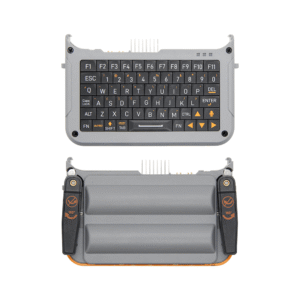
A feature-dense handheld terminal expansion pairing a TCA8418 matrix scanner, dual 21700 battery chassis, and multi-protocol RF transceivers, tempered by delicate pogo-pin alignment and standby battery drain.
Mizex Comparative Audit Verdict
5-Pillar Engineering Telemetry
Detailed comparison across standardized normalized 1.0 – 5.0 engineering pillars.
Logitech G Pro X2 Superstrike: Strengths & Caveats
- Cutting-edge HERO 2 optical sensor supporting up to 8,000Hz polling rates
- Haptic Inductive Trigger System (HITS) provides rapid trigger resets and adjustable actuation
- Ultra-lightweight 60-gram chassis paired with low-friction PTFE skates
- Robust, low-latency LIGHTSPEED wireless connection
- Side buttons exhibit mushy tactile feedback and an undersized profile
- Slick shell coating compromises grip stability without aftermarket grip tape
- Early production reports of physical clicking stickiness and mechanical trigger resistance
LILYGO T-Display-P4 Standalone Keyboard Expansion Module: Strengths & Caveats
- Dedicated Texas Instruments TCA8418 I2C keyboard controller with hardware debouncing and key event FIFO
- Extensive RF consolidation integrating CC1101 Sub-GHz, nRF24L01 2.4 GHz, and ST25R3916 NFC transceivers
- Dual 21700 lithium-ion cell bay provides high-capacity runtime for untethered field terminal operation
- Cable-free mating via spring-loaded pogo pin interface directly to the host platform
- Quiescent standby battery drain can deplete 21700 cells into low-voltage lockout if the hardware switch is left on
- Pogo-pin bus alignment requires precise mechanical registration to prevent I2C initialization failures
- Cramped miniature tactile dome switch layout limits typing comfort during prolonged sessions
Technical Specification Comparison
Side-by-side spec alignment. Rows highlighted with subtle shading denote differing specifications.
| Specification | Logitech G Pro X2 Superstrike | LILYGO T-Display-P4 Standalone Keyboard Expansion Module |
|---|---|---|
| Brand DIFF | Logitech | LILYGO |
| Model DIFF | Logitech G Pro X2 Superstrike | T-Display-P4 Standalone Keyboard Expansion Module |
| Model Number DIFF | MR0097 | — |
| Sensor Type DIFF | HERO 2 Optical | — |
| Maximum Polling Rate Hz DIFF | 8000 | — |
| Switch Technology DIFF | Haptic Inductive Trigger System (HITS) | — |
| Connectivity DIFF | LIGHTSPEED Wireless | — |
| Weight Grams DIFF | 60 | — |
| Skate Material DIFF | PTFE | — |
| Onboard Memory DIFF | Supported | — |
| Configuration Software DIFF | Logitech G HUB | — |
| Keyboard Controller DIFF | — | Texas Instruments TCA8418 (I2C interface, 10x7 scan matrix) |
| I/O Expansion DIFF | — | XL9555 16-Bit I2C GPIO Expander |
| Key Layout DIFF | — | Miniature QWERTY tactile dome matrix |
| Backlight Driver DIFF | — | Silergy SY7200A Step-Up LED Driver (PWM Dimming) |
| Host Interconnect DIFF | — | Rigid multi-pin spring-loaded pogo pin array |
| Sub GHz Radio DIFF | — | Texas Instruments CC1101 (433 / 868 / 915 MHz) |
| 2.4 GHz Radio DIFF | — | Nordic Semiconductor nRF24L01+ |
| NFC Transceiver DIFF | — | STMicroelectronics ST25R3916 |
| Battery Compatibility DIFF | — | Dual 21700 Lithium-Ion Cells |
| Power Control DIFF | — | Integrated hardware slide switch |
| Host Platform Compatibility DIFF | — | LILYGO T-Display-P4 (TFT and AMOLED variants) |
| Form Factor Integration DIFF | — | Handheld terminal / cyberdeck expansion shell |
| Host Dimensions Reference DIFF | — | 4.29 x 2.48 x 0.87 in (109 x 63 x 22 mm) |
Need to evaluate a different configuration?
🔍 Compare Other Hardware