HiRO H50371 V92 56K USB-C/A Data Fax Modem vs FamilyKit Wi-Fi HaLow Gateway ThinkNode G4
Standardized 5-pillar engineering audit, thermal telemetry, verified longevity metrics, and complete technical specification diff.
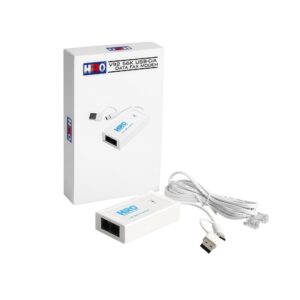
A driverless V.92 hardware modem delivering versatile dual USB-C/A host connectivity and dual RJ-11 passthrough, compromised only by modern Windows 11 sandboxing quirks and regional Caller ID support.
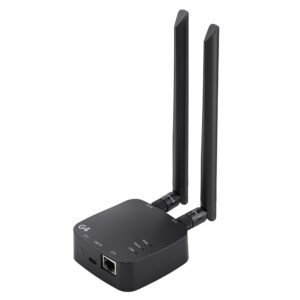
The ThinkNode G4 delivers capable long-range 802.11ah Wi-Fi HaLow bridging via Morse Micro silicon and 5V USB-C power, balanced against modest MIPS compute resources and specialized kernel driver dependencies.
Mizex Comparative Audit Verdict
5-Pillar Engineering Telemetry
Detailed comparison across standardized normalized 1.0 – 5.0 engineering pillars.
HiRO H50371 V92 56K USB-C/A Data Fax Modem: Strengths & Caveats
- Driverless CDC-compliant architecture enables instant plug-and-play operation across Windows 7 through Windows 11
- Native dual USB Type-C and Type-A host interfaces eliminate the need for external port adapters
- Dual RJ-11 jacks support direct passthrough for a telephone or answering machine without a line splitter
- Integrated hardware buzzer provides essential in-band call progress and negotiation audio feedback
- Requires launching Windows Fax and Scan as Administrator on Windows 11 to bypass AppX print spooler sandboxing failures
- Caller ID decoding functionality is restricted strictly to USA telephone networks
FamilyKit Wi-Fi HaLow Gateway ThinkNode G4: Strengths & Caveats
- Sub-1 GHz 802.11ah protocol delivers long-range penetration up to 1 km line-of-sight for remote IoT nodes.
- Quectel FGH100M module with Morse Micro MM6108 silicon provides dedicated Wi-Fi HaLow hardware decoding.
- Flexible operation across Access Point, Station, and Mesh topologies with dual-band 2.4 GHz fallback.
- Standard 5V USB-C power input simplifies remote battery and solar-assisted field deployments.
- Wired backhaul is constrained to 10/100 Mbps Fast Ethernet.
- Firmware relies on vendor-maintained OpenWrt kernel feeds and specific Board Configuration Files rather than mainline upstream releases.
- Modest 580 MHz MIPS processor and 128 MB RAM limit complex local edge computing or container workloads.
Technical Specification Comparison
Side-by-side spec alignment. Rows highlighted with subtle shading denote differing specifications.
| Specification | HiRO H50371 V92 56K USB-C/A Data Fax Modem | FamilyKit Wi-Fi HaLow Gateway ThinkNode G4 |
|---|---|---|
| Brand DIFF | HiRO | FamilyKit |
| Model DIFF | H50371 V92 56K USB-C/A Data Fax Modem | ThinkNode G4 |
| Data Protocol DIFF | ITU-T V.92 / 56K | — |
| Host Interface DIFF | Dual Interface (USB Type-C & USB 2.0 Type-A) | — |
| Phone Line Interfaces DIFF | 2x RJ-11 ports (Line and Phone/Extension) | — |
| Power Source DIFF | USB bus-powered | — |
| Driver Architecture DIFF | CDC-compliant, driverless Microsoft Inbox class driver | — |
| Call Progress Monitoring DIFF | Built-in buzzer for in-band digital audio feedback | — |
| Caller ID Support DIFF | Supported (USA phone networks only) | — |
| Fax Software Compatibility DIFF | Windows Fax and Scan | — |
| Supported Operating Systems DIFF | Windows 11, Windows 10, Windows 8, Windows 7 | — |
| Wireless Standard DIFF | — | IEEE 802.11ah (Wi-Fi HaLow) & IEEE 802.11b/g/n |
| Operating Frequency DIFF | — | 850–950 MHz (Sub-1 GHz) & 2.4 GHz |
| Maximum PHY Rate DIFF | — | 32.5 Mbps (Wi-Fi HaLow) / 150 Mbps (2.4 GHz) |
| Processor DIFF | — | MediaTek MT7628N (MIPS24KEc @ 580 MHz) |
| Wireless Transceiver DIFF | — | Quectel FGH100M (Morse Micro MM6108) |
| System Memory DIFF | — | 128 MB DDR2 |
| Storage DIFF | — | 32 MB SPI Flash |
| Network Interface DIFF | — | 1x 10/100 Mbps RJ45 Fast Ethernet |
| Antenna Interface DIFF | — | 2x External SMA Connectors |
| Operating Modes DIFF | — | Access Point (AP), Station (STA), Mesh |
| Power Input DIFF | — | 5V DC via USB-C |
| Operating Temperature Range DIFF | — | -20°C to 70°C (-4°F to 158°F) |
| Dimensions DIFF | — | 2.95 x 2.95 x 1.18 in (75 x 75 x 30 mm) |
| Weight DIFF | — | 2.82 oz (80 g) |
| Enclosure Material DIFF | — | Injection-Molded Polymer |
Need to evaluate a different configuration?
🔍 Compare Other Hardware