GMKtec M6 Ultra vs ASUS Ascent QN10
Standardized 5-pillar engineering audit, thermal telemetry, verified longevity metrics, and complete technical specification diff.
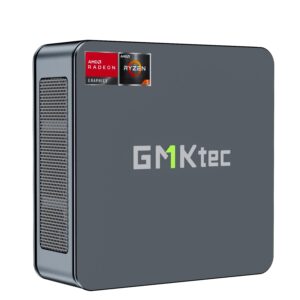
GMKtec M6 Ultra
A highly versatile Zen 4 mini PC delivering standout dual 2.5 GbE connectivity and dual M.2 expansion in an accessible, plastic-chassis form factor.
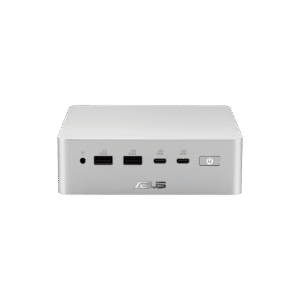
ASUS Ascent QN10
Elite engineering and thermal management in a sub-140mm chassis deliver top-tier performance for AI workloads and multi-monitor setups.
Mizex Comparative Audit Verdict
5-Pillar Engineering Telemetry
Detailed comparison across standardized normalized 1.0 – 5.0 engineering pillars.
GMKtec M6 Ultra: Strengths & Caveats
- High-performance 6-core Zen 4 Ryzen 5 7640HS with RDNA 3 Radeon 760M and AV1 hardware decoding
- Dual 2.5 GbE LAN ports and full-bandwidth 40 Gbps USB4 port supporting DisplayPort Alt Mode and Power Delivery
- Extensive internal upgrade path featuring dual DDR5 SODIMM bays up to 128GB and dual M.2 2280 PCIe 4.0 slots
- Cooling fan is clearly audible under sustained compute and gaming workloads
- Chassis construction is primarily plastic rather than an aluminum alloy shell
- Lacks an integrated full-size or microSD card reader
ASUS Ascent QN10: Strengths & Caveats
- World's first mini PC featuring an 80 TOPS NPU for advanced AI tasks
- Supports up to four simultaneous 4K displays via HDMI and USB4
- Dedicated fan cooling ensures stable operation for PCIe Gen5 SSDs
- Cutting-edge connectivity with WiFi 7 and Bluetooth 6.0
- Compact chassis limits acoustic dampening compared to larger towers
- Premium pricing reflects niche AI-first positioning
- Internal component density restricts upgradeability beyond storage slots
Technical Specification Comparison
Side-by-side spec alignment. Rows highlighted with subtle shading denote differing specifications.
| Specification | GMKtec M6 Ultra | ASUS Ascent QN10 |
|---|---|---|
| Brand DIFF | GMKtec | ASUS |
| Model DIFF | M6 Ultra | ASUS Ascent QN10 |
| Processor DIFF | AMD Ryzen 5 7640HS (6 cores, 12 threads, 4.3 GHz base, up to 5.0 GHz boost) | Qualcomm Snapdragon X2 Elite (Glymur 8480B / X2E-88-100) |
| Cpu Architecture DIFF | Zen 4 (Phoenix), TSMC 4nm | — |
| Configurable Tdp DIFF | 35W - 50W (up to 60W boost) | — |
| Integrated Graphics DIFF | AMD Radeon 760M (RDNA 3, 8 CUs, 2600 MHz) | — |
| Media Engine DIFF | Hardware acceleration for AV1, HEVC, and AVC decode/encode | — |
| Memory DIFF | Dual-channel DDR5 SO-DIMM (2x slots, 4800 MT/s, up to 128GB) | — |
| Storage Support DIFF | 2x M.2 2280 NVMe PCIe 4.0 slots (up to 8TB total) | — |
| Networking DIFF | 2x 2.5 GbE RJ45 LAN, Wi-Fi 6E, Bluetooth 5.2 | 2.5GbE RJ45, WiFi 7, Bluetooth 6.0 |
| Usb And Display DIFF | 1x USB4 (40 Gbps, DP Alt Mode, PD), 1x HDMI, 1x DisplayPort | — |
| Display Output Capacity DIFF | Simultaneous triple display up to 4K | — |
| Power Input DIFF | 120W (19V / 6.32A external power supply) | — |
| Chassis Construction DIFF | Polymer plastic housing | — |
| Operating System DIFF | Windows 11 Pro | — |
| Cpu Cores DIFF | — | 18x Armv9 cores |
| Gpu DIFF | — | Adreno X2-90 @ 1.70 GHz |
| Ai Accelerator DIFF | — | Qualcomm Hexagon NPU (80 TOPS INT8), Dual Micro NPU |
| Memory Max DIFF | — | 32GB LPDDR5X (up to 9600 MHz) |
| Storage Slots DIFF | — | M.2 2280 PCIe Gen4 NVMe (occupied), M.2 2280 PCIe Gen5 NVMe |
| Video Outputs DIFF | — | 1x HDMI 2.1, 3x USB4 (DP 2.1 via USB-C) |
| Max Displays DIFF | — | 4 independent 4K monitors |
| Usb Ports DIFF | — | 3x USB 4 Gen2 Type-C, 1x USB 2.0 Type-A, 3x USB 3.2 Gen2 Type-A |
| Audio Codec DIFF | — | Qualcomm WCD9378C |
| Power Adapter DIFF | — | 19.5V/9.23A (180W) |
| Dimensions Mm DIFF | — | 130 x 130 x 39.96 mm |
| Weight G DIFF | — | 720 g |
| Os DIFF | — | Windows 11 Pro/Home Copilot+PC |
Need to evaluate a different configuration?
🔍 Compare Other Hardware