FamilyKit Wi-Fi HaLow Gateway ThinkNode G4 vs Ubiquiti Max 5G Modem
Standardized 5-pillar engineering audit, thermal telemetry, verified longevity metrics, and complete technical specification diff.
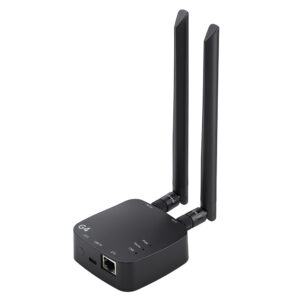
The ThinkNode G4 delivers capable long-range 802.11ah Wi-Fi HaLow bridging via Morse Micro silicon and 5V USB-C power, balanced against modest MIPS compute resources and specialized kernel driver dependencies.
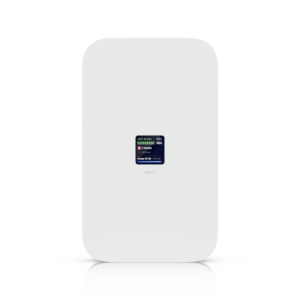
Integrated 5G cellular gateway pairing tri-band Wi-Fi, SFP fiber capability, and automated failover in a unified UniFi OS desktop platform.
Mizex Comparative Audit Verdict
5-Pillar Engineering Telemetry
Detailed comparison across standardized normalized 1.0 – 5.0 engineering pillars.
FamilyKit Wi-Fi HaLow Gateway ThinkNode G4: Strengths & Caveats
- Sub-1 GHz 802.11ah protocol delivers long-range penetration up to 1 km line-of-sight for remote IoT nodes.
- Quectel FGH100M module with Morse Micro MM6108 silicon provides dedicated Wi-Fi HaLow hardware decoding.
- Flexible operation across Access Point, Station, and Mesh topologies with dual-band 2.4 GHz fallback.
- Standard 5V USB-C power input simplifies remote battery and solar-assisted field deployments.
- Wired backhaul is constrained to 10/100 Mbps Fast Ethernet.
- Firmware relies on vendor-maintained OpenWrt kernel feeds and specific Board Configuration Files rather than mainline upstream releases.
- Modest 580 MHz MIPS processor and 128 MB RAM limit complex local edge computing or container workloads.
Ubiquiti Max 5G Modem: Strengths & Caveats
- Integrated 5G cellular modem supporting both physical SIM and eSIM for flexible carrier provisioning
- Tri-band Wi-Fi capability spanning 2.4 GHz, 5 GHz, and 6 GHz spectrums
- Built-in SFP slot allowing direct fiber-optic WAN connectivity
- Integrated front display delivering immediate real-time telemetry on signal quality and data usage
- Multi-gigabit throughput support across the four RJ45 Ethernet ports was unconfirmed at announcement
- SFP optical transceiver is not included in the chassis package and must be sourced separately
Technical Specification Comparison
Side-by-side spec alignment. Rows highlighted with subtle shading denote differing specifications.
| Specification | FamilyKit Wi-Fi HaLow Gateway ThinkNode G4 | Ubiquiti Max 5G Modem |
|---|---|---|
| Brand DIFF | FamilyKit | Ubiquiti |
| Model DIFF | ThinkNode G4 | Max 5G Modem |
| Wireless Standard DIFF | IEEE 802.11ah (Wi-Fi HaLow) & IEEE 802.11b/g/n | — |
| Operating Frequency DIFF | 850–950 MHz (Sub-1 GHz) & 2.4 GHz | — |
| Maximum PHY Rate DIFF | 32.5 Mbps (Wi-Fi HaLow) / 150 Mbps (2.4 GHz) | — |
| Processor DIFF | MediaTek MT7628N (MIPS24KEc @ 580 MHz) | — |
| Wireless Transceiver DIFF | Quectel FGH100M (Morse Micro MM6108) | — |
| System Memory DIFF | 128 MB DDR2 | — |
| Storage DIFF | 32 MB SPI Flash | — |
| Network Interface DIFF | 1x 10/100 Mbps RJ45 Fast Ethernet | — |
| Antenna Interface DIFF | 2x External SMA Connectors | — |
| Operating Modes DIFF | Access Point (AP), Station (STA), Mesh | — |
| Power Input DIFF | 5V DC via USB-C | — |
| Operating Temperature Range DIFF | -20°C to 70°C (-4°F to 158°F) | — |
| Dimensions DIFF | 2.95 x 2.95 x 1.18 in (75 x 75 x 30 mm) | — |
| Weight DIFF | 2.82 oz (80 g) | — |
| Enclosure Material DIFF | Injection-Molded Polymer | — |
| Cellular Technology DIFF | — | 5G |
| SIM Support DIFF | — | Physical SIM and eSIM |
| Cellular Deployment Modes DIFF | — | Primary connection, failover, or redundancy |
| Wi Fi Frequency Bands DIFF | — | Tri-band (2.4 GHz, 5 GHz, 6 GHz) |
| Ethernet Interface DIFF | — | 4x RJ45 ports |
| Fiber Optic Interface DIFF | — | 1x SFP slot |
| Storage Expansion DIFF | — | MicroSD card slot |
| Integrated Display DIFF | — | Status display (signal quality, throughput, total data usage) |
| Operating System DIFF | — | UniFi OS |
Need to evaluate a different configuration?
🔍 Compare Other Hardware