DIYPC DIY-V2-MicroATX vs Thermalright TR-A30 Vision
Standardized 5-pillar engineering audit, thermal telemetry, verified longevity metrics, and complete technical specification diff.
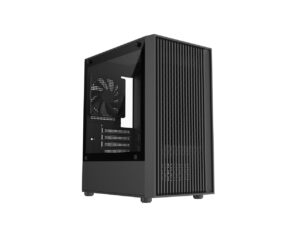
A budget-focused Micro-ATX mini-tower enclosure pairing front USB Type-C and tempered glass with strict component clearance limits.
Showcase-oriented mid-tower with panoramic tempered glass and an integrated telemetry screen, balanced by strict 120 mm fan requirements and zero out-of-the-box fans.
Mizex Comparative Audit Verdict
5-Pillar Engineering Telemetry
Detailed comparison across standardized normalized 1.0 – 5.0 engineering pillars.
DIYPC DIY-V2-MicroATX: Strengths & Caveats
- Integrated front-panel USB Type-C port alongside USB 3.0 Type-A and HD audio
- Full-coverage tempered glass side panel for clean internal hardware presentation
- Expansive cooling layout accommodating up to seven 120 mm fans with magnetic top filtering
- Accommodates standard tower CPU air coolers up to 163 mm (6.42 in) in height
- Maximum graphics card length constrained to 280 mm (11.02 in), limiting fitment of large modern GPUs
- Solid front panel design with lateral intake slits restricts airflow compared to open-mesh chassis
- Break-away stamped PCIe slot covers cannot be reattached once removed
Thermalright TR-A30 Vision: Strengths & Caveats
- Integrated 9.16-inch magnetic display with crisp 1920x462 resolution for telemetry and custom media
- Panoramic three-sided tempered glass panels offering unobstructed views of core components
- Stepped dual-chamber layout with concealed tubing channels and up to 400 mm GPU clearance
- Modern front I/O configuration including dedicated USB Type-C connectivity
- Ships without any pre-installed cooling fans, requiring separate fan purchases
- Chassis fan mounting points are limited to 120 mm fans with no 140 mm bracket support
Technical Specification Comparison
Side-by-side spec alignment. Rows highlighted with subtle shading denote differing specifications.
| Specification | DIYPC DIY-V2-MicroATX | Thermalright TR-A30 Vision |
|---|---|---|
| Brand DIFF | DIYPC | Thermalright |
| Model DIFF | DIY-V2-MicroATX | Thermalright TR-A30 Vision |
| Form Factor DIFF | Micro-ATX Mini Tower | — |
| Motherboard Support DIFF | Micro-ATX, Mini-ITX | — |
| Chassis Materials DIFF | SPCC Steel, Tempered Glass, ABS Plastic | — |
| Dimensions DIFF | 15.60 x 8.00 x 12.72 in (396 x 203 x 323 mm) | — |
| Weight DIFF | 9.10 lbs (4.13 kg) | — |
| Front I/O Ports DIFF | 1x USB Type-C, 1x USB 3.0 Type-A, 1x HD Audio In/Out | — |
| Expansion Slots DIFF | 4 (Breakout / Punch-Out Covers) | — |
| Internal Drive Bays DIFF | 1x 3.5-inch HDD, 2x 2.5-inch SSD | — |
| Maximum GPU Length DIFF | 280 mm (11.02 in) | — |
| Maximum CPU Cooler Height DIFF | 163 mm (6.42 in) | — |
| Maximum PSU Length DIFF | 140 mm (5.51 in) | — |
| Pre Installed Fans DIFF | 1x 120 mm (Rear Exhaust) | — |
| Total Fan Capacity DIFF | 7x 120 mm (2 Front, 2 Top, 2 Bottom/Shroud, 1 Rear) | — |
| Radiator Support DIFF | 120 mm (Rear) | — |
| Dust Filters DIFF | Top (Magnetic Mesh), Bottom (PSU Intake Mesh) | — |
| Form Factor DIFF | — | Mid Tower |
| Case Volume DIFF | — | 52 L |
| Dimensions DIFF | — | 440 x 232 x 512 mm (17.32 x 9.13 x 20.16 in) |
| Chassis Materials DIFF | — | Steel, Tempered Glass (Front, Side, Top) |
| Motherboard Compatibility DIFF | — | ATX, Micro-ATX, Mini-ITX |
| Integrated Display DIFF | — | 9.16-inch Magnetic Panel (1920 x 462 resolution) |
| Expansion Slots DIFF | — | 7 |
| Storage Capacity DIFF | — | 1x 3.5-inch HDD, 2x 2.5-inch SSD |
| Max Gpu Length DIFF | — | 400 mm |
| Max Cpu Cooler Height DIFF | — | 165 mm |
| Max Psu Length DIFF | — | 220 mm |
| Psu Form Factor DIFF | — | ATX |
| Fan Mount Capacity DIFF | — | Up to 7x 120 mm (Side: 3x 120 mm, Bottom: 3x 120 mm, Rear: 1x 120 mm) |
| Preinstalled Fans DIFF | — | 0 |
| Radiator Support DIFF | — | Side: 120 / 240 / 360 mm, Rear: 120 mm |
| Front Io DIFF | — | 1x USB Type-C, 2x USB 3.0 Type-A, 1x 3.5mm Headphone Jack, 1x 3.5mm Microphone Jack |
| Lighting DIFF | — | Integrated ARGB Light Strip |
Need to evaluate a different configuration?
🔍 Compare Other Hardware