Side-by-Side Comparison
Cerebras CS-4 vs Axelera AI Europa
Standardized 5-pillar engineering audit, thermal telemetry, verified longevity metrics, and complete technical specification diff.
▲ DOCUMENTED QUIRKS
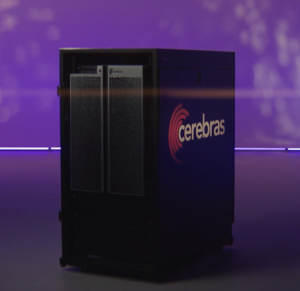
Composite Score:
4.1
/ 5.0
A powerhouse rack-scale AI accelerator delivering 129.6 PB/s memory bandwidth across three 5nm wafer-scale engines with modular power delivery.
★ Recommended Winner
● HIGHLY RATED

Composite Score:
4.4
/ 5.0
High-efficiency 5nm AI processor delivering 629 TOPS and integrated RISC-V vector compute within a 45W enterprise envelope.
⚖️
Mizex Comparative Audit Verdict
The Axelera AI Europa achieves the higher Mizex Composite Score (4.4 vs 4.1), leading across 5 of 5 engineering pillars. With an advantage in Engineering & Architecture, Build Quality & Materials, Thermal, Power & Acoustics, Real-World Reliability, Buyer Value & Upgrades, it represents the stronger technical recommendation.
5-Pillar Engineering Telemetry
Detailed comparison across standardized normalized 1.0 – 5.0 engineering pillars.
Cerebras CS-4
Axelera AI Europa
Engineering & Architecture
(30%)
Winner: Axelera AI Europa (+0.2)
4.4
4.6
Build Quality & Materials
(20%)
Winner: Axelera AI Europa (+0.1)
4.2
4.3
Thermal, Power & Acoustics
(20%)
Winner: Axelera AI Europa (+0.7)
3.8
4.5
Real-World Reliability
(20%)
Winner: Axelera AI Europa (+0.1)
4.1
4.2
Buyer Value & Upgrades
(10%)
Winner: Axelera AI Europa (+0.1)
4.0
4.1
Cerebras CS-4: Strengths & Caveats
✔ Advantages
- Massive aggregate memory bandwidth of 129.6 PB/s and 160.5 PB/s compute fabric bandwidth bypassing cluster networking bottlenecks
- Reduced inter-wafer communication latency of 2 microseconds across three integrated WSE-3 Turbo processors
- Modular chassis architecture featuring a removable rear-mounted power conversion backpack for enterprise servicing
- Engineered to support frontier models exceeding 50 trillion parameters with up to 30x faster per-user inference
✖ Documented Caveats
- WSE-3 Turbo processor represents an overclocked clock-bump refresh (~2.8 GHz) on TSMC 5nm rather than an architectural redesign
- Advertised 750 PFLOPS throughput requires sparse FP16 execution; dense FP16 compute is 75 PFLOPS
- Acoustic noise, thermal dissipation under full load, and multi-trillion parameter throughput claims await independent verification
Axelera AI Europa: Strengths & Caveats
✔ Advantages
- Delivers 629 TOPS across INT4, INT8, and INT16 within an efficient 45W TDP envelope
- 16 integrated RISC-V vector cores execute data pre- and post-processing directly on-die
- Substantial memory subsystem featuring 128MB L2 SRAM and 200 GB/s LPDDR5 bandwidth
- Validated integration across enterprise server platforms including Dell PowerEdge XE5 and Supermicro 111AD
✖ Documented Caveats
- Early software ecosystem requires framework verification compared to established GPU toolchains
- Inference performance remains sensitive to runtime model optimization and KV-cache implementation
Technical Specification Comparison
Side-by-side spec alignment. Rows highlighted with subtle shading denote differing specifications.
| Specification | Cerebras CS-4 | Axelera AI Europa |
|---|---|---|
| Brand DIFF | Cerebras | Axelera |
| Model DIFF | Cerebras CS-4 | Axelera AI Europa |
| Architecture DIFF | Nexus rack-scale platform | — |
| Processor Configuration DIFF | 3x Wafer Scale Engine 3 Turbo (WSE-3 Turbo) | — |
| Process Technology DIFF | TSMC 5nm | Samsung 5nm |
| Total Cores DIFF | 2,700,000 cores (900,000 per wafer) | — |
| Transistor Count DIFF | 12 trillion (4 trillion per wafer) | — |
| On Chip Memory DIFF | 132 GB SRAM (44 GB per wafer) | — |
| Clock Frequency DIFF | 2.8 GHz | — |
| AI Compute (Sparse FP16) DIFF | 750 PFLOPS (250 PFLOPS per wafer) | — |
| AI Compute (Dense FP16) DIFF | 75 PFLOPS (25 PFLOPS per wafer) | — |
| Memory Bandwidth DIFF | 129.6 PB/s (43.2 PB/s per wafer) | 200 GB/s |
| Compute Fabric Bandwidth DIFF | 160.5 PB/s | — |
| I/O Bandwidth DIFF | 7.2 Tbps | — |
| Inter Wafer Latency DIFF | 2 microseconds | — |
| Power Delivery Design DIFF | Chassis rear-mounted removable power conversion backpack | — |
| Supported Model Scale DIFF | Frontier models exceeding 50 trillion parameters | — |
| AI Performance DIFF | — | 629 TOPS (INT4, INT8, INT16) |
| AI Cores DIFF | — | 8 Cores |
| Vector Cores DIFF | — | 16 RISC-V Vector Cores |
| On Chip Cache DIFF | — | 128MB L2 SRAM |
| Memory Interface DIFF | — | 256-bit LPDDR5 |
| Maximum Memory Capacity DIFF | — | Up to 64GB per chip |
| Thermal Design Power (TDP) DIFF | — | 45W |
| Hardware Video Decoder DIFF | — | Integrated on-chip |
| Available Form Factors DIFF | — | Bare Chip, HHHL PCIe (Edge 232p), FHFL PCIe (Server 250p) |
Need to evaluate a different configuration?
🔍 Compare Other Hardware