Canon EOS R100 vs Sony ZV-E10 II
Standardized 5-pillar engineering audit, thermal telemetry, verified longevity metrics, and complete technical specification diff.
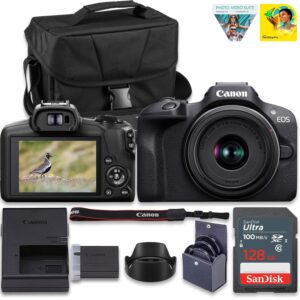
An entry-level APS-C mirrorless camera pairing a capable 24 Megapixel sensor with the RF mount, heavily compromised by a non-touch fixed display, slow burst shooting, and a restricted 4K pipeline.
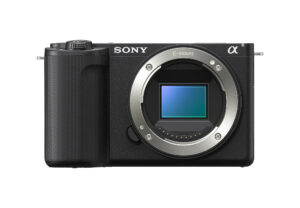
A potent video-centric APS-C platform delivering 10-bit 4:2:2 oversampled capture and substantial battery life, tempered by heavy stabilization crops and the omission of in-body sensor stabilization.
Mizex Comparative Audit Verdict
5-Pillar Engineering Telemetry
Detailed comparison across standardized normalized 1.0 – 5.0 engineering pillars.
Canon EOS R100: Strengths & Caveats
- Proven 24 Megapixel APS-C sensor delivering sharp stills and reliable 1080p video recording
- Compact, lightweight chassis providing affordable access to the modern Canon RF lens mount
- Noticeably improved autofocus tracking compared to legacy entry-level DSLRs
- Fixed rear display completely lacks touch input and angle articulation
- Absence of built-in in-body image stabilization (IBIS) limits handheld versatility
- Compromised 4K recording capabilities and slow continuous burst shooting rates
Sony ZV-E10 II: Strengths & Caveats
- Advanced 26.0 MP Exmor R BSI sensor and BIONZ XR processing architecture supporting 10-bit 4:2:2 All-Intra recording
- Oversampled 4K capture (6K oversampled up to 30p and 5.6K oversampled at 60p) with S-Log3, S-Cinetone, and custom LUT support
- Substantially improved battery endurance via migration to high-capacity Sony NP-FZ100 battery packs
- Fast Hybrid AF system featuring 759 phase-detection points across 94% of the sensor frame
- Omission of in-body optical sensor stabilization (IBIS), requiring optically stabilized lenses or digital stabilization
- Active electronic stabilization applies a significant 1.5x crop factor to video framing
- Complete absence of a physical mechanical shutter and electronic viewfinder (EVF)
Technical Specification Comparison
Side-by-side spec alignment. Rows highlighted with subtle shading denote differing specifications.
| Specification | Canon EOS R100 | Sony ZV-E10 II |
|---|---|---|
| Brand DIFF | Canon | Sony |
| Model DIFF | EOS R100 | ZV-E10 II |
| Camera Type DIFF | Mirrorless | — |
| Sensor Format DIFF | APS-C | — |
| Sensor Resolution DIFF | 24 Megapixels | — |
| Lens Mount DIFF | Canon RF | — |
| Video Recording DIFF | 4K, 1080p | — |
| Display Type DIFF | Fixed non-touch screen | — |
| Bundled Kit Lens DIFF | RF-S 18-45mm zoom | — |
| Announcement Date DIFF | May 2023 | — |
| Sensor Type DIFF | — | APS-C Exmor R BSI CMOS |
| Effective Resolution DIFF | — | 26.0 Megapixels |
| Image Processor DIFF | — | BIONZ XR |
| Lens Mount DIFF | — | Sony E-mount |
| Shutter Type DIFF | — | Electronic shutter |
| Continuous Shooting Speed DIFF | — | 11 fps with continuous AF/AE tracking |
| Autofocus System DIFF | — | Fast Hybrid AF (759 phase-detection / 25 contrast-detection points) |
| Autofocus Coverage DIFF | — | 94% frame coverage |
| Autofocus Sensitivity DIFF | — | -3 EV to +20 EV |
| Native Iso Range DIFF | — | 100 - 32,000 |
| Expanded Iso Range DIFF | — | 50 - 204,800 |
| Video Recording Resolution DIFF | — | 4K (3840 x 2160) up to 60p, Full HD (1920 x 1080) up to 120p |
| Video Oversampling DIFF | — | 6K oversampled (4K 24/25/30p), 5.6K oversampled (4K 60p) |
| Video Color Depth And Sampling DIFF | — | 10-bit 4:2:2 and 10-bit 4:2:0 |
| Video Compression DIFF | — | All-Intra / Long GOP (H.265 / XAVC HS, H.264 / XAVC S) |
| Picture Profiles DIFF | — | S-Log3, S-Cinetone, user LUT import support |
| Image Stabilization DIFF | — | Active Mode electronic stabilization (1.5x crop) |
| Display DIFF | — | 3.0-inch 1.03-million dot fully articulating vari-angle touchscreen LCD |
| Built In Audio DIFF | — | Intelligent 3-capsule directional microphone |
| Audio Interfaces DIFF | — | 3.5 mm microphone input, 3.5 mm stereo headphone jack |
| Video Interface DIFF | — | Mini-HDMI output |
| Battery Type DIFF | — | Sony NP-FZ100 rechargeable lithium-ion |
Need to evaluate a different configuration?
🔍 Compare Other Hardware