BOSGAME E5 vs GEEKOM IT13 Max
Standardized 5-pillar engineering audit, thermal telemetry, verified longevity metrics, and complete technical specification diff.
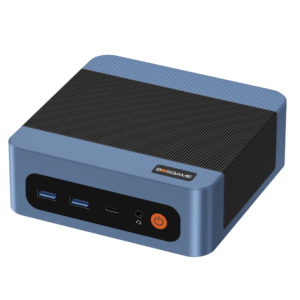
A versatile dual-LAN mini PC pairing modular DDR4 and M.2 expandability with mature Zen 2 silicon for budget-conscious homelabs.
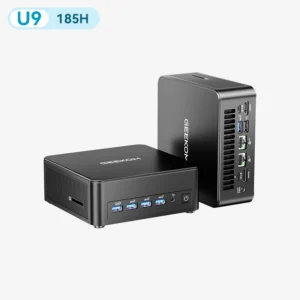
High-density Meteor Lake mini PC delivering top-tier networking and expansive multi-display I/O, balanced against soldered memory and an audible load acoustic profile.
Mizex Comparative Audit Verdict
5-Pillar Engineering Telemetry
Detailed comparison across standardized normalized 1.0 – 5.0 engineering pillars.
BOSGAME E5: Strengths & Caveats
- Dual Ethernet LAN ports accommodate soft routing, firewall appliances, and homelab configurations
- Triple 4K@60Hz display support across HDMI 2.0, DisplayPort, and USB Type-C
- User-accessible expansion via modular DDR4 SO-DIMM slots and M.2 SSD storage
- Utilizes older-generation AMD Zen 2 processor architecture
- Wireless connectivity is restricted to legacy Wi-Fi 5 and Bluetooth 5.0
GEEKOM IT13 Max: Strengths & Caveats
- High compute throughput via 16-core Intel Core Ultra 9 185H processor and Arc graphics
- Dual 2.5Gbps Intel Ethernet ports paired with cutting-edge Intel Wi-Fi 7 wireless
- Expansive I/O suite featuring dual 40Gbps USB4 ports and quad display capability
- Straightforward maintenance with clean 4-screw access and no tethered antenna cables
- Audible acoustic profile under heavy load with no custom fan curve options in BIOS
- Soldered 24GB LPDDR5 memory eliminates post-purchase RAM upgrades
- Pre-installed Kingston NV3 QLC SSD throttles during intensive sustained write workloads
Technical Specification Comparison
Side-by-side spec alignment. Rows highlighted with subtle shading denote differing specifications.
| Specification | BOSGAME E5 | GEEKOM IT13 Max |
|---|---|---|
| Brand DIFF | BOSGAME | GEEKOM |
| Model DIFF | E5 | GEEKOM IT13 Max |
| Processor DIFF | AMD Ryzen 3 5300U (4 cores, 8 threads, up to 3.8 GHz, Zen 2) | Intel Core Ultra 9 185H (16 cores: 6P + 8E + 2LPE, 22 threads, up to 5.1 GHz, 24MB cache) |
| Graphics DIFF | AMD Radeon Graphics (Vega 6) | Intel Arc Graphics (8 Xe-cores, up to 2450 MHz) |
| Memory DIFF | 8GB / 16GB DDR4 SO-DIMM (User-upgradable) | — |
| Storage DIFF | 256GB / 1TB M.2 SSD (User-upgradable) | — |
| Display Output DIFF | Triple 4K@60Hz (1x HDMI 2.0, 1x DisplayPort, 1x USB Type-C) | — |
| Wired Networking DIFF | Dual Ethernet LAN ports | — |
| Wireless Networking DIFF | Wi-Fi 5 (802.11ac) | — |
| Bluetooth DIFF | Bluetooth 5.0 | — |
| USB Ports DIFF | 1x USB Type-C, 4x USB Type-A | — |
| Audio Interface DIFF | 3.5mm combo audio jack | 3.5mm stereo headset jack |
| Operating System Support DIFF | Windows 11 Pro, Linux / Ubuntu | — |
| Neural Processing Unit DIFF | — | Intel AI Boost (up to 11 TOPS INT8, 35 TOPS platform) |
| Power Limits DIFF | — | 45W PL1, 70W PL2, 120W PL4 |
| System Memory DIFF | — | 24GB LPDDR5-5600 (soldered) |
| Primary Storage DIFF | — | 500GB Kingston NV3 (M.2 2280 PCIe 4.0 QLC NVMe SSD) |
| Secondary Storage Slot DIFF | — | M.2 2242 PCIe slot (up to 2TB) |
| Ethernet DIFF | — | Dual 2.5 Gbps RJ45 (Intel i226-V) |
| Wireless Connectivity DIFF | — | Wi-Fi 7 (Intel BE200NG), Bluetooth 5.4 |
| USB C Ports DIFF | — | 2x USB4 40Gbps (DisplayPort Alt Mode) |
| USB A Ports DIFF | — | 5x USB 3.2 Gen 2 (10Gbps) |
| Display Interfaces DIFF | — | 2x HDMI 2.0, 2x USB4 (up to 4 independent displays) |
| Card Reader DIFF | — | Full-size SD 4.0 slot |
| Power Input DIFF | — | DC barrel jack, 100W USB-C Power Delivery support |
| Operating System DIFF | — | Windows 11 Pro |
| Idle Power Consumption DIFF | — | 5 W |
Need to evaluate a different configuration?
🔍 Compare Other Hardware