Beelink SER3 vs ASUS Ascent QN10
Standardized 5-pillar engineering audit, thermal telemetry, verified longevity metrics, and complete technical specification diff.
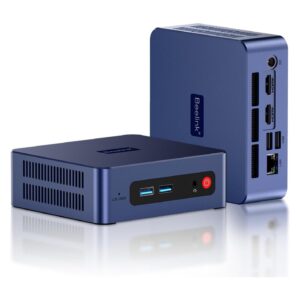
Beelink SER3
A space-efficient and highly upgradeable mini PC with solid connectivity, constrained by an erratic cooling fan curve and older Zen+ processing architecture.
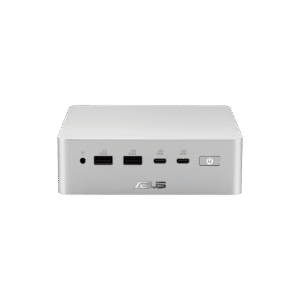
ASUS Ascent QN10
Elite engineering and thermal management in a sub-140mm chassis deliver top-tier performance for AI workloads and multi-monitor setups.
Mizex Comparative Audit Verdict
5-Pillar Engineering Telemetry
Detailed comparison across standardized normalized 1.0 – 5.0 engineering pillars.
Beelink SER3: Strengths & Caveats
- Easily accessible internal dual SO-DIMM memory and dual storage expansion slots
- Dual HDMI display outputs supporting multi-monitor productivity and 4K media playback
- Compact small form factor chassis with bundled VESA and wall mounting hardware
- Active cooling fan frequently pulses and ramps under fluctuating processing loads
- Pre-boot BIOS and boot menu access can fail when paired with wireless keyboards
- Relies on older-generation AMD Zen+ architecture processors and lacks a built-in card reader
ASUS Ascent QN10: Strengths & Caveats
- World's first mini PC featuring an 80 TOPS NPU for advanced AI tasks
- Supports up to four simultaneous 4K displays via HDMI and USB4
- Dedicated fan cooling ensures stable operation for PCIe Gen5 SSDs
- Cutting-edge connectivity with WiFi 7 and Bluetooth 6.0
- Compact chassis limits acoustic dampening compared to larger towers
- Premium pricing reflects niche AI-first positioning
- Internal component density restricts upgradeability beyond storage slots
Technical Specification Comparison
Side-by-side spec alignment. Rows highlighted with subtle shading denote differing specifications.
| Specification | Beelink SER3 | ASUS Ascent QN10 |
|---|---|---|
| Brand DIFF | Beelink | ASUS |
| Model DIFF | SER3 | ASUS Ascent QN10 |
| Processor DIFF | AMD Ryzen 7 3750H (4C/8T, 2.3 GHz - 4.0 GHz, 18W PL1 / 21W PL2) / AMD Ryzen 5 3550H (4C/8T, 2.1 GHz - 3.7 GHz) | Qualcomm Snapdragon X2 Elite (Glymur 8480B / X2E-88-100) |
| Graphics DIFF | AMD Radeon RX Vega 10 / AMD Radeon Vega 8 | — |
| Memory DIFF | 16 GB DDR4-3200 (Dual SO-DIMM slots, upgradeable) | — |
| Storage DIFF | 512 GB M.2 NVMe SSD (Supports dual storage expansion) | — |
| Video Outputs DIFF | 2x HDMI (up to 4K) | 1x HDMI 2.1, 3x USB4 (DP 2.1 via USB-C) |
| Usb Ports DIFF | 4x USB 3.0 / 3.1 Gen 1 Type-A, 1x USB Type-C | 3x USB 4 Gen2 Type-C, 1x USB 2.0 Type-A, 3x USB 3.2 Gen2 Type-A |
| Audio DIFF | 3.5 mm combo headphone/microphone jack | — |
| Networking DIFF | Realtek RTL8168/8111 Gigabit Ethernet (10/100/1000 Mbps) | 2.5GbE RJ45, WiFi 7, Bluetooth 6.0 |
| Wireless DIFF | Intel Dual Band Wireless-AC 7265 (Wi-Fi 5 / 802.11ac), Bluetooth 4.2 | — |
| Form Factor DIFF | Mini PC with included wall / VESA mounting bracket | — |
| Dimensions DIFF | 126 x 113 x 40 mm (4.96 x 4.45 x 1.57 in) | — |
| Operating System DIFF | Windows 10 Pro / Windows 11 Pro 64-bit | — |
| Cpu Cores DIFF | — | 18x Armv9 cores |
| Gpu DIFF | — | Adreno X2-90 @ 1.70 GHz |
| Ai Accelerator DIFF | — | Qualcomm Hexagon NPU (80 TOPS INT8), Dual Micro NPU |
| Memory Max DIFF | — | 32GB LPDDR5X (up to 9600 MHz) |
| Storage Slots DIFF | — | M.2 2280 PCIe Gen4 NVMe (occupied), M.2 2280 PCIe Gen5 NVMe |
| Max Displays DIFF | — | 4 independent 4K monitors |
| Audio Codec DIFF | — | Qualcomm WCD9378C |
| Power Adapter DIFF | — | 19.5V/9.23A (180W) |
| Dimensions Mm DIFF | — | 130 x 130 x 39.96 mm |
| Weight G DIFF | — | 720 g |
| Os DIFF | — | Windows 11 Pro/Home Copilot+PC |
Need to evaluate a different configuration?
🔍 Compare Other Hardware