AVerMedia Live Gamer Ultra S vs Canon EOS R8 Mark II
Standardized 5-pillar engineering audit, thermal telemetry, verified longevity metrics, and complete technical specification diff.
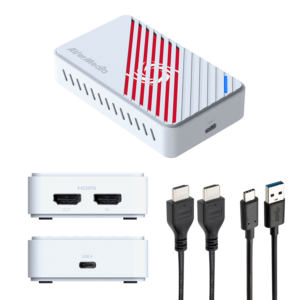
A well-engineered external capture solution delivering 4K60 HDR and high-refresh VRR support within a compact, completely silent solid-state footprint.
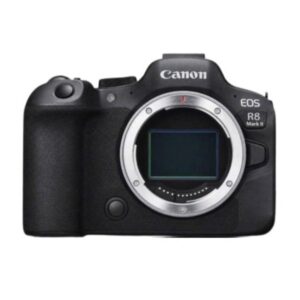
A highly portable full-frame body that successfully introduces 5-axis image stabilization and a joystick controller, countered by thermal ceilings and modest LP-E17 battery capacity.
Mizex Comparative Audit Verdict
5-Pillar Engineering Telemetry
Detailed comparison across standardized normalized 1.0 – 5.0 engineering pillars.
AVerMedia Live Gamer Ultra S: Strengths & Caveats
- Supports 4K60 HDR, 1440p, ultrawide, and up to 1080p240 VRR capture
- Native 5.1 surround sound audio ingestion capability
- Compact and silent solid-state external form factor
- Streamlined configuration through AVerMedia Streaming Center
- Limited to HDMI 2.0 bandwidth rather than HDMI 2.1
Canon EOS R8 Mark II: Strengths & Caveats
- Integrated 5-axis in-body image stabilization rated for up to 7.5 stops of shake correction
- Uncropped 4K 60p oversampled from 6K with internal 10-bit 4:2:2 Canon Log 3 recording
- Upgraded tactile ergonomics featuring an angular body redesign and dedicated multi-controller joystick
- Fast Dual Pixel CMOS AF II tracking with deep-learning subject recognition and up to 40 fps electronic burst
- Compact LP-E17 battery yields limited runtime of 220 to 340 shots and creates thermal ceilings during extended 4K 60p recording
- Single UHS-II SD card slot lacks hardware redundancy for critical professional assignments
- Micro-HDMI (Type-D) output and lack of a full mechanical shutter introduce workflow and optical trade-offs
Technical Specification Comparison
Side-by-side spec alignment. Rows highlighted with subtle shading denote differing specifications.
| Specification | AVerMedia Live Gamer Ultra S | Canon EOS R8 Mark II |
|---|---|---|
| Brand DIFF | AVerMedia | Canon |
| Model DIFF | AVerMedia Live Gamer Ultra S | EOS R8 Mark II |
| Model Number DIFF | GC553Pro | — |
| Form Factor DIFF | External | — |
| Interface DIFF | HDMI 2.0 | — |
| Max Capture Resolution DIFF | 4K at 60Hz HDR | — |
| Supported Resolutions DIFF | 4K60, 1440p, 1080p240, Ultrawide | — |
| Variable Refresh Rate (VRR) DIFF | Supported (up to 1080p240 VRR) | — |
| Audio Ingest DIFF | 5.1 Surround Sound | — |
| Companion Software DIFF | AVerMedia Streaming Center | — |
| Sensor Type DIFF | — | 24.2 MP Full-Frame CMOS (35.9 x 23.9 mm) |
| Image Processor DIFF | — | DIGIC X |
| In Body Image Stabilization (IBIS) DIFF | — | 5-axis sensor-shift (up to 7.5 stops) |
| Autofocus System DIFF | — | Dual Pixel CMOS AF II with Deep Learning Subject Tracking |
| Shutter Mechanism DIFF | — | Electronic first-curtain shutter (EFCS) and electronic shutter |
| Shutter Speed DIFF | — | 1/16,000 to 30 sec (electronic), 1/4,000 to 30 sec (EFCS) |
| Continuous Shooting Speed DIFF | — | Up to 40 fps (electronic shutter), 6 fps (EFCS) |
| Video Resolution & Framerates DIFF | — | 4K UHD up to 60p (oversampled from 6K), FHD up to 180p |
| Video Color Sampling & Profiles DIFF | — | 10-bit 4:2:2 Canon Log 3 (C-Log3), HDR PQ |
| Electronic Viewfinder (EVF) DIFF | — | 0.39-inch OLED, 2.36 million dots, 0.70x magnification, up to 120 Hz |
| Rear Display DIFF | — | 3.0-inch vari-angle touchscreen LCD, 1.62 million dots |
| Storage Media DIFF | — | 1x SD/SDHC/SDXC (UHS-II supported) |
| Connectivity DIFF | — | USB-C (USB 3.2 Gen 2), Micro-HDMI (Type-D), 3.5mm Mic, 3.5mm Headphone, 2.4 GHz Wi-Fi, Bluetooth 4.2 |
| Battery Type DIFF | — | LP-E17 Rechargeable Lithium-Ion |
| Battery Life (CIPA) DIFF | — | Approx. 220 shots (EVF), 340 shots (LCD) |
| Dimensions (W X H X D) DIFF | — | 5.17 x 3.54 x 3.14 in (131.3 x 89.9 x 79.8 mm) |
| Weight (Body Only) DIFF | — | 17.6 oz (499 g) |
| Weight (With Battery & Card) DIFF | — | 19.3 oz (546 g) |
| Chassis Construction DIFF | — | Magnesium alloy core with polycarbonate resin exterior |
Need to evaluate a different configuration?
🔍 Compare Other Hardware