Side-by-Side Comparison
ASUS TUF Gaming B850I Wi-Fi Neo vs GIGABYTE B760 DS3H WIFI6E GEN5
Standardized 5-pillar engineering audit, thermal telemetry, verified longevity metrics, and complete technical specification diff.
▲ DOCUMENTED QUIRKS
Composite Score:
4.1
/ 5.0
Resilient 10-layer Mini-ITX AM5 board featuring PCIe 5.0 graphics and storage support, balanced against high VRM temperatures under heavy load and entry-level audio.
▲ DOCUMENTED QUIRKS
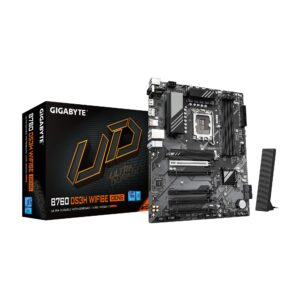
Composite Score:
4.1
/ 5.0
Mainstream B760 platform pairing PCIe 5.0 and Wi-Fi 6E with modest VRM cooling.
⚖️
Mizex Comparative Audit Verdict
Both the ASUS TUF Gaming B850I Wi-Fi Neo and GIGABYTE B760 DS3H WIFI6E GEN5 share an identical composite score of 4.1. Choice between them depends primarily on specific port requirements, physical dimensions, or pricing.
5-Pillar Engineering Telemetry
Detailed comparison across standardized normalized 1.0 – 5.0 engineering pillars.
ASUS TUF Gaming B850I Wi-Fi Neo
GIGABYTE B760 DS3H WIFI6E GEN5
Engineering & Architecture
(30%)
Tie
4.1
4.1
Build Quality & Materials
(20%)
Winner: ASUS TUF Gaming B850I Wi-Fi Neo (+0.1)
4.1
4.0
Thermal, Power & Acoustics
(20%)
Winner: GIGABYTE B760 DS3H WIFI6E GEN5 (+0.1)
3.8
3.9
Real-World Reliability
(20%)
Tie
4.3
4.3
Buyer Value & Upgrades
(10%)
Winner: GIGABYTE B760 DS3H WIFI6E GEN5 (+0.2)
4.0
4.2
ASUS TUF Gaming B850I Wi-Fi Neo: Strengths & Caveats
✔ Advantages
- Capable 8+2+1 phase 80A power stages sustain full AMD Ryzen 9 9950X multi-core workloads
- PCIe 5.0 support on both the primary x16 expansion slot and main M.2 storage slot
- Four 4-pin fan headers alongside rear Clear CMOS and BIOS FlashBack buttons on a Mini-ITX layout
- Dedicated heatsink maintains stable operating temperatures for PCIe 5.0 NVMe SSDs
✖ Documented Caveats
- Elevated power delivery temperatures under sustained multi-core heavy workloads
- Equipped with an entry-level Realtek ALC897 audio codec and modest six-port rear USB array
- Lacks tool-free M.2 retention mechanisms and quick-release PCIe latching
GIGABYTE B760 DS3H WIFI6E GEN5: Strengths & Caveats
✔ Advantages
- Native PCIe 5.0 x16 GPU interface with reinforced steel shielding and EZ-Latch release
- Quad-DIMM DDR5 memory topology accommodating up to 256 GB and 7600 MT/s XMP profiles
- High-speed rear I/O including 20 Gbps USB 3.2 Gen 2x2 Type-C and Intel Wi-Fi 6E AX210
- Hardware-level Q-Flash Plus button enables BIOS recovery without CPU, memory, or GPU
✖ Documented Caveats
- Modest hybrid VRM heatsink surface area constrains thermal headroom with sustained high-TDP K-series processors
- Wired networking restricted to 1 Gbps Gigabit Ethernet rather than standard 2.5 Gbps
- Secondary M.2 slot omits an integrated heatsink, and secondary PCIe slots run at PCIe 3.0 x1 bandwidth
Technical Specification Comparison
Side-by-side spec alignment. Rows highlighted with subtle shading denote differing specifications.
| Specification | ASUS TUF Gaming B850I Wi-Fi Neo | GIGABYTE B760 DS3H WIFI6E GEN5 |
|---|---|---|
| Brand DIFF | ASUS | GIGABYTE |
| Model DIFF | ASUS TUF Gaming B850I Wi-Fi Neo | B760 DS3H WIFI6E GEN5 |
| Form Factor DIFF | Mini-ITX (17 x 17 cm / 6.7 x 6.7 in) | — |
| Socket DIFF | AMD Socket AM5 | — |
| Chipset DIFF | AMD B850 | — |
| Supported Processors DIFF | AMD Ryzen 7000, 8000, 9000 Series | — |
| Pcb Layers DIFF | 10-layer | — |
| Power Delivery DIFF | 8+2+1 phase (80A Vishay SiC629 power stages) | — |
| Memory Slots DIFF | 2x DIMM | — |
| Memory Type DIFF | DDR5 | — |
| Max Memory Capacity DIFF | 128 GB | — |
| Max Memory Speed DIFF | DDR5-9600 (OC) | — |
| Memory Profiles DIFF | AMD EXPO, ASUS AEMP | — |
| Expansion Slots DIFF | 1x PCIe 5.0 x16 | — |
| M2 Slots DIFF | 2x M.2 (1x PCIe 5.0 x4 CPU, 1x PCIe 4.0 x4 Chipset) | — |
| Sata Ports DIFF | 2x SATA 6 Gb/s | — |
| Ethernet DIFF | 1x Realtek RTL8125 2.5 Gbps | — |
| Wireless DIFF | MediaTek MT7922 Wi-Fi 6E, Bluetooth | — |
| Audio Codec DIFF | Realtek ALC897 7.1 HD Audio | — |
| Rear Usb Ports DIFF | 1x USB 3.2 Gen 2x2 Type-C (20 Gbps), 2x USB 3.2 Gen 2 Type-A (10 Gbps), 1x USB 3.0 Type-A (5 Gbps), 2x USB 2.0 Type-A | — |
| Front Usb Headers DIFF | 1x USB 3.2 Gen 2 Type-C (10 Gbps), 1x USB 3.0 header, 1x USB 2.0 header | — |
| Video Outputs DIFF | 1x HDMI 2.1, 1x DisplayPort 1.4 | — |
| Fan Pump Headers DIFF | 4x 4-pin PWM/DC | — |
| Rgb Headers DIFF | 2x Addressable Gen 2 headers | — |
| Bios Chip DIFF | 256 Mbit (32 MB) AMI UEFI | — |
| Hardware Buttons DIFF | Clear CMOS button, BIOS FlashBack button | — |
| Form Factor DIFF | — | ATX |
| Dimensions DIFF | — | 12.0 x 9.6 in (305 x 244 mm) |
| CPU Socket DIFF | — | LGA1700 |
| Chipset DIFF | — | Intel B760 |
| Supported Processors DIFF | — | Intel 14th, 13th, and 12th Gen Core, Pentium Gold, and Celeron |
| Memory Type DIFF | — | DDR5 |
| Memory Slots DIFF | — | 4 x DIMM |
| Max Memory Capacity DIFF | — | 256 GB |
| Memory Frequency Support DIFF | — | Up to 7600 MT/s (OC) |
| PCIe Expansion Slots DIFF | — | 1 x PCIe 5.0 x16 (CPU), 4 x PCIe 3.0 x16 (running at x1 mode, Chipset) |
| M.2 Storage Interfaces DIFF | — | 2 x M.2 2280/22110 PCIe 4.0 x4 |
| SATA Ports DIFF | — | 4 x SATA 6Gb/s |
| Wireless Connectivity DIFF | — | Intel Wi-Fi 6E AX210 (2.4/5/6 GHz) + Bluetooth 5.3 |
| Ethernet Controller DIFF | — | Realtek 1GbE LAN (1 Gbps) |
| Rear USB Connectivity DIFF | — | 1 x USB 3.2 Gen 2x2 Type-C (20 Gbps), 1 x USB 3.2 Gen 2 Type-A, 4 x USB 2.0/1.1 |
| Video Outputs DIFF | — | 1 x HDMI 2.1 (4096x2160@60Hz), 1 x DisplayPort 1.2 (4096x2304@60Hz) |
| Audio Codec DIFF | — | Realtek Audio CODEC (7.1-channel HD Audio) |
| Power Connectors DIFF | — | 1 x 24-pin ATX, 1 x 8-pin ATX 12V |
| BIOS Architecture DIFF | — | 1 x 128 Mb flash, UEFI AMI BIOS, Q-Flash Plus support |
Need to evaluate a different configuration?
🔍 Compare Other Hardware