Apple Magic Keyboard with Touch ID (USB-C) Review: Biometric Desktop Security Meets USB-C vs Microsoft Surface Mouse (2nd Gen) Review: Haptic actuation eliminates switch fatigue
Standardized 5-pillar engineering audit, thermal telemetry, verified longevity metrics, and complete technical specification diff.
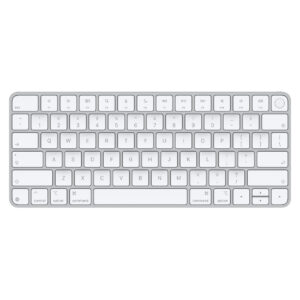
Apple Magic Keyboard with Touch ID (USB-C) Review: Biometric Desktop Security Meets USB-C
A sleek low-profile aluminum scissor keyboard pairing seamless Touch ID biometric authentication and USB-C charging with exceptional battery life, tempered by sealed non-repairable construction and single-device Bluetooth pairing.
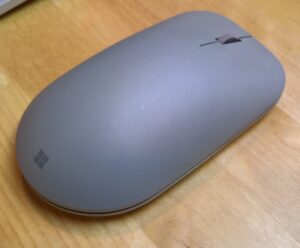
Microsoft Surface Mouse (2nd Gen) Review: Haptic actuation eliminates switch fatigue
Solid-state capacitive and haptic actuation eliminates switch fatigue, delivering a whisper-quiet, durable peripheral with Bluetooth 6.0 multi-device support.
Mizex Comparative Audit Verdict
5-Pillar Engineering Telemetry
Detailed comparison across standardized normalized 1.0 – 5.0 engineering pillars.
Apple Magic Keyboard with Touch ID (USB-C) Review: Biometric Desktop Security Meets USB-C: Strengths & Caveats
- Instantaneous Touch ID biometric authentication communicating via encrypted channel with Apple Silicon Secure Enclave.
- Updated USB-C port supporting both recharging and stable wired data operation.
- Extremely compact 0.16–0.43 in (4.1–10.9 mm) anodized aluminum chassis with rigid zero-flex construction.
- Long-lasting 2.98 Wh battery providing over a month of typical daily wireless use.
- Zero modular repairability with glued internal battery and non-replaceable scissor switches.
- Restricted to single-host Bluetooth pairing with no multi-device quick-switching button.
- Lacks key backlighting and requires an Apple silicon Mac for Touch ID functionality.
Microsoft Surface Mouse (2nd Gen) Review: Haptic actuation eliminates switch fatigue: Strengths & Caveats
- Solid-state capacitive and pressure sensors eliminate mechanical microswitch wear and double-click defects
- Internal haptic engine provides customizable tactile feedback with minimal acoustic disruption
- Bluetooth 6.0 connectivity enables stable, seamless multi-device switching
- Up to six months of operational runtime on standard AAA cells
- Relies on disposable AAA batteries instead of an integrated USB-C rechargeable cell
- Higher launch price ($79.99) compared to predecessor generations
- Haptic adjustment and Action Button remapping require the dedicated Microsoft Surface application
Technical Specification Comparison
Side-by-side spec alignment. Rows highlighted with subtle shading denote differing specifications.
| Specification | Apple Magic Keyboard with Touch ID (USB-C) Review: Biometric Desktop Security Meets USB-C | Microsoft Surface Mouse (2nd Gen) Review: Haptic actuation eliminates switch fatigue |
|---|---|---|
| Brand DIFF | Apple | Microsoft |
| Model DIFF | Magic Keyboard with Touch ID (USB-C) | Microsoft Surface Mouse (2nd Gen) |
| Form Factor DIFF | Compact 75% / Tenkeyless (TKL) | Ambidextrous |
| Switch Type DIFF | Low-profile scissor mechanism with rubber dome | — |
| Key Travel DIFF | 0.04 in (1.0 mm) | — |
| Biometrics DIFF | Capacitive Touch ID sensor with Secure Enclave hardware encryption | — |
| Wireless Connectivity DIFF | Bluetooth | — |
| Wired Interface DIFF | USB-C (charging and wired data transmission) | — |
| Battery Chemistry DIFF | Rechargeable lithium-ion polymer | — |
| Battery Capacity DIFF | 2.98 Wh | — |
| Battery Life DIFF | Approximately 1 month or more per charge | — |
| Chassis Material DIFF | Anodized aluminum top plate with composite base | — |
| Dimensions DIFF | 0.16–0.43 x 10.98 x 4.52 in (4.1–10.9 x 278.9 x 114.9 mm) | — |
| Weight DIFF | 0.54 lbs (243 g / 8.57 oz) | — |
| System Requirements DIFF | Mac with Apple silicon running macOS 11.4 or later (macOS 15.1 or later recommended) | — |
| Actuation Technology DIFF | — | Capacitive touch and pressure sensors with haptic force feedback |
| Haptic Engine DIFF | — | Integrated vibration motor in shell hump with adjustable intensity |
| Connectivity DIFF | — | Bluetooth 6.0 |
| Multi Device Pairing DIFF | — | Simultaneous multi-device connection |
| Battery Type DIFF | — | 2x AAA batteries |
| Battery Runtime DIFF | — | Up to 6 months |
| Buttons DIFF | — | Touch/click surface with customizable Action Button (default Copilot) |
| Sustainable Materials DIFF | — | 30% recycled content |
| Available Finishes DIFF | — | Black, Platinum |
| Configuration Interface DIFF | — | Microsoft Surface app |
Need to evaluate a different configuration?
🔍 Compare Other Hardware