Apple HomePod mini vs Seeed Studio reSpeaker Flex XVF3800 Linear-4 USB Mic Array
Standardized 5-pillar engineering audit, thermal telemetry, verified longevity metrics, and complete technical specification diff.
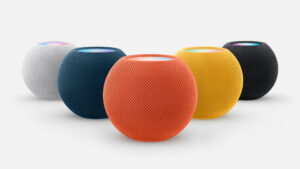
Compact computational audio powerhouse distinguished by acoustic waveguides and UWB handoff, limited strictly by ecosystem exclusivity and non-repairable architecture.
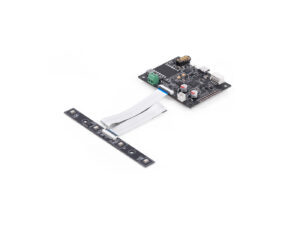
Modular far-field linear microphone array powered by an XMOS XVF3800 DSP and 10 W amplifier, pairing strong beamforming performance with notable firmware flashing and OS driver quirks.
Mizex Comparative Audit Verdict
5-Pillar Engineering Telemetry
Detailed comparison across standardized normalized 1.0 – 5.0 engineering pillars.
Apple HomePod mini: Strengths & Caveats
- Sophisticated computational audio processing and 360-degree acoustic waveguide dispersal
- Opposing force-cancelling passive radiators eliminate chassis vibration at higher sound pressure levels
- High-sensitivity 4-microphone beamforming array ensures accurate far-field voice pickup
- Integrated Apple U1 chip enables low-latency Ultra Wideband audio handoff
- Strict operational lock-in requiring an iOS or iPadOS device for setup and control
- Absence of a physical microphone privacy mute toggle switch
- Zero modular repairability with a fully sealed enclosure design
Seeed Studio reSpeaker Flex XVF3800 Linear-4 USB Mic Array: Strengths & Caveats
- Dedicated XMOS XVF3800 DSP offloads AEC, AGC, beamforming, and noise suppression in hardware
- Modular 24-pin FPC ribbon cable enables flexible satellite microphone placement in custom enclosures
- Dual USB UAC 2.0 and I2S host connectivity with onboard Seeed Studio XIAO ESP32S3 solder footprint
- Integrated 10 W at 4 Ω speaker amplifier backed by dedicated 12 V DC screw terminal power input
- Microphone sound inlets are positioned on the rear side of the PCB, requiring specific mounting orientation toward the audio source
- Windows firmware updating requires manual WinUSB driver assignment through Zadig before dfu-util functions
- I2S firmware operation requires switching to Safe Mode recovery partition to re-flash standard USB firmware
Technical Specification Comparison
Side-by-side spec alignment. Rows highlighted with subtle shading denote differing specifications.
| Specification | Apple HomePod mini | Seeed Studio reSpeaker Flex XVF3800 Linear-4 USB Mic Array |
|---|---|---|
| Brand DIFF | Apple | Seeed Studio |
| Model DIFF | Apple HomePod mini | reSpeaker Flex XVF3800 Linear-4 USB Mic Array |
| Dimensions Mm DIFF | 84.3 x 97.9 | — |
| Height In DIFF | 3.3 | — |
| Weight G DIFF | 345 | — |
| Processor DIFF | Apple S5 | — |
| Wireless Coprocessor DIFF | Apple U1 (Ultra Wideband) | — |
| Transducer Type DIFF | Full-range driver with neodymium magnet | — |
| Acoustic Architecture DIFF | Down-firing acoustic waveguide with dual force-cancelling passive radiators | — |
| Microphone Array DIFF | 4-microphone far-field array with beamforming | — |
| Chassis Material DIFF | Seamless acoustic mesh fabric | — |
| Input Interface DIFF | Backlit capacitive touch surface | — |
| Ingress Protection DIFF | Humidity-resistant | — |
| Model Numbers DIFF | MY5G2LL/A, MJ2C3LL/A | — |
| Dsp Processor DIFF | — | XMOS XVF3800 (firmware v3.2.1) |
| Audio Codec DIFF | — | Texas Instruments TLV320AIC3104 |
| Microphone Count DIFF | — | 4 |
| Microphone Type DIFF | — | PDM MEMS |
| Microphone Layout DIFF | — | Linear array (1.30 in / 33 mm inter-mic spacing) |
| Polar Pattern DIFF | — | Directional front-facing (~180° pickup with rear suppression) |
| Voice Pickup Range DIFF | — | Up to 16.4 ft (5.0 m) far-field |
| Audio Processing Algorithms DIFF | — | Acoustic Echo Cancellation (AEC), Automatic Gain Control (AGC), Direction of Arrival (DoA), Multi-channel Beamforming, Voice Activity Detection (VAD), Noise Suppression, De-reverberation |
| Interconnect DIFF | — | 24-pin 0.5 mm pitch FPC ribbon cable (7.87 in / 20 cm included) |
| Host Interfaces DIFF | — | USB Type-C (UAC 2.0), PH2.0 locking connector (UAC 2.0), I2S |
| Supported Sample Rates DIFF | — | 16 kHz, 48 kHz |
| Audio Bit Depth DIFF | — | 16-bit, 32-bit |
| Audio Channels DIFF | — | 2-channel stereo, 6-channel USB output |
| Analog Audio Outputs DIFF | — | 3.5 mm AUX headphone jack, 2-pin JST speaker connector |
| Speaker Amplifier Power DIFF | — | 10 W into 4 Ω |
| External Power Input DIFF | — | 12 V DC terminal block |
| Microcontroller Expansion DIFF | — | Onboard footprint for Seeed Studio XIAO ESP32S3 (I2S, I2C, RST, GPIO) |
| Mounting Holes DIFF | — | 2 × M3 (linear mic array board), 4 × M3 (core processing board) |
| Onboard Controls DIFF | — | Hardware Reset (RST) button, SafeMode / Boot button |
| Onboard Indicators DIFF | — | Green power LED |
| Usb Identifiers DIFF | — | Vendor ID: 0x2886, Product ID: 0x001A |
Need to evaluate a different configuration?
🔍 Compare Other Hardware