Side-by-Side Comparison
AMD Instinct MI455X vs MSI GeForce RTX 5060 Ti 8G Shadow 2X OC Plus
Standardized 5-pillar engineering audit, thermal telemetry, verified longevity metrics, and complete technical specification diff.
▲ DOCUMENTED QUIRKS
Composite Score:
3.8
/ 5.0
A high-density CDNA5 accelerator packing 432 GB HBM4, currently constrained by advanced CoWoS-L packaging hurdles and pre-release validation status.
★ Recommended Winner
▲ DOCUMENTED QUIRKS
Composite Score:
4.2
/ 5.0
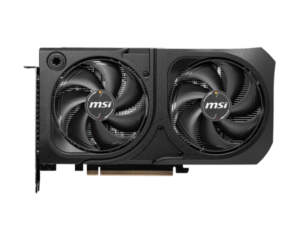
Efficient dual-fan Blackwell GPU pairing solid 180W thermals and standard 8-pin power with an 8GB memory limitation.
⚖️
Mizex Comparative Audit Verdict
The MSI GeForce RTX 5060 Ti 8G Shadow 2X OC Plus achieves the higher Mizex Composite Score (4.2 vs 3.8), leading across 4 of 5 engineering pillars. With an advantage in Build Quality & Materials, Thermal, Power & Acoustics, Real-World Reliability, Buyer Value & Upgrades, it represents the stronger technical recommendation.
5-Pillar Engineering Telemetry
Detailed comparison across standardized normalized 1.0 – 5.0 engineering pillars.
AMD Instinct MI455X
MSI GeForce RTX 5060 Ti 8G Shadow 2X OC Plus
Engineering & Architecture
(30%)
Winner: AMD Instinct MI455X (+0.4)
4.6
4.2
Build Quality & Materials
(20%)
Winner: MSI GeForce RTX 5060 Ti 8G Shadow 2X OC Plus (+0.4)
3.7
4.1
Thermal, Power & Acoustics
(20%)
Winner: MSI GeForce RTX 5060 Ti 8G Shadow 2X OC Plus (+0.7)
3.5
4.2
Real-World Reliability
(20%)
Winner: MSI GeForce RTX 5060 Ti 8G Shadow 2X OC Plus (+1.1)
3.4
4.5
Buyer Value & Upgrades
(10%)
Winner: MSI GeForce RTX 5060 Ti 8G Shadow 2X OC Plus (+0.6)
3.3
3.9
AMD Instinct MI455X: Strengths & Caveats
✔ Advantages
- Industry-leading 432 GB HBM4 memory capacity across 12 stacks providing up to 23.3 TB/s bandwidth
- CDNA5 architecture delivers 40.26 PFLOPS peak compute for OCP MXFP4 workloads
- Native support for 72-GPU single-hop scale-up fabrics via UALink over Ethernet
✖ Documented Caveats
- Mass production and broad enterprise deployment delayed to 2027 due to CoWoS-L packaging challenges
- Unresolved memory bandwidth metric disparity between formal datasheets (23.3 TB/s) and Helios platform documentation (19.6 TB/s)
- High estimated bill-of-materials manufacturing cost approximating $20,700 per accelerator
MSI GeForce RTX 5060 Ti 8G Shadow 2X OC Plus: Strengths & Caveats
✔ Advantages
- Standard single 8-pin PCIe connector avoids 12V-2x6/12VHPWR adapter wear and cable bending risks.
- Compact 8.90-inch (226 mm) dual-slot chassis fits virtually all small-form-factor and mini-ITX cases.
- Modern display output array supporting triple DisplayPort 2.1b and HDMI 2.1b up to 8K resolution.
- Zero Frozr acoustic profile ensures completely silent operation during idle and low-load desktop tasks.
✖ Documented Caveats
- 8GB GDDR7 frame buffer creates texture caching constraints in modern ray-traced AAA titles.
- Electrical PCIe 5.0 x8 bus interface may introduce slight throughput penalties on older PCIe Gen 3 host systems.
Technical Specification Comparison
Side-by-side spec alignment. Rows highlighted with subtle shading denote differing specifications.
| Specification | AMD Instinct MI455X | MSI GeForce RTX 5060 Ti 8G Shadow 2X OC Plus |
|---|---|---|
| Brand DIFF | AMD | MSI |
| Model DIFF | AMD Instinct MI455X | GeForce RTX 5060 Ti 8G Shadow 2X OC Plus |
| Architecture DIFF | CDNA5 | — |
| Packaging Technology DIFF | TSMC CoWoS-L | — |
| Accelerator Complex Dies DIFF | 8 XCDs | — |
| Work Group Processors DIFF | 256 WGPs | — |
| Max Engine Clock DIFF | 2.4 GHz | — |
| Memory Capacity DIFF | 432 GB | — |
| Memory Type DIFF | HBM4 | — |
| Memory Stacks DIFF | 12 | — |
| Memory Bus Width DIFF | 2048-bit per stack (192 channels total) | 128-bit |
| Memory Bandwidth DIFF | 23.3 TB/s (19.6 TB/s in Helios documentation) | — |
| Peak MXFP4 Compute DIFF | 40.26 PFLOPS | — |
| Peak FP32 / FP16 Compute DIFF | 315 TFLOPS | — |
| Scale Up Interconnect DIFF | UALink over Ethernet (UALoE) | — |
| GPU Architecture DIFF | — | NVIDIA Blackwell (GB206) |
| CUDA Cores DIFF | — | 4,608 Units |
| Boost Clock DIFF | — | 2,602 MHz (2,617 MHz Extreme via MSI Center) |
| Memory Configuration DIFF | — | 8 GB GDDR7 |
| Memory Bandwidth / Speed DIFF | — | 28 Gbps |
| Bus Interface DIFF | — | PCIe 5.0 x16 (Electrical x8) |
| Display Outputs DIFF | — | 3x DisplayPort 2.1b, 1x HDMI 2.1b |
| Maximum Digital Resolution DIFF | — | 7680 x 4320 (8K) |
| Power Consumption (TGP) DIFF | — | 180 W |
| Recommended System Power DIFF | — | 600 W |
| Power Connector DIFF | — | 1x 8-pin PCIe |
| Form Factor DIFF | — | Dual-Slot |
| Dimensions DIFF | — | 8.90 x 4.96 x 1.61 in (226 x 126 x 41 mm) |
| Weight DIFF | — | 1.22 lbs (553 g) |
| Cooling Solution DIFF | — | MSI Shadow 2X Dual STORMFORCE Fans with Zero Frozr |
| Power Stages DIFF | — | DrMOS Integrated Power Delivery |
Need to evaluate a different configuration?
🔍 Compare Other Hardware