
- Four drive bays with RAID 5 and TRAID support for single-drive fault tolerance and flexible expansion
- Supports Btrfs, Snapshot, and TFSS for structured home backups and multimedia storage
- Receives TOS 7 ARM operating system support alongside original TOS 5.1 firmware
- Single 1GbE port caps theoretical single-client throughput at 125 MB/s with no 2.5GbE option
- Fixed 2 GB non-upgradable RAM and ARM platform lack NVMe support and headroom for containers, VMs, or direct video editing
- TOS 7 ARM omits Surveillance Manager, iSCSI Manager, and Portainer, and clears system settings when migrating from TOS 5.1.73 or later
Overview
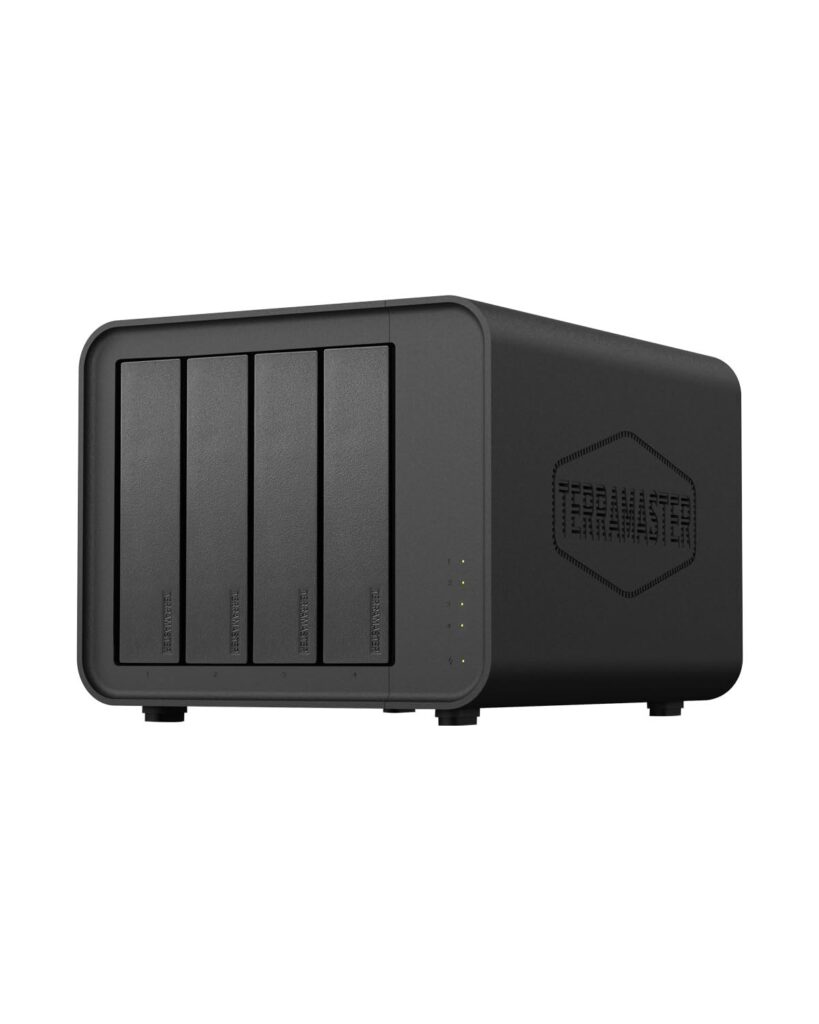
Four drive bays and Btrfs snapshots anchor a desktop NAS built for straightforward home storage rather than heavy compute. Inside sits a quad-core Realtek ARM processor paired with 2 GB of fixed, non-upgradable memory and a single 1GbE port that caps single-client transfers at a theoretical 125 MB/s. With no NVMe slots or x86 headroom, it isn’t meant for running containers, spinning up virtual machines, or editing video directly off the array—it operates strictly as a dedicated backup and home media repository.
Where the platform earns its keep is in data protection and storage flexibility. All four bays support RAID 5 alongside TerraMaster’s TRAID mode for single-drive fault tolerance and simpler capacity expansion, backed by the Btrfs file system, Snapshot support, and TFSS. On the software side, units running TOS 5.1 remain eligible for the TOS 7 ARM operating system update as of August 2026, extending the system’s active software lifecycle well past legacy firmware.
That TOS 7 ARM upgrade path does bring a couple of practical caveats for administrators. Moving to TOS 7 ARM from TOS 5.1.73 or later wipes existing system settings, so you’ll need to document accounts, shared folders, permissions, network configurations, and scheduled jobs before migrating. The ARM build of TOS 7 also trims the App Center roster compared to x86 models, omitting Surveillance Manager, iSCSI Manager, Portainer, and several other utilities—a clear reminder to treat this box solely as a reliable network file and backup target.
Technical Specifications
| Brand | TerraMaster |
| Model | F4-212 |
| Form Factor | 4-bay desktop NAS |
| Drive Bays | 4 |
| Processor | Quad-core Realtek ARM |
| Memory | 2 GB (non-upgradable) |
| Networking | 1x 1GbE (125 MB/s theoretical max single-client) |
| RAID Support | RAID 5, TRAID |
| File System | Btrfs |
| Operating System | TOS 5.1 (upgradable to TOS 7 ARM) |
| Backup & Data Features | Snapshot, TFSS |
Primary Sources & Audited Citations
Recommended Alternatives in Network Attached Storage (NAS)

At a Glance
How reliable is the TerraMaster F4-212 according to Mizex audits?
Buy this if you want simple four-bay RAID 5 or TRAID storage for home backups and media; look at an x86 NAS with upgradable memory and NVMe support if you run containers, virtual machines, or edit video directly off the array.
What are the known quirks or drawbacks of the TerraMaster F4-212?
Our reliability audit identified the following documented caveats:
- Single 1GbE port caps theoretical single-client throughput at 125 MB/s with no 2.5GbE option
- Fixed 2 GB non-upgradable RAM and ARM platform lack NVMe support and headroom for containers, VMs, or direct video editing
- TOS 7 ARM omits Surveillance Manager, iSCSI Manager, and Portainer, and clears system settings when migrating from TOS 5.1.73 or later
What are the key engineering highlights of the TerraMaster F4-212?
The top strengths recorded in our evaluation include:
- Four drive bays with RAID 5 and TRAID support for single-drive fault tolerance and flexible expansion
- Supports Btrfs, Snapshot, and TFSS for structured home backups and multimedia storage
- Receives TOS 7 ARM operating system support alongside original TOS 5.1 firmware