
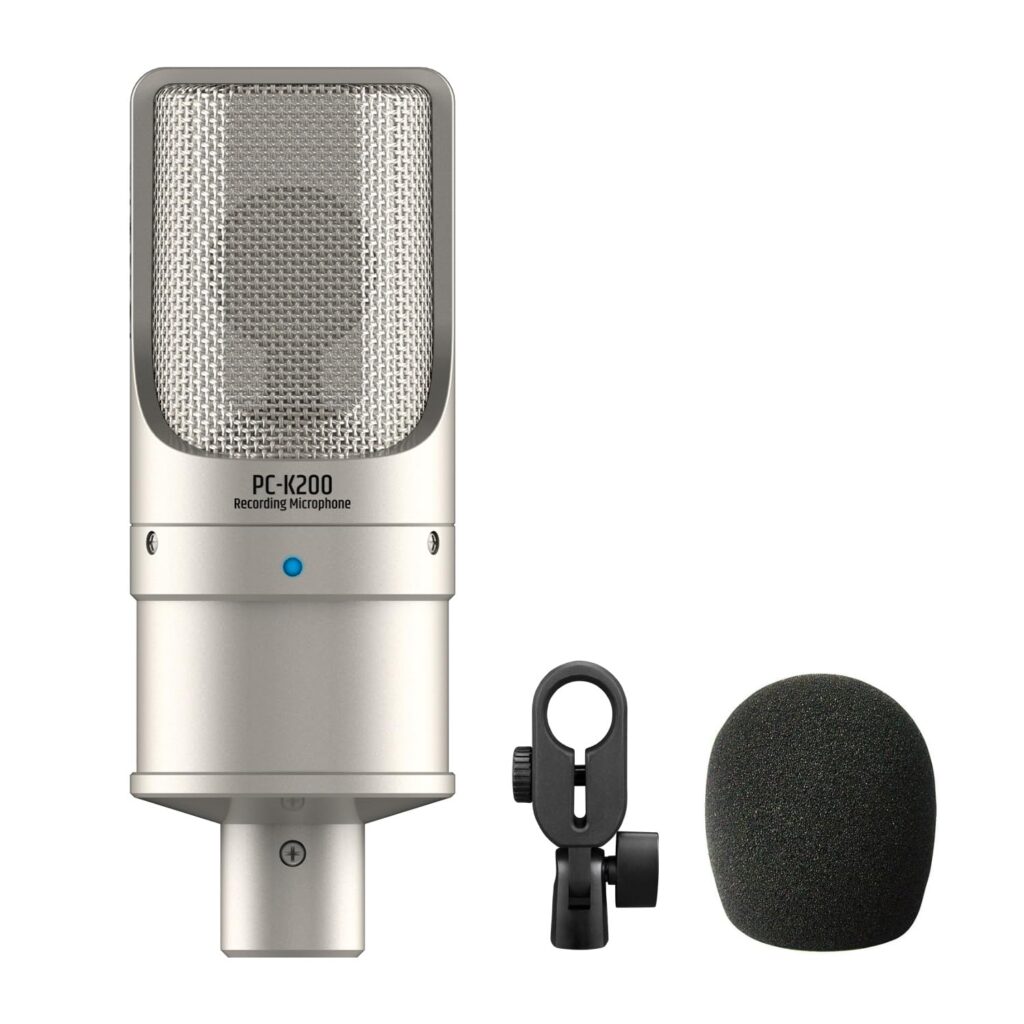
- Durable all-metal chassis with integrated blue LED phantom power indicator
- High sound pressure handling up to 130 dB prevents clipping on loud transients
- Wide 20 Hz to 20 kHz frequency response for articulate vocal capture
- Standard balanced 3-pin XLR connectivity for integration with professional audio gear
- Elevated equivalent self-noise floor (≤28 dBA) can introduce audible hiss under high preamp gain
- Strictly requires an external +48V phantom power source and cannot run on unpowered 3.5mm consumer mic ports
- High sensitivity picks up untreated room reflections and background ambient noise
Overview
Capturing clean vocal tracks and acoustic instruments on a modest desktop setup often comes down to finding a transducer that balances physical durability with clean dynamic headroom. Built around a 16 mm cardioid condenser capsule housed in a heavy all-metal body, this studio microphone targets entry-level voiceover artists, podcasters, and home recordists who operate dedicated audio interfaces. Its core architecture relies on balanced analog transmission over a standard 3-pin XLR connection, requiring a true +48V phantom power feed to energize the internal impedance converter and illuminate its blue chassis LED indicator. Because there are no onboard digital converters, USB ports, or complex software layers, the hardware focuses entirely on raw analog signal integrity with a 200-ohm output impedance designed to drive standard 1000-ohm mixer and preamp loads.
Physical durability is a standout aspect of the cylindrical chassis, which measures 2.13 inches (54 mm) in diameter by 5.83 inches (148 mm) in length and weighs 12.38 oz (351 g). The dense metal shell and wire-mesh basket provide substantial resistance against accidental desk knocks and structural resonance, while passive thermal dissipation across the exterior housing ensures the internal FET and bias circuits operate at room temperature without drifting. On the acoustic front, the capsule handles sound pressure levels up to 130 dB at 1 kHz with total harmonic distortion capped at 0.5%, easily absorbing loud vocal bursts and percussion without clipping. Its frequency response spans 20 Hz to 20 kHz, delivering clear treble presence and articulate mid-range definition across close-mic speech.
In day-to-day studio workflows, operating conditions heavily influence acoustic results. With an equivalent self-noise floor rated at or below 28 dBA, the capsule introduces noticeable background hiss when paired with budget audio interfaces pushed to higher gain ranges in whisper-quiet booths. The cardioid pickup pattern effectively rejects audio coming directly from the rear of the mic, yet its sensitivity means untreated rooms and reflective walls will readily bleed into recordings without acoustic treatment or close pop filtering. Connecting the unit to unpowered 3.5 mm computer microphone jacks yields virtually no usable signal, underscoring that the hardware is strictly intended to live on balanced XLR studio interfaces where stable phantom power and proper gain staging can be maintained.
Technical Specifications
| Brand | TAKSTAR |
| Model | PC-K200 II |
| Capsule Type | Ø16 mm (0.63 in) condenser capsule |
| Polar Pattern | Cardioid |
| Frequency Response | 20 Hz – 20 kHz |
| Sensitivity | -33 dB ± 3 dB (0 dB = 1V/Pa at 1 kHz) |
| Equivalent Noise Level | ≤28 dBA (IEC 581-5) |
| Maximum SPL | 130 dB (THD ≤ 0.5% at 1 kHz) |
| Output Impedance | 200 Ω ± 30% (at 1 kHz) |
| Load Impedance | ≥1000 Ω |
| Power Requirement | +48V phantom power |
| Connector Type | 3-pin XLR (balanced) |
| Chassis Material | All-metal construction |
| Status Indicator | Blue LED phantom power indicator |
| Dimensions | Ø2.13 x 5.83 in (Ø54 x 148 mm) |
| Weight | 12.38 oz (351 g) |
Primary Sources & Audited Citations
Recommended Alternatives in Audio & Acoustics


At a Glance
How reliable is the TAKSTAR PC-K200 II Review: High-SPL Capture on Budget XLR according to Mizex audits?
A rugged, budget-friendly entry into XLR condenser recording, best suited for vocalists and streamers with treated spaces and dedicated +48V phantom power interfaces who can manage its elevated self-noise floor.
What are the known quirks or drawbacks of the TAKSTAR PC-K200 II Review: High-SPL Capture on Budget XLR?
Our reliability audit identified the following documented caveats:
- Elevated equivalent self-noise floor (≤28 dBA) can introduce audible hiss under high preamp gain
- Strictly requires an external +48V phantom power source and cannot run on unpowered 3.5mm consumer mic ports
- High sensitivity picks up untreated room reflections and background ambient noise
What are the key engineering highlights of the TAKSTAR PC-K200 II Review: High-SPL Capture on Budget XLR?
The top strengths recorded in our evaluation include:
- Durable all-metal chassis with integrated blue LED phantom power indicator
- High sound pressure handling up to 130 dB prevents clipping on loud transients
- Wide 20 Hz to 20 kHz frequency response for articulate vocal capture
- Standard balanced 3-pin XLR connectivity for integration with professional audio gear