
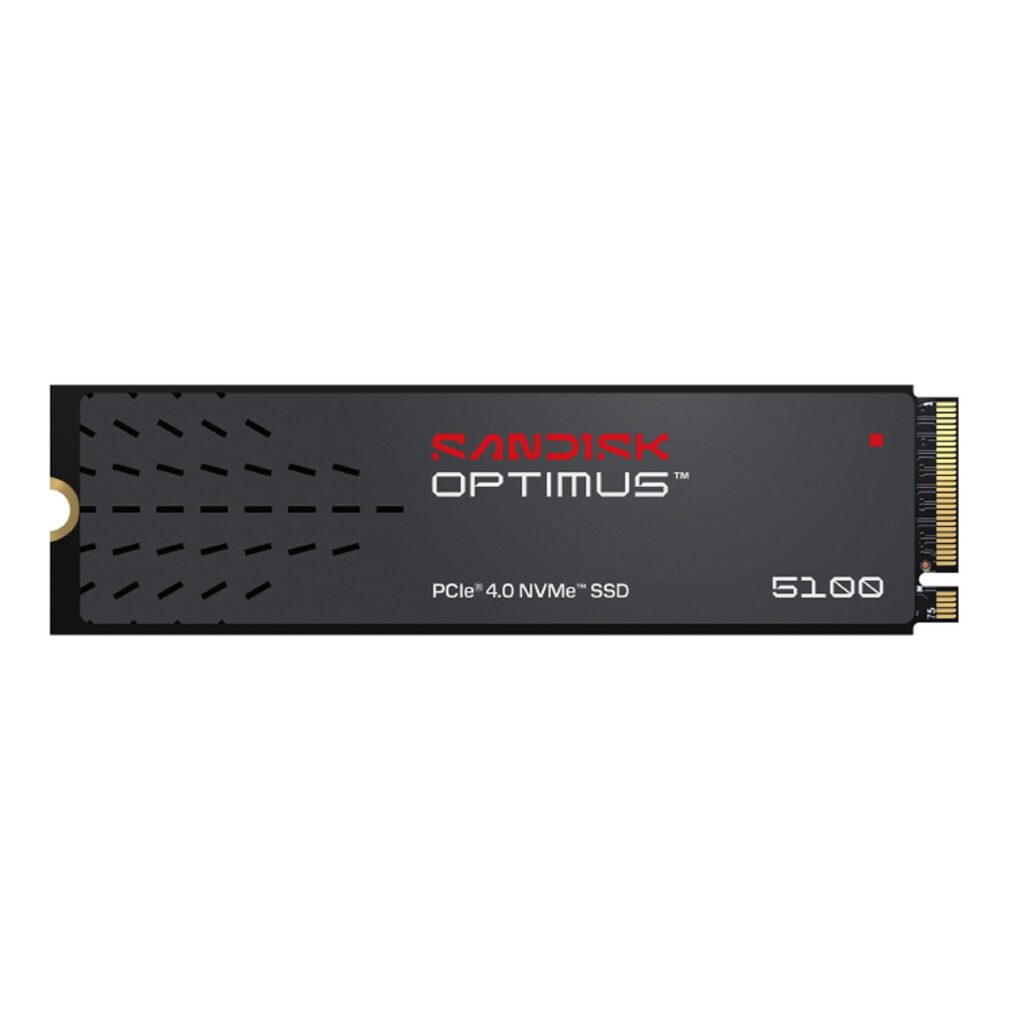
- Single-sided M.2 2280 PCB avoids physical clearance issues in thin laptops, mini PCs, and slim external enclosures.
- Two-chip layout without onboard DRAM keeps all active components flush on the top face for direct contact with heat spreaders or motherboard heatsinks.
- Host Memory Buffer (HMB) and SanDisk nCache 4.0 hybrid SLC caching deliver responsive everyday OS, app, and burst file-copy performance.
- Includes downloadable SanDisk SSD Dashboard and Acronis True Image Disk Migration utilities.
- BiCS8 3D QLC NAND yields slower native steady-state write speeds and a lower endurance ceiling than TLC drives once the SLC cache is exhausted.
- DRAMless design relies on Host Memory Buffer (HMB) borrowed from system memory rather than dedicated onboard DRAM.
- Extended continuous write workloads in unventilated enclosures still require basic passive cooling.
Overview
Compact laptops and slim mini PCs rarely leave room for bulky double-sided storage, making this single-sided M.2 2280 stick an easy mechanical fit almost anywhere. It carries over the proven hardware platform of the WD Blue SN5100 under SanDisk’s updated Optimus branding, pairing a Gen5 4-channel controller with a single BiCS8 3D QLC NAND package on a clean two-chip black PCB. Leaving off an onboard DRAM chip keeps the underside completely flat and puts both active components flush on the top face, letting laptop heat spreaders or motherboard heatsinks sit evenly across the drive.
Everyday OS responsiveness, app launches, and typical burst file copies lean heavily on Host Memory Buffer support and SanDisk’s nCache 4.0 hybrid SLC cache. Once large continuous transfers exhaust that cache, though, the underlying CMOS Bonded Array QLC flash falls back to lower native steady-state write speeds and carries a tighter endurance ceiling than comparable TLC drives. Thermal behavior follows that same workload split: light desktop tasks run smoothly, while prolonged sustained writes inside unventilated USB caddies or cramped chassis still benefit from basic passive cooling.
SanDisk rounds out the package with its downloadable SSD Dashboard for drive health monitoring and firmware management, alongside Acronis True Image Disk Migration for straightforward OS cloning. For general-purpose upgrades, secondary game libraries, and thin notebooks where physical clearance matters more than marathon scratch-disk writes, this layout makes practical sense.
Technical Specifications
| Model | SanDisk Optimus 5100 500GB NVMe SSD |
| Capacity | 500GB |
| Form Factor | M.2 2280 (Single-Sided) |
| Interface | PCIe 4.0 x4, NVMe 2.0 |
| Controller | SanDisk Gen5 4-channel DRAMless NVMe controller |
| NAND Type | SanDisk 8th-generation BiCS8 3D QLC NAND with CMOS Bonded Array (CBA) |
| DRAM Cache | DRAMless (Host Memory Buffer / HMB) |
| SLC Cache | SanDisk nCache 4.0 (Hybrid SLC) |
| PCB Layout | Single-sided black PCB with 2-chip layout (controller and single NAND package) |
| Bundled Software | SanDisk SSD Dashboard, Acronis True Image Disk Migration |
| Platform Lineage | Rebranded WD Blue SN5100 |
Primary Sources & Audited Citations
- SanDisk Simplifies Client SSD Lineup with SANDISK Optimus Branding - StorageReview.com
- SanDisk terminates WD brands and introduces Optimus SSD
- Sandisk WD Blue SN5100 2TB PCIe Gen4 NVMe SSD Review - ServeTheHome
- SanDisk WD Blue SN5100 Gen4 QLC DRAMless SSD Review - An Ideal Notebook Consideration | The SSD Review
Recommended Alternatives in Storage (SSDs & HDDs)
At a Glance
How reliable is the SanDisk Optimus 5100 500GB NVMe SSD according to Mizex audits?
Buy this if you want a slim, easy-to-fit 500GB boot drive for a thin laptop or everyday PC; look at a TLC-based SSD with onboard DRAM if your workflow hammers storage with large continuous writes.
What are the known quirks or drawbacks of the SanDisk Optimus 5100 500GB NVMe SSD?
Our reliability audit identified the following documented caveats:
- BiCS8 3D QLC NAND yields slower native steady-state write speeds and a lower endurance ceiling than TLC drives once the SLC cache is exhausted.
- DRAMless design relies on Host Memory Buffer (HMB) borrowed from system memory rather than dedicated onboard DRAM.
- Extended continuous write workloads in unventilated enclosures still require basic passive cooling.
What are the key engineering highlights of the SanDisk Optimus 5100 500GB NVMe SSD?
The top strengths recorded in our evaluation include:
- Single-sided M.2 2280 PCB avoids physical clearance issues in thin laptops, mini PCs, and slim external enclosures.
- Two-chip layout without onboard DRAM keeps all active components flush on the top face for direct contact with heat spreaders or motherboard heatsinks.
- Host Memory Buffer (HMB) and SanDisk nCache 4.0 hybrid SLC caching deliver responsive everyday OS, app, and burst file-copy performance.
- Includes downloadable SanDisk SSD Dashboard and Acronis True Image Disk Migration utilities.