
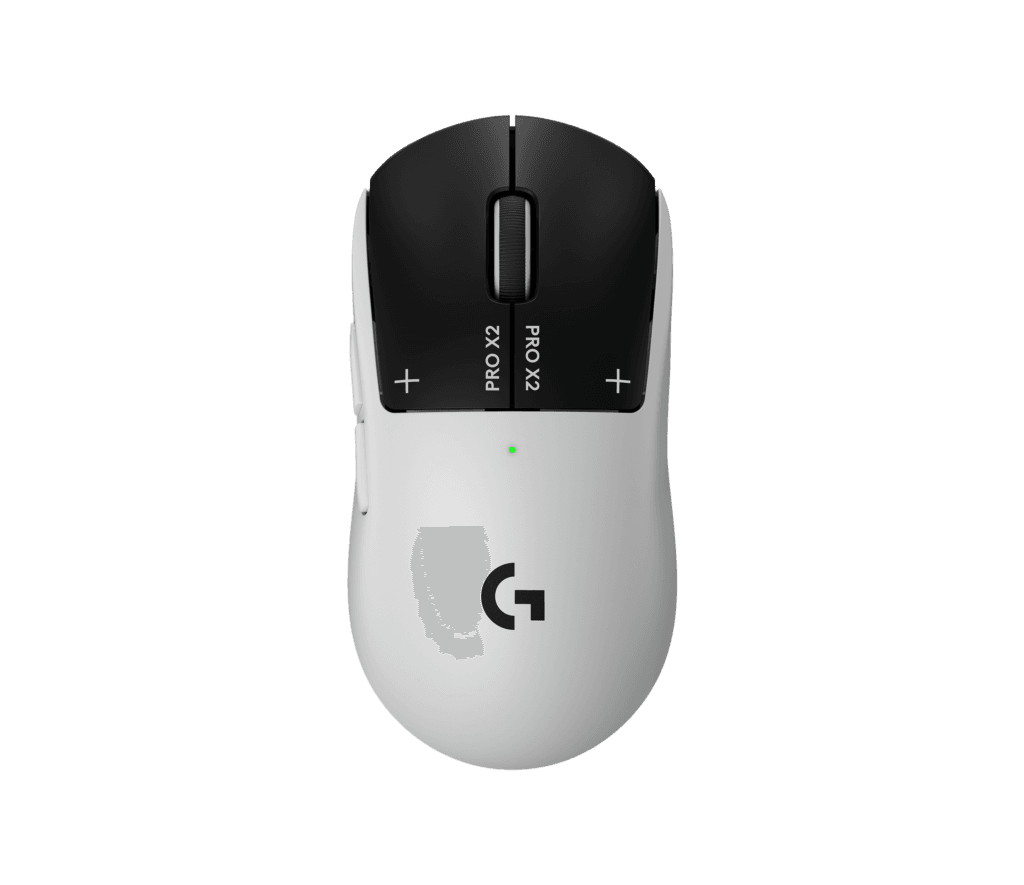
- Haptic Inductive Trigger System (HITS) enables customizable actuation, reset points, and click feel while cutting click latency by up to 30 ms
- NxLOGI chipset reduces power draw by 50% over the PRO X2 SUPERSTRIKE for 135+ hours of battery life
- Native 8,000 Hz polling rate supported over both LIGHTSPEED 2.4GHz wireless and wired USB-C
- Balanced 2.08 oz (59 g) chassis with center-redistributed mass and upgraded 48,000 DPI / 930 IPS HERO 2 optical sensor
- Incremental generational improvements offer limited practical benefit for casual gamers over the G Pro X2 Superstrike
- POWERPLAY wireless charging capability requires purchasing a separate accessory
Overview
Replacing traditional mechanical microswitches with a Haptic Inductive Trigger System marks a deliberate shift in how competitive mice handle primary clicks. By using inductive sensing paired with haptic feedback instead of physical leaf contacts, the mouse allows players to tune actuation thresholds, reset points, and tactile click feel while trimming click latency by up to 30 ms. Paired with the upgraded HERO 2 optical sensor—rated for 48,000 DPI, 930 IPS tracking speed, and 90G acceleration—this input architecture targets esports scenarios where millisecond responsiveness and consistent rapid-fire resets matter most.
Beneath the shell, the NxLOGI chipset cuts power consumption by 50% compared to the PRO X2 SUPERSTRIKE, stretching endurance to 135+ hours per charge even while supporting 8,000 Hz polling over both LIGHTSPEED 2.4GHz wireless and wired USB-C connections. That low-power silicon keeps internal heat negligible during marathon sessions and supports flexible top-ups via USB-C or a separately sold POWERPLAY wireless charging mat. Because primary clicks rely on customizable haptic triggers rather than conventional snap-action switches, acoustic behavior can be tailored toward cleaner, more controlled feedback without mechanical leaf ping.
At 2.08 oz (59 g) with center-redistributed internal mass and PTFE skates, the Midnight Black and Pink shells prioritize neutral balance over extreme skeletal cutouts. For competitive players chasing maximum polling headroom and tunable trigger physics, the platform delivers meaningful refinements, though casual users or existing PRO X2 SUPERSTRIKE owners will find the day-to-day ergonomic leap incremental.
Technical Specifications
| Model | Logitech G Pro X3 Superstrike |
| Sensor | HERO 2 Optical |
| Max Resolution | 48,000 DPI |
| Max Tracking Speed | 930 IPS |
| Max Acceleration | 90G |
| Chipset | NxLOGI |
| Switch Architecture | Haptic Inductive Trigger System (HITS) |
| Max Polling Rate | 8,000 Hz (wired USB-C and LIGHTSPEED wireless) |
| Connectivity | LIGHTSPEED 2.4GHz Wireless, Wired USB-C |
| Battery Life | 135+ hours |
| Charging | USB-C, POWERPLAY wireless charging compatible (mat sold separately) |
| Weight | 2.08 oz (59 g) |
| Skates | PTFE |
| Color Options | Midnight Black, Pink |
Primary Sources & Audited Citations
Recommended Alternatives in Keyboards & Mice
At a Glance
How reliable is the Logitech G Pro X3 Superstrike according to Mizex audits?
An ideal choice for competitive FPS players seeking tunable inductive trigger response, 8,000 Hz wireless polling, and 135+ hour endurance, though casual gamers will see limited gains over its predecessor.
What are the known quirks or drawbacks of the Logitech G Pro X3 Superstrike?
Our reliability audit identified the following documented caveats:
- Incremental generational improvements offer limited practical benefit for casual gamers over the G Pro X2 Superstrike
- POWERPLAY wireless charging capability requires purchasing a separate accessory
What are the key engineering highlights of the Logitech G Pro X3 Superstrike?
The top strengths recorded in our evaluation include:
- Haptic Inductive Trigger System (HITS) enables customizable actuation, reset points, and click feel while cutting click latency by up to 30 ms
- NxLOGI chipset reduces power draw by 50% over the PRO X2 SUPERSTRIKE for 135+ hours of battery life
- Native 8,000 Hz polling rate supported over both LIGHTSPEED 2.4GHz wireless and wired USB-C
- Balanced 2.08 oz (59 g) chassis with center-redistributed mass and upgraded 48,000 DPI / 930 IPS HERO 2 optical sensor