
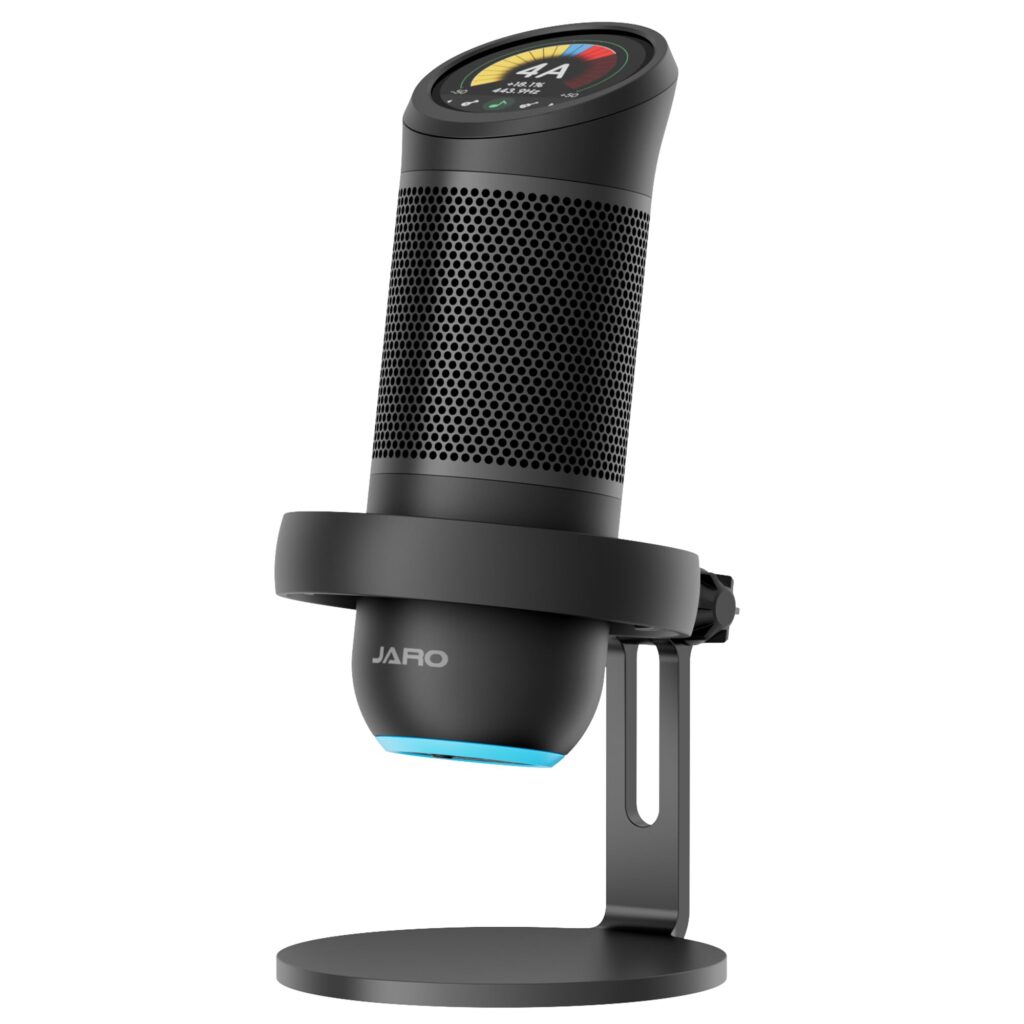
- Integrated capacitive touchscreen enables direct on-device management of input gain, monitoring, and DSP audio filters without host software
- Dedicated Studio Mode cuts power to the touchscreen and processor core to eliminate potential electrical interference during sensitive recordings
- High-resolution 24-bit/192 kHz recording pipeline anchored by an on-board 0.63 in (16 mm) multi-pattern condenser capsule
- Comprehensive out-of-the-box bundle featuring an external shock mount, detachable desktop base, and integrated pop filter
- Entering Studio Mode shuts down the onboard touchscreen and processor, preventing direct on-device parameter monitoring and adjustments during quiet takes
- Restricted to digital USB-C connectivity, lacking a native balanced analog XLR interface for standard mixing consoles or audio interfaces
Overview
Integrating an interactive touch interface directly onto a studio condenser chassis fundamentally reshapes how creators manage their recording chain. By embedding a capacitive touchscreen, the design brings input gain, zero-latency headphone monitoring, and on-chip digital signal processing filters right to the user’s fingertips without requiring open background applications. Real-time instrument pitch detection for string instruments operates entirely on the microphone itself, significantly simplifying mobile recording setups and streaming environments where host system resources are prioritized for games or rendering engines.
At the acoustic core, a 0.63 in (16 mm) condenser capsule captures 24-bit/192 kHz multi-pattern audio, providing clean vocal rendition and versatile frequency response across speech and instrument tracking. To address electrical interference inherent in complex digital microcontrollers and touchscreen displays, the architecture incorporates a dedicated low-noise Studio Mode. When engaged, this mode cuts power to the screen and secondary processing stages, isolating the analog capture stage to prevent electromagnetic hum during high-gain acoustic recording.
Physical handling and mounting isolation are addressed out of the box with an included external shock mount, a detachable desktop base, and a tailored pop filter that minimizes plosives. While full parameter fine-tuning is supported through JARO Studio across Windows and macOS, the hardware remains completely functional without auxiliary utilities. Passive thermal dissipation across the chassis ensures consistent digital signal conversion throughout extended sessions without requiring active cooling fans.
Technical Specifications
| Brand | JARO |
| Model | Origin M1 |
| Transducer Type | Condenser |
| Capsule Diameter | 0.63 in (16 mm) |
| Sampling Rate | 192 kHz |
| Bit Depth | 24-bit |
| Pickup Pattern | Multi-pattern |
| Interface | USB-C |
| Headphone Monitoring | 1/8 in (3.5 mm) zero-latency output |
| Display | On-board capacitive touchscreen |
| On Chip Audio Filters | Flat, Low-Cut, High-Cut, Band-Pass |
| Integrated Tuner | Real-time pitch detection (guitar, bass, ukulele, violin) |
| Operating Modes | Standard Mode, Studio Mode (powers down screen and processor for low-noise tracking) |
| Lighting | Customizable RGB |
| Included Accessories | Detachable desktop base, shock mount, pop filter |
| Os Compatibility | Windows, macOS |
| Companion Software | JARO Studio |
Primary Sources & Audited Citations
Recommended Alternatives in Audio & Acoustics
At a Glance
How reliable is the JARO Origin M1 according to Mizex audits?
Ideal for solo creators and multi-instrumentalists who need driver-free tone shaping and pitch tuning directly on the microphone without sacrificing acoustic cleanliness during recording sessions.
What are the known quirks or drawbacks of the JARO Origin M1?
Our reliability audit identified the following documented caveats:
- Entering Studio Mode shuts down the onboard touchscreen and processor, preventing direct on-device parameter monitoring and adjustments during quiet takes
- Restricted to digital USB-C connectivity, lacking a native balanced analog XLR interface for standard mixing consoles or audio interfaces
What are the key engineering highlights of the JARO Origin M1?
The top strengths recorded in our evaluation include:
- Integrated capacitive touchscreen enables direct on-device management of input gain, monitoring, and DSP audio filters without host software
- Dedicated Studio Mode cuts power to the touchscreen and processor core to eliminate potential electrical interference during sensitive recordings
- High-resolution 24-bit/192 kHz recording pipeline anchored by an on-board 0.63 in (16 mm) multi-pattern condenser capsule
- Comprehensive out-of-the-box bundle featuring an external shock mount, detachable desktop base, and integrated pop filter