
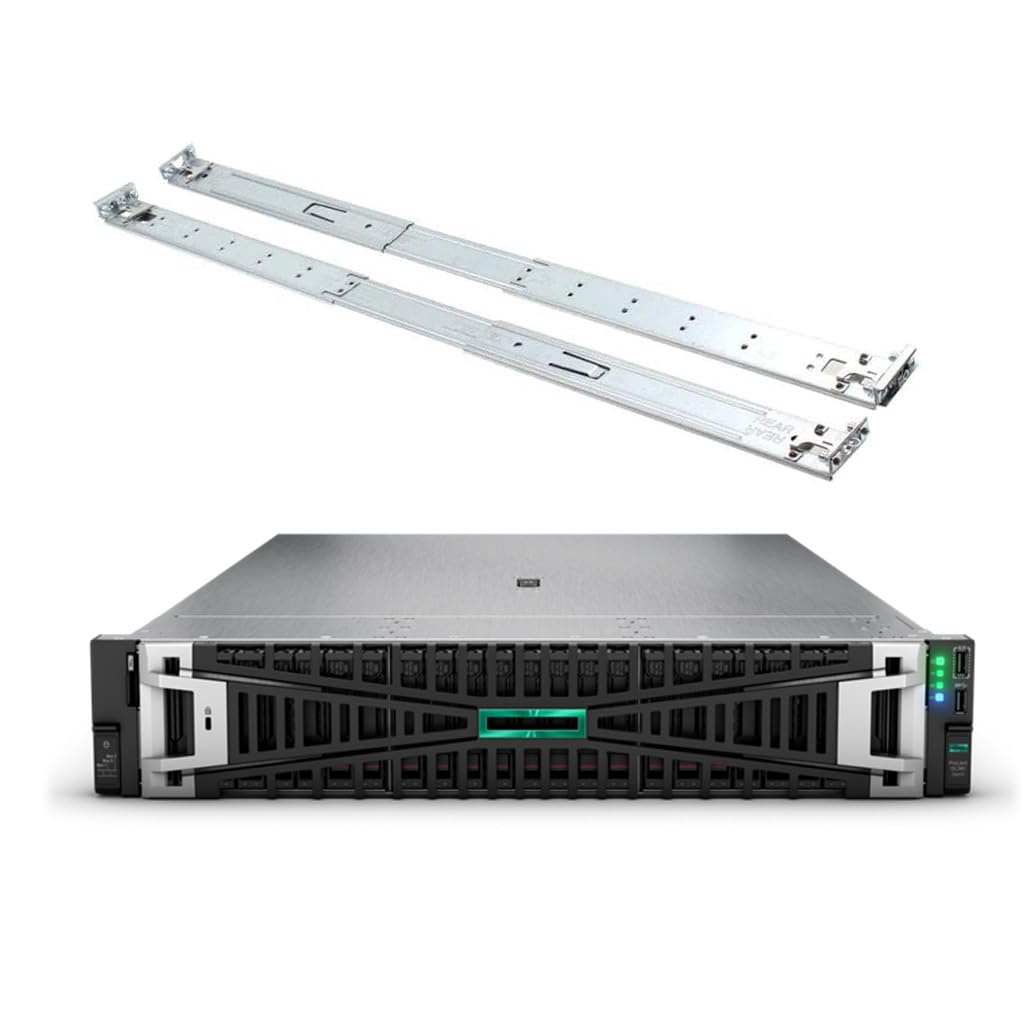
- Unmatched front-panel storage density supporting up to 36 EDSFF NVMe, 24 SFF, or 12 LFF drives
- Extensive I/O bandwidth featuring up to eight PCIe Gen5 slots alongside two OCP 3.0 mezzanine bays
- Robust memory subsystem accommodating up to 8TB of high-speed DDR5 SmartMemory
- Broad compute support spanning both 4th and 5th Gen Intel Xeon Scalable processors
- Midplane drive cage installation forces removal of the air shroud and mandates 1U performance heatsinks
- Populating rear dual-drive SFF bays consumes internal chassis space directly at the expense of PCIe expansion slots
Overview
Architected to balance dense multi-workload virtualization with high-throughput I/O pipelines, the dual-socket 2U rack infrastructure bridges 4th and 5th Gen Intel Xeon Scalable processors to an eight-channel DDR5 SmartMemory subsystem supporting up to 8TB of aggregate capacity. High-bandwidth point-to-point signaling is routed directly through up to eight PCIe Gen5 expansion slots and dual OCP 3.0 mezzanine bays, establishing direct, low-latency interconnects for accelerators and enterprise networking cards. The storage fabric introduces native compatibility for SAS4, SATA, and high-density EDSFF NVMe drive form factors across a modular backplane architecture.
Physical bay modularity allows the 2U chassis to adapt across varied tier-one storage workloads, supporting configurations of up to 12 LFF, 24 SFF, or 36 EDSFF drives accessible directly from the front panel. Additional internal expansion can be achieved via midplane cages accommodating 4 LFF or 8 SFF drives, or through up to three dual-drive rear SFF cages, bringing total SFF capacity to 30 drives. However, maximizing drive density incurs mechanical and operational trade-offs: utilizing rear cages directly consumes chassis volume otherwise reserved for rear PCIe riser cards, while populating the midplane cage requires removing the internal air shroud and stepping down to lower-profile 1U performance heatsinks to maintain airflow paths across the processor sockets.
Operational governance and day-to-day administrative stability are maintained via HPE integrated remote management tools, facilitating out-of-band monitoring, system health telemetry, and firmware orchestration. For systems administrators deploying dense virtual environments or storage-centric tiers, the platform delivers structural modularity and robust bus bandwidth, provided administrators account for the thermal packaging compromises when specifying midplane drive configurations.
Technical Specifications
| Brand | Hewlett Packard Enterprise |
| Model | ProLiant DL380 Gen11 |
| Form Factor | 2U Rackmount |
| Processor Support | 4th and 5th Gen Intel Xeon Scalable Processors |
| Maximum Memory Capacity | 8TB |
| Memory Type | DDR5 SmartMemory |
| PCIe Expansion Slots | Up to 8x PCIe Gen5 slots |
| Network Expansion | 2x OCP 3.0 mezzanine slots |
| Storage Interfaces | SAS4, SATA, EDSFF NVMe |
| Front Drive Capacity | Up to 12 LFF, 24 SFF, or 36 EDSFF drives |
| Rear Drive Capacity | Up to 3x dual-drive SFF bays |
| Midplane Drive Options | 4 LFF or 8 SFF midplane cage |
| Maximum SFF Drive Count | 30 SFF drives |
| Remote Management | HPE integrated remote management tools |
Primary Sources & Audited Citations
Recommended Alternatives in Enterprise & Server Systems
At a Glance
How reliable is the Hewlett Packard Enterprise ProLiant DL380 Gen11 Review: Modular PCIe Gen5 Storage Architecture according to Mizex audits?
Enterprises requiring versatile compute and high-density storage will find the platform outstanding, provided thermal constraints and PCIe trade-offs in midplane or rear drive configurations are planned for.
What are the known quirks or drawbacks of the Hewlett Packard Enterprise ProLiant DL380 Gen11 Review: Modular PCIe Gen5 Storage Architecture?
Our reliability audit identified the following documented caveats:
- Midplane drive cage installation forces removal of the air shroud and mandates 1U performance heatsinks
- Populating rear dual-drive SFF bays consumes internal chassis space directly at the expense of PCIe expansion slots
What are the key engineering highlights of the Hewlett Packard Enterprise ProLiant DL380 Gen11 Review: Modular PCIe Gen5 Storage Architecture?
The top strengths recorded in our evaluation include:
- Unmatched front-panel storage density supporting up to 36 EDSFF NVMe, 24 SFF, or 12 LFF drives
- Extensive I/O bandwidth featuring up to eight PCIe Gen5 slots alongside two OCP 3.0 mezzanine bays
- Robust memory subsystem accommodating up to 8TB of high-speed DDR5 SmartMemory
- Broad compute support spanning both 4th and 5th Gen Intel Xeon Scalable processors