
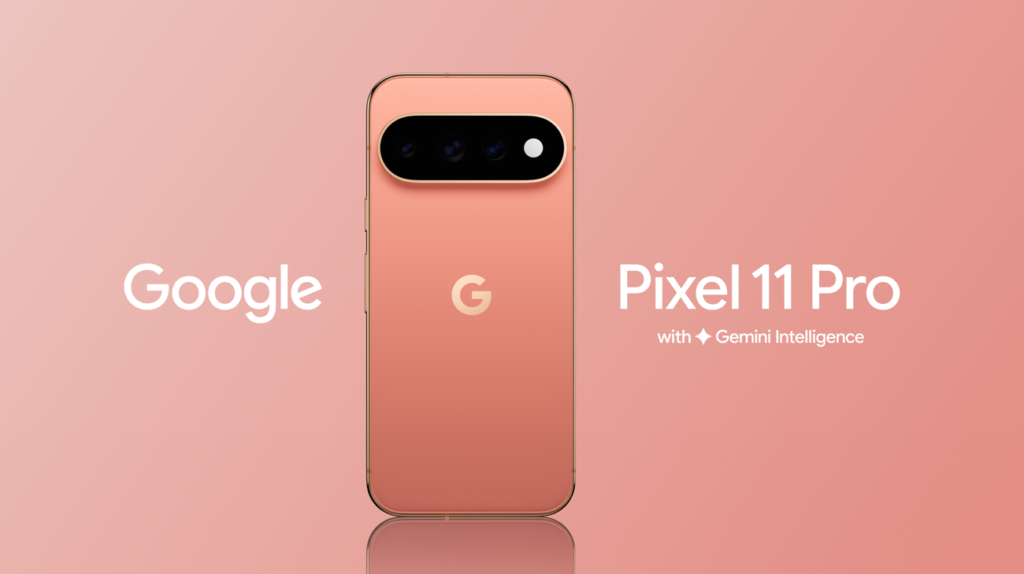
- Efficient 3nm Google Tensor G6 architecture paired with fast UFS 4.x storage
- Class-leading 6.30-inch 120Hz LTPO OLED panel reaching up to 3600 nits peak brightness
- Exceptional multi-year firmware lifecycle offering up to 7 major Android OS upgrades
- IP68-certified chassis engineered with Corning Gorilla Glass Victus 2 and an aluminum frame
- Substantial 7.20 oz (204 g) chassis weight for a 6.30-inch form factor
- Base hardware tier is limited to 12GB RAM rather than 16GB across all storage capacities
Overview
Fabricated on a dense 3nm process node, the Google Tensor G6 system-on-chip marks a pivotal transition toward tighter thermal dissipation and sustained compute efficiency. Paired with high-speed UFS 4.x storage buses and up to 16GB of system memory, the internal architecture prioritizes low-latency on-device processing and deterministic power delivery. The silicon drives a 6.30-inch LTPO OLED panel operating at an adaptive 120Hz refresh rate, delivering up to 2400 nits high brightness mode and 3600 nits peak luminance across a 1280 x 2856 pixel grid (497 ppi) without excessive battery drain under high ambient lighting.
Structural rigidity is established via a machined aluminum perimeter frame encased between dual panes of Corning Gorilla Glass Victus 2. The enclosure maintains an IP68 ingress protection rating, certified to withstand water submersion up to 4.9 ft (1.5 m) for 30 minutes, while distributing its 7.20 oz (204 g) mass across a compact 6.01 x 2.83 x 0.33 in (152.7 x 71.9 x 8.4 mm) profile. Optically stabilized imaging hardware—comprising a 50 MP 1/1.3-inch primary sensor and a 48 MP 5x periscope telephoto module—is integrated flush within the rear camera assembly, minimizing mechanical stress on lens actuators.
Thermal regulation relies on passive conduction through the aluminum chassis and internal thermal spreaders, capitalizing on the reduced leakage current of the 3nm lithography to manage operating surface temperatures during high-load processing. On the software and firmware tier, the device launches with Android 17 backed by a verified manufacturer lifecycle commitment of up to seven major operating system updates. This deterministic maintenance schedule directly mitigates platform obsolescence, ensuring sustained driver integrity and long-term hardware reliability throughout multi-year deployment.
Technical Specifications
| Brand | |
| Model | Pixel 11 Pro |
| Dimensions | 6.01 x 2.83 x 0.33 in (152.7 x 71.9 x 8.4 mm) |
| Weight | 7.20 oz (204 g) |
| Chassis Materials | Corning Gorilla Glass Victus 2 (front and back), Aluminum Frame |
| Ingress Protection | IP68 (submersible up to 4.9 ft / 1.5 m for 30 min) |
| Display Type | LTPO OLED |
| Display Size | 6.30 in (160 mm) |
| Display Resolution | 1280 x 2856 pixels |
| Display Aspect Ratio | 20.08:9 |
| Pixel Density | 497 ppi |
| Refresh Rate | 120 Hz |
| High Brightness Mode (HBM) | 2400 nits |
| Peak Brightness | 3600 nits |
| HDR Support | HDR10+ |
| Processor / SoC | Google Tensor G6 |
| Process Node | 3 nm |
| System Memory (RAM) | 12GB, 16GB |
| Storage Options | 256GB, 512GB, 1TB |
| Storage Bus Interface | UFS 4.x |
| Operating System | Android 17 |
| Software Support Commitment | Up to 7 major OS updates |
| Primary Camera | 50 MP, f/1.7, 25mm, 1/1.3", 1.2µm, multi-directional PDAF, OIS |
| Telephoto Camera | 48 MP, f/2.8, 106mm, 1/1.95", dual pixel PDAF, OIS, 5x optical zoom |
| Wireless Charging | Supported |
Primary Sources & Audited Citations
Recommended Alternatives in Smartphones



At a Glance
How reliable is the Google Pixel 11 Pro Review: 3nm Architecture With Multi-Year Longevity according to Mizex audits?
An exceptional choice for users demanding top-tier display brightness, precision telephoto imaging, and industry-leading multi-year firmware support.
What are the known quirks or drawbacks of the Google Pixel 11 Pro Review: 3nm Architecture With Multi-Year Longevity?
Our reliability audit identified the following documented caveats:
- Substantial 7.20 oz (204 g) chassis weight for a 6.30-inch form factor
- Base hardware tier is limited to 12GB RAM rather than 16GB across all storage capacities
What are the key engineering highlights of the Google Pixel 11 Pro Review: 3nm Architecture With Multi-Year Longevity?
The top strengths recorded in our evaluation include:
- Efficient 3nm Google Tensor G6 architecture paired with fast UFS 4.x storage
- Class-leading 6.30-inch 120Hz LTPO OLED panel reaching up to 3600 nits peak brightness
- Exceptional multi-year firmware lifecycle offering up to 7 major Android OS upgrades
- IP68-certified chassis engineered with Corning Gorilla Glass Victus 2 and an aluminum frame