
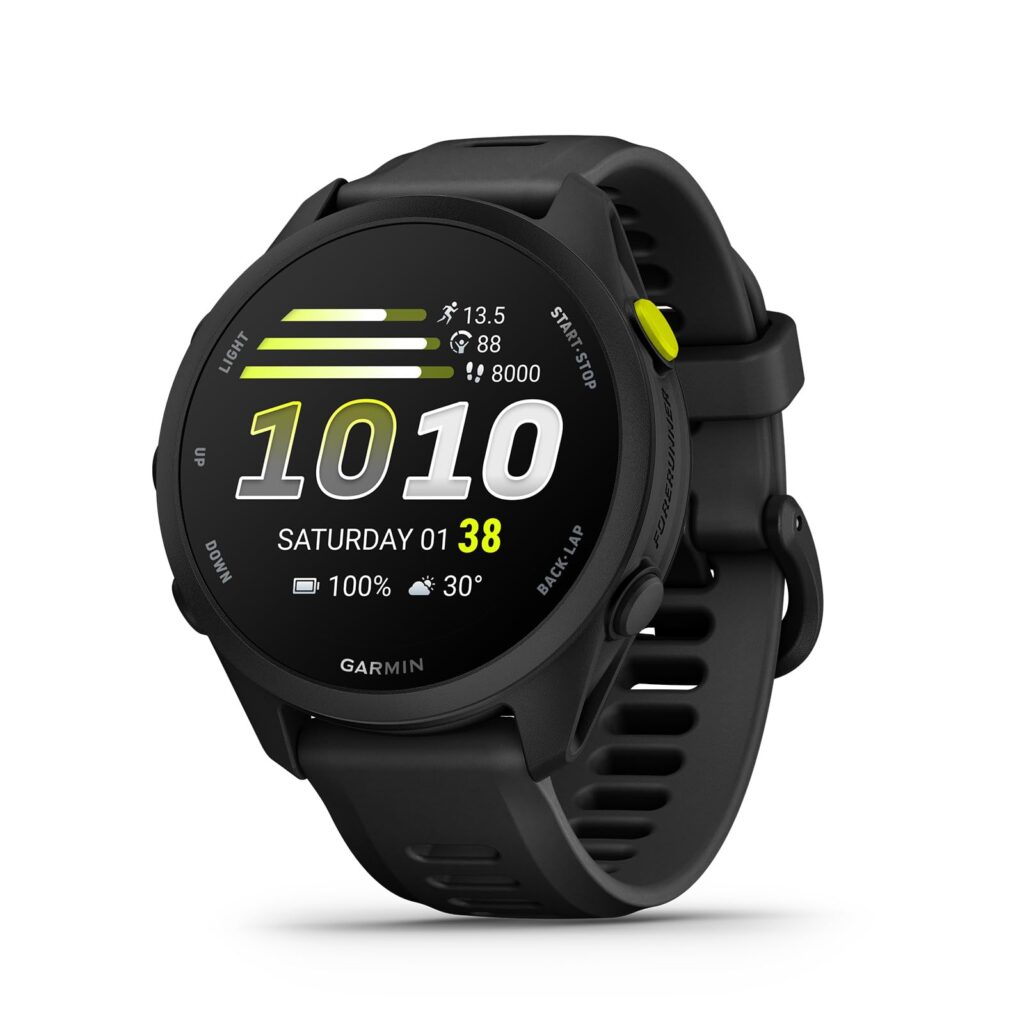
- Garmin unified software platform shared with flagship Fenix and Forerunner models
- Upgraded optical heart rate sensor package and improved GPS tracking module
- Comprehensive tracking library with over 50 activity profiles
- On-device Quick Workout creator for rapid training customization
- No onboard offline topographic mapping
- ClimbPro ascent analysis feature is omitted
Overview
A compact 43 mm (1.69 in) form factor anchors Garmin’s mid-tier running chassis, prioritizing low wrist mass and anatomical contouring during high-cadence training sessions. The structural housing utilizes a reinforced polymer composite designed to handle sweat exposure, environmental cycling, and repetitive physical impacts without introducing flex or seam separation. Internally, the architecture centers on an upgraded optical heart rate sensor package paired with an optimized GPS positioning module, providing tightened telemetry acquisition for pace and cardiovascular load. Hardware integration maintains high manufacturing tolerances around the perimeter pushers and sensor backplate, ensuring environmental protection and stable skin contact during intense movement.
Firmware implementation marks a major shift through Garmin’s unified operating system platform, bringing the codebase, interface paradigms, and more than 50 specialized activity profiles into alignment with high-tier Fenix and Forerunner models. This shared architecture introduces tools like the Quick Workout creator for on-device routine assembly alongside predictable OTA update cadences. Operating passively with no mechanical acoustic signature and dissipating minimal thermal load across the wrist contact area, the platform prioritizes electrical efficiency over compute-heavy local graphics rendering. However, deliberate hardware segmentation is evident in the absence of onboard offline cartography and the exclusion of ClimbPro ascent profiling, establishing a clear division between everyday endurance tracking and topography-heavy alpine navigation.
Technical Specifications
| Brand | Garmin |
| Model | Forerunner 70 43mm |
| Case Diameter | 1.69 in (43 mm) |
| Heart Rate Sensor | Upgraded Optical Heart Rate Sensor |
| Location Tracking | GPS Positioning |
| Sport Profiles | 50+ Profiles |
| Software Platform | Garmin Unified OS Platform |
| Workout Engine | Quick Workout Creator |
| Offline Mapping | Not Supported |
| ClimbPro Ascent Profiling | Not Supported |
Primary Sources & Audited Citations
Recommended Alternatives in Wearables & Smartwatches

At a Glance
How reliable is the Garmin Forerunner 70 43mm Review: Unified Firmware Meets Segmented Hardware according to Mizex audits?
An appealing entry point for runners wanting Garmin's modern unified software interface and upgraded biometric tracking, provided offline topography and dedicated climb analysis are not essential to your training.
What are the known quirks or drawbacks of the Garmin Forerunner 70 43mm Review: Unified Firmware Meets Segmented Hardware?
Our reliability audit identified the following documented caveats:
- No onboard offline topographic mapping
- ClimbPro ascent analysis feature is omitted
What are the key engineering highlights of the Garmin Forerunner 70 43mm Review: Unified Firmware Meets Segmented Hardware?
The top strengths recorded in our evaluation include:
- Garmin unified software platform shared with flagship Fenix and Forerunner models
- Upgraded optical heart rate sensor package and improved GPS tracking module
- Comprehensive tracking library with over 50 activity profiles
- On-device Quick Workout creator for rapid training customization