
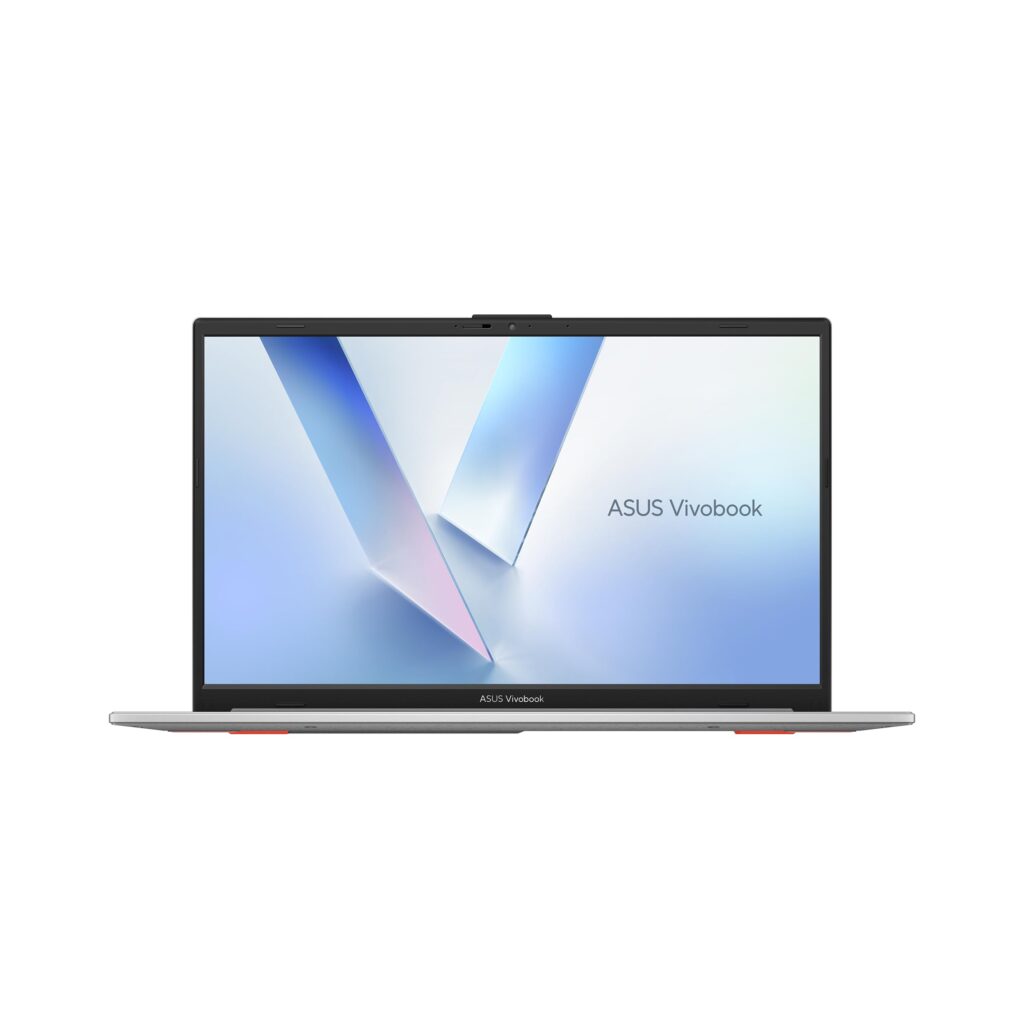
- Optional 100% DCI-P3 PANTONE-validated OLED panel delivers VESA DisplayHDR True Black 500 contrast
- Efficient power consumption yielding 8.5 to 9 hours of battery life from a 42 Wh pack
- Lightweight 3.59 lbs (1.63 kg) chassis paired with modern Wi-Fi 6E and Bluetooth 5.3 connectivity
- System RAM is fully soldered to the motherboard without any expansion slots for future upgrades
- Internal M.2 NVMe SSD storage slot is limited to PCIe 3.0 x2 bandwidth
- Base display variant is restricted to a dim 250-nit output with 45% NTSC color gamut coverage
Overview
Bringing high-fidelity organic LED panels into everyday consumer portables changes the equation for budget mobile computing. Built around a slim 0.70 in (17.9 mm) profile and weighing just 3.59 lbs (1.63 kg), the chassis packages modern wireless connectivity like Wi-Fi 6E and Bluetooth 5.3 into an approachable lightweight frame. Ergonomically, the full-size 15.6-inch footprint offers generous palm rest space and comfortable lap usability, making it an easy companion for classroom lectures, remote study, or general productivity sessions. While the base configuration relies on a standard 250-nit panel with narrower 45% NTSC color coverage, upgrading to the optional 100% DCI-P3 DisplayHDR True Black 500 OLED panel completely transforms visual fidelity with true black levels and vivid contrast rarely found in this segment.
Internal architecture reflects a careful balance of efficiency-focused silicon and strict manufacturing cost controls. Processing duties are handled by entry-tier architectures, spanning AMD Zen 2 silicon like the Ryzen 5 7520U with Radeon 610M graphics alongside Intel N-series processors such as the 8-core Core i3-N305. Thermal dissipation is managed through a streamlined cooling assembly comprising a single copper heat pipe, an aluminum fin array, and a blower fan. Because these low-TDP processors generate modest heat under standard office multitasking, the single-fan setup operates quietly during document drafting and media consumption without aggressive acoustic spikes or uncomfortable keyboard deck warmth.
Where the device requires careful buyer consideration is in its hardware longevity and post-purchase upgrade ceiling. All LPDDR5 system memory is soldered directly to the mainboard at the factory with no expansion slots, meaning the selected capacity at checkout—whether 4GB, 8GB, or 16GB—is permanently locked for the lifespan of the machine. Furthermore, the single M.2 NVMe storage connector operates on a narrower PCIe 3.0 x2 interface rather than standard four-lane bandwidth, capping peak sequential transfer speeds. Offsetting these architectural compromises is steady power efficiency, where the 42 Wh 3-cell battery regularly delivers 8.5 to 9 hours of continuous video streaming and web navigation, backed by stable manufacturer BIOS updates that maintain dependable system sleep and wake transitions.
Technical Specifications
| Brand | ASUS |
| Model | Vivobook Go 15 |
| Processor Options | AMD Ryzen 5 7520U (4C/8T, up to 4.3 GHz), Intel Core i3-N305 (8C/8T, up to 3.8 GHz), Intel Processor N200 / N150 / N100 |
| Graphics | AMD Radeon 610M / Intel UHD Graphics |
| Display Options | 15.6-inch FHD (1920 x 1080) OLED 60Hz 400 nits (600 nits HDR), 100% DCI-P3; or 15.6-inch FHD (1920 x 1080) IPS-level 60Hz 250 nits, 45% NTSC |
| Memory | 4GB / 8GB / 16GB LPDDR5 5500MHz (soldered, non-upgradeable) |
| Storage | 1x M.2 NVMe PCIe 3.0 x2 SSD |
| Battery Capacity | 42 Wh, 3-cell Lithium-Ion |
| Ports | 1x USB 2.0, 2x USB 3.2 Gen 1, 1x HDMI, 1x 3.5mm combo audio jack |
| Wireless Connectivity | Wi-Fi 6E, Bluetooth 5.3 |
| Camera | 720p HD webcam |
| Cooling Solution | Single heat pipe, single heat sink, single cooling fan |
| Dimensions | 0.70 in (17.9 mm) thickness |
| Weight | 3.59 lbs (1.63 kg) |
Primary Sources & Audited Citations
Recommended Alternatives in Laptops
At a Glance
How reliable is the ASUS Vivobook Go 15 Review: OLED Brilliance Meets Expansion Limits according to Mizex audits?
Prioritize the 16GB OLED variant for media-centric daily tasks, but look elsewhere if your workload requires post-purchase memory expansion or high-speed NVMe data transfers.
What are the known quirks or drawbacks of the ASUS Vivobook Go 15 Review: OLED Brilliance Meets Expansion Limits?
Our reliability audit identified the following documented caveats:
- System RAM is fully soldered to the motherboard without any expansion slots for future upgrades
- Internal M.2 NVMe SSD storage slot is limited to PCIe 3.0 x2 bandwidth
- Base display variant is restricted to a dim 250-nit output with 45% NTSC color gamut coverage
What are the key engineering highlights of the ASUS Vivobook Go 15 Review: OLED Brilliance Meets Expansion Limits?
The top strengths recorded in our evaluation include:
- Optional 100% DCI-P3 PANTONE-validated OLED panel delivers VESA DisplayHDR True Black 500 contrast
- Efficient power consumption yielding 8.5 to 9 hours of battery life from a 42 Wh pack
- Lightweight 3.59 lbs (1.63 kg) chassis paired with modern Wi-Fi 6E and Bluetooth 5.3 connectivity