
- 307GB/s unified memory bandwidth configurable up to 64GB with SSD options up to 8TB
- 15-core to 18-core CPU and GPU options featuring Neural Accelerators and hardware ray tracing
- Dedicated Media Engine supporting H.264, HEVC, ProRes, ProRes RAW, and AV1 decode
- Reported by Tom's Guide as faster than the base M6 Mac mini model
- Unified memory architecture locks RAM capacity to the configuration selected at purchase
- Base 512GB SSD fills quickly when editing high-bitrate ProRes and ProRes RAW video
Overview
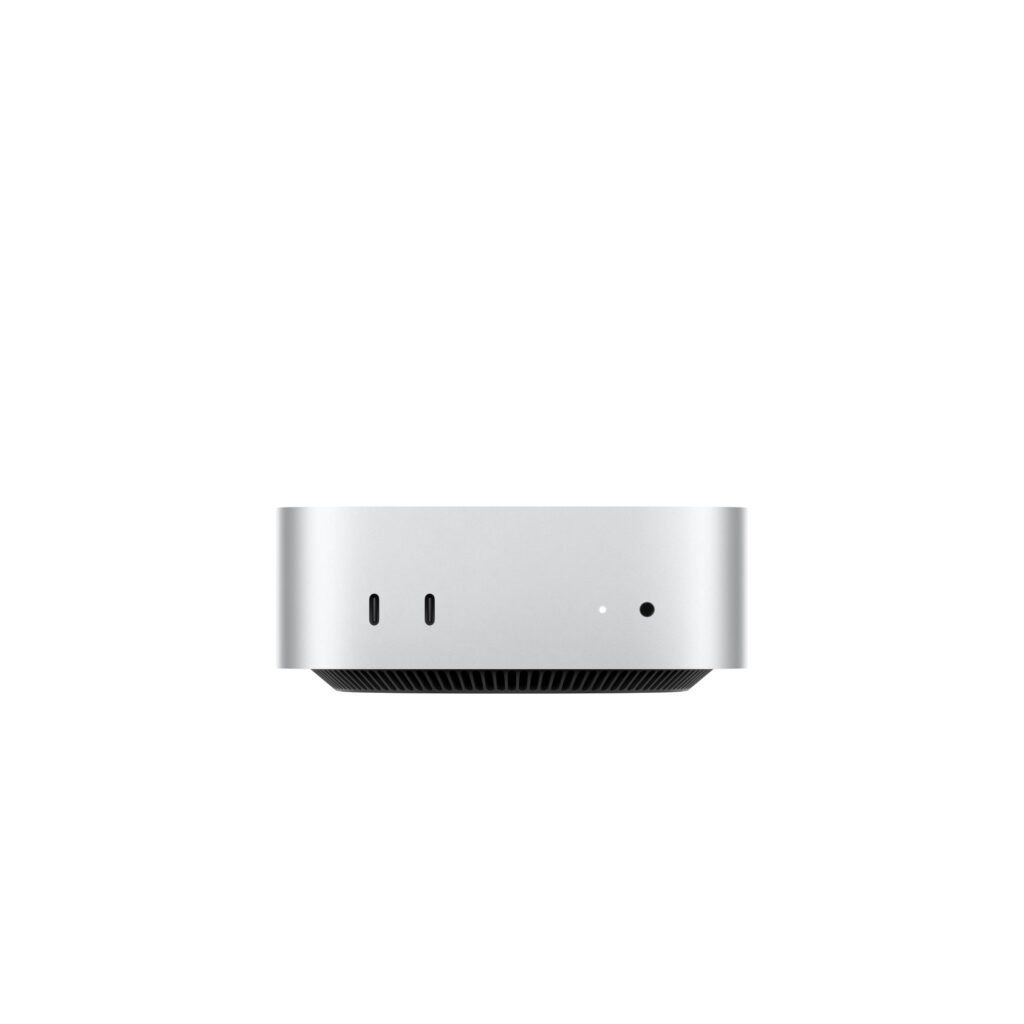
Compact desktops rarely pack workstation-caliber memory throughput into a Silver enclosure small enough to tuck beneath a monitor, yet Apple’s M5 Pro configuration turns the Mac mini into a capable studio and development machine. Moving beyond entry-level desktop silicon, the chip pairs a 15-core CPU split across five super cores and ten performance cores with a 16-core GPU equipped with Neural Accelerators and hardware-accelerated ray tracing. Those needing extra headroom can step up to an 18-core CPU and 20-core GPU, giving creative and compute workloads performance that Tom’s Guide reports even outpaces the newer base M6 Mac mini.
Memory and media handling define everyday responsiveness on this platform. At 307GB/s, unified memory bandwidth lets the CPU, GPU, and 16-core Neural Engine share large datasets without copying across separate pools, starting at 24GB and scaling to 48GB or 64GB at purchase. Video editors benefit from a dedicated Media Engine that accelerates H.264, HEVC, ProRes, ProRes RAW, and AV1 decode in hardware, keeping general-purpose cores free during timeline scrubbing and exports. Storage starts at a 512GB SSD and scales up to 8TB, though selecting capacity upfront matters because unified silicon leaves little room for internal tinkering later.
Consolidating processor, graphics, memory, and media engines onto a single package simplifies internal power delivery and allows dedicated hardware blocks to shoulder heavy video and AI tasks efficiently. Firmware cadence and system stability benefit from Apple’s tightly coupled hardware-software ecosystem, with no documented community quirks or hardware recalls surfaced in lab tracking. For buyers who want high memory bandwidth and pro-grade video acceleration without stepping up to a tower workstation, this desktop strikes a practical balance between footprint and capability.
Technical Specifications
| Brand | Apple |
| Model | Mac mini M5 Pro |
| Processor | Apple M5 Pro |
| CPU | 15-core (5 super cores, 10 performance cores); configurable to 18-core |
| GPU | 16-core with Neural Accelerators and hardware-accelerated ray tracing; configurable to 20-core |
| Neural Engine | 16-core |
| Unified Memory | 24GB (configurable to 48GB or 64GB) |
| Memory Bandwidth | 307GB/s |
| Storage | 512GB SSD (configurable to 1TB, 2TB, 4TB, or 8TB) |
| Media Engine | Hardware-accelerated H.264, HEVC, ProRes, ProRes RAW, and AV1 decode |
| Finish | Silver |
Primary Sources & Audited Citations
Recommended Alternatives in Mini PCs
At a Glance
How reliable is the Apple Mac mini M5 Pro according to Mizex audits?
Buy the Mac mini M5 Pro if you need 307GB/s unified memory bandwidth and hardware ProRes acceleration in a compact desktop, and configure memory and SSD capacity upfront.
What are the known quirks or drawbacks of the Apple Mac mini M5 Pro?
Our reliability audit identified the following documented caveats:
- Unified memory architecture locks RAM capacity to the configuration selected at purchase
- Base 512GB SSD fills quickly when editing high-bitrate ProRes and ProRes RAW video
What are the key engineering highlights of the Apple Mac mini M5 Pro?
The top strengths recorded in our evaluation include:
- 307GB/s unified memory bandwidth configurable up to 64GB with SSD options up to 8TB
- 15-core to 18-core CPU and GPU options featuring Neural Accelerators and hardware ray tracing
- Dedicated Media Engine supporting H.264, HEVC, ProRes, ProRes RAW, and AV1 decode
- Reported by Tom's Guide as faster than the base M6 Mac mini model