
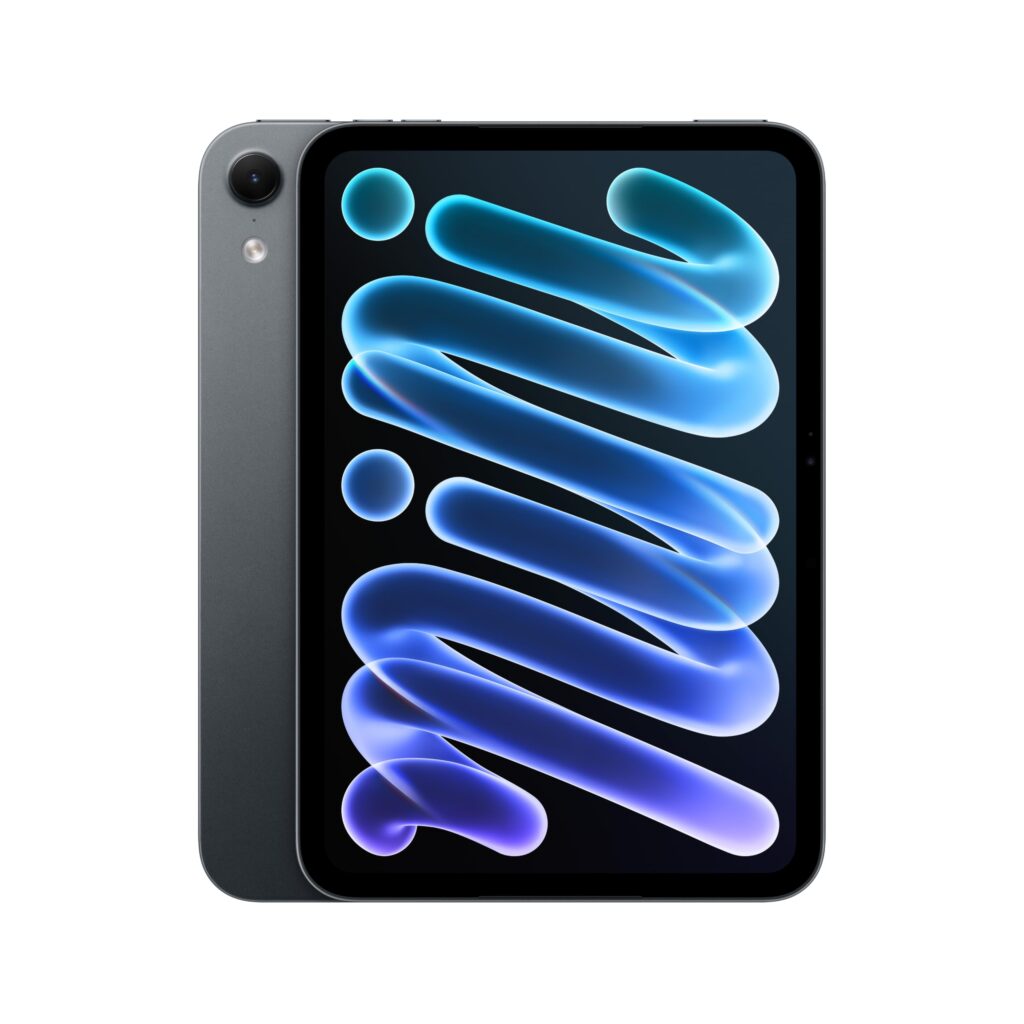
- Exceptional single-core performance reaching 3,879 points in Geekbench 7 on the 2 nm A20 Pro processor.
- Vibrant 8.5-inch Super Retina XDR OLED display offering 1,200 nits peak brightness and optional nano-texture glass.
- Ultra-thin 0.21 in (5.4 mm) chassis backed by IP67 dust and water resistance certification.
- Standard 12 GB unified memory pool across all storage capacities.
- Display refresh rate is restricted to 60 Hz without 120 Hz ProMotion capability.
- Base 128 GB and 256 GB models feature a binned 5-core CPU rather than the full 6-core chip on the 512 GB tier.
- Multi-core processing throughput falls substantially behind larger M-series Apple silicon tablets.
Overview
Shrinking a high-performance workstation pipeline into a pocketable silhouette has long defined the smallest member of Apple’s tablet roster, and this generation pushes that physical envelope further than ever before. Measuring just 0.21 inches (5.4 mm) thick and tipping the scales at 8.99 ounces (255 g) in its Wi-Fi trim, the chassis delivers exceptional handheld comfort during extended reading, note-taking, or field data entry. The front face is dominated by an 8.5-inch Super Retina XDR OLED display pushing 1512 x 2316 pixels at approximately 325 pixels per inch, achieving infinite contrast ratios and reaching up to 1,200 nits of peak brightness under demanding outdoor sunlight. However, maintaining a static 60 Hz refresh rate remains an unmistakable compromise for high-speed scrolling and stylus tracking, even as the optional nano-texture glass treatment meaningfully mitigates harsh ambient glare.
Under the hood, computational duties are driven by 2 nm A20 Pro silicon backed across all tiers by 12 GB of unified memory. Single-core execution is remarkably agile, logging 3,879 points in Geekbench 7 behind its 4.93 GHz performance cores, while dual 16-core neural engines accelerate on-device machine intelligence workloads. Apple introduces silicon binning across storage tiers: configurations with 128 GB and 256 GB of onboard storage are provisioned with a penta-core CPU featuring three efficiency cores, whereas the 512 GB configuration unlocks the full hexa-core layout with four efficiency cores. Power is distributed from a 4,900 mAh internal battery cell that replenishes to 50 percent capacity in 30 minutes via wired fast charging, while the Acoustic Display stereo speaker system routes audio directly through the screen perimeter for clear, direct sound projection.
Everyday usability benefits from sensible structural refinements, most noticeably the relocation of the 12 MP ultrawide Center Stage front camera to the landscape edge, where video calls feel naturally centered rather than skewed off-angle. The outer perimeter houses a reliable top-mounted Touch ID biometric sensor alongside a USB Type-C 3.1 Gen 2 port capable of native DisplayPort external video output. Long-term environmental resilience sees a significant boost through official IP67 dust and water resistance, providing immersion protection up to 3.3 feet (1 meter) for 30 minutes—a durability benchmark rarely encountered in consumer tablets. While non-expandable storage precludes aftermarket upgrades and multi-threaded throughput naturally trails desktop-class M-series hardware, consistent iPadOS software updates ensure the underlying hardware platform remains stable and supported over a lengthy lifecycle.
Technical Specifications
| Brand | Apple |
| Model | iPad mini (A20 Pro) |
| Processor | Apple A20 Pro (2 nm) |
| CPU Configuration | Penta-core (2x 4.93 GHz performance + 3x efficiency) on 128GB/256GB; Hexa-core (2x performance + 4x efficiency) on 512GB |
| GPU | Apple GPU (7-core graphics with Neural Accelerators) |
| Neural Engine | Dual 16-core Neural Engine |
| System Memory | 12 GB unified RAM |
| Internal Storage | 128 GB, 256 GB, 512 GB (soldered) |
| Display Panel | 8.5 in (215.9 mm) Super Retina XDR OLED |
| Display Resolution | 1512 x 2316 pixels (~325 ppi) |
| Display Refresh Rate | 60 Hz |
| Display Brightness | 600 nits typical, 1200 nits peak (HBM) |
| Display Coating | Anti-reflective coating with optional nano-texture glass |
| Rear Camera | 12 MP (f/1.8, autofocus, multi-focus LED flash, 4K video at 60 fps) |
| Front Camera | 12 MP ultrawide Center Stage (f/2.0, 122˚ FOV, landscape orientation) |
| Audio System | Acoustic Display stereo speakers |
| Biometric Security | Top-mounted Touch ID fingerprint sensor |
| Wireless Connectivity | Wi-Fi 7 (802.11be), Bluetooth 6.0, optional 5G cellular (eSIM) |
| I/O Port | USB Type-C 3.1 Gen 2 with DisplayPort output |
| Ingress Protection | IP67 (immersion up to 3.3 ft / 1 m for 30 minutes) |
| Battery Capacity | 4900 mAh |
| Charging Profile | Wired fast charging (50% charge in 30 minutes) |
| Dimensions | 7.69 x 5.22 x 0.21 in (195.3 x 132.6 x 5.4 mm) |
| Weight | 8.99 oz (255 g) Wi-Fi / 9.28 oz (263 g) Wi-Fi + Cellular |
| Operating System | iPadOS 27 |
Primary Sources & Audited Citations
- Apple Gives iPad mini Its Biggest Update Ever with A20 Pro and OLED Display
- Apple iPad mini (2026) in Geekbench - Single-Core Performance Ahead of iPad Pro
- Apple iPad mini (2026) Full Hardware Specifications
- Apple just announced a new iPad mini with an OLED panel and IP67 resistance
- Apple's New OLED iPad mini (A20 Pro) Hardware Review and Architectural Deep Dive
Recommended Alternatives in Tablets & E-Readers
At a Glance
How reliable is the Apple iPad mini (A20 Pro) Review: Pocket OLED Power Meets Silicon Binning according to Mizex audits?
Ideal for mobile professionals and digital readers requiring top-tier single-core power in an IP67-rated pocket form factor, though users sensitive to 60 Hz motion or seeking unbinned CPU performance will need to budget for the top storage configuration.
What are the known quirks or drawbacks of the Apple iPad mini (A20 Pro) Review: Pocket OLED Power Meets Silicon Binning?
Our reliability audit identified the following documented caveats:
- Display refresh rate is restricted to 60 Hz without 120 Hz ProMotion capability.
- Base 128 GB and 256 GB models feature a binned 5-core CPU rather than the full 6-core chip on the 512 GB tier.
- Multi-core processing throughput falls substantially behind larger M-series Apple silicon tablets.
What are the key engineering highlights of the Apple iPad mini (A20 Pro) Review: Pocket OLED Power Meets Silicon Binning?
The top strengths recorded in our evaluation include:
- Exceptional single-core performance reaching 3,879 points in Geekbench 7 on the 2 nm A20 Pro processor.
- Vibrant 8.5-inch Super Retina XDR OLED display offering 1,200 nits peak brightness and optional nano-texture glass.
- Ultra-thin 0.21 in (5.4 mm) chassis backed by IP67 dust and water resistance certification.
- Standard 12 GB unified memory pool across all storage capacities.