Samsung Galaxy S26 FE Review: 3nm Silicon Meets Multi-Year Support vs Xiaomi 18 Pro Max Review: Dual 200MP optics carry heavy weight
Standardized 5-pillar engineering audit, thermal telemetry, verified longevity metrics, and complete technical specification diff.

Samsung Galaxy S26 FE Review: 3nm Silicon Meets Multi-Year Support
Delivers 3nm Exynos 2500 performance, high-speed UFS 4.0 storage, and seven years of OS support in an IP68 aluminum-and-glass chassis, offset by iterative camera hardware.
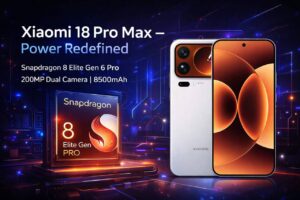
Xiaomi 18 Pro Max Review: Dual 200MP optics carry heavy weight
Cutting-edge 2 nm processing, dual 200 MP optics, and massive battery capacity balanced against substantial chassis weight.
Mizex Comparative Audit Verdict
5-Pillar Engineering Telemetry
Detailed comparison across standardized normalized 1.0 – 5.0 engineering pillars.
Samsung Galaxy S26 FE Review: 3nm Silicon Meets Multi-Year Support: Strengths & Caveats
- 3nm Exynos 2500 10-core processor paired with high-speed UFS 4.0 storage
- 6.7-inch Dynamic AMOLED 2X display with 120Hz refresh and 1,900 nits high brightness mode
- 4,900 mAh battery capacity supporting 45W wired and 15W wireless charging
- Guaranteed long-term firmware support with up to 7 major Android OS updates
- Telephoto camera retains a small 1/4.4-inch 8 MP sensor with no hardware generation upgrade
- Primary 50 MP camera sensor carried over without optical sensor size improvement
- No expandable storage via microSD card slot or 3.5mm headphone jack
Xiaomi 18 Pro Max Review: Dual 200MP optics carry heavy weight: Strengths & Caveats
- High-performance Qualcomm Snapdragon 8 Elite Extreme Gen 6 SoC clocking up to 5.01 GHz
- High-capacity 8,500 mAh silicon-carbon battery with 100W wired and 50W wireless charging
- Versatile dual-display layout with 4,000-nit primary screen and interactive rear display
- Advanced camera array featuring dual 200 MP optically stabilized primary and telephoto sensors
- Substantial chassis weight between 235 g and 240 g
- Lacks expandable storage via microSD card
Technical Specification Comparison
Side-by-side spec alignment. Rows highlighted with subtle shading denote differing specifications.
| Specification | Samsung Galaxy S26 FE Review: 3nm Silicon Meets Multi-Year Support | Xiaomi 18 Pro Max Review: Dual 200MP optics carry heavy weight |
|---|---|---|
| Brand DIFF | Samsung | Xiaomi |
| Model DIFF | Galaxy S26 FE | Xiaomi 18 Pro Max |
| Display DIFF | 6.7-inch Dynamic AMOLED 2X, 120Hz, HDR10+, 1900 nits (HBM) | — |
| Resolution DIFF | 1080 x 2340 pixels (~385 ppi, 19.5:9 ratio) | — |
| Screen Protection DIFF | Corning Gorilla Glass Victus+ | — |
| Processor DIFF | Samsung Exynos 2500 (3 nm) | — |
| CPU Architecture DIFF | 10-core (1x 3.3 GHz Cortex-X925 & 2x 2.74 GHz Cortex-A725 & 5x 2.36 GHz Cortex-A725 & 2x 1.8 GHz Cortex-A520) | — |
| GPU DIFF | Samsung Xclipse 950 | — |
| RAM DIFF | 8 GB | — |
| Storage DIFF | 128GB / 256GB / 512GB (UFS 4.0) | — |
| Rear Camera System DIFF | Triple camera: 50 MP f/1.8 wide (Samsung ISOCELL S5KGN3, 1/1.56-inch, OIS, dual pixel PDAF) + 8 MP f/2.4 telephoto (OmniVision OV08A1, 1/4.4-inch, 3x optical zoom, OIS) + 12 MP f/2.2 123-degree ultrawide | — |
| Front Camera DIFF | 12 MP, f/2.2, 23mm (wide) | — |
| Video Recording DIFF | 8K@24/30fps, 4K@30/60/120fps, 1080p@30/60/120/240fps with gyro-EIS, HDR10+ | — |
| Battery Capacity DIFF | 4900 mAh | — |
| Charging DIFF | 45W wired, 15W wireless | — |
| Dimensions DIFF | 6.36 x 3.03 x 0.29 in (161.6 x 76.9 x 7.4 mm) | — |
| Weight DIFF | 6.81 oz (193 g) | — |
| Build Materials DIFF | Corning Gorilla Glass Victus+ front and back, aluminum frame | — |
| Ingress Protection DIFF | IP68 dust tight and water resistant (up to 4.9 ft / 1.5 m for 30 min) | — |
| Operating System DIFF | Android 17, One UI 9 (up to 7 major OS updates) | — |
| SIM Configuration DIFF | Nano-SIM + eSIM | — |
| Audio DIFF | Stereo speakers | — |
| Wireless Connectivity DIFF | 5G (SA/NSA/Sub6), Wi-Fi 802.11 | — |
| Processor DIFF | — | Qualcomm Snapdragon 8 Elite Extreme Gen 6 (2 nm, Octa-core, up to 5.01 GHz) |
| Gpu DIFF | — | Adreno 850 |
| Npu DIFF | — | Hexagon |
| Memory DIFF | — | 12 GB / 16 GB LPDDR5X |
| Storage DIFF | — | 256 GB / 512 GB / 1 TB UFS 4.1 |
| Main Display DIFF | — | 6.9-inch LTPO AMOLED, 1-120 Hz, 1208 x 2624 pixels, 4000 nits peak brightness, Xiaomi Dragon Crystal Glass 3 |
| Secondary Display DIFF | — | 2.7 - 2.9 inch LTPO AMOLED, 120 Hz |
| Rear Cameras DIFF | — | Triple setup: 200 MP f/1.7 wide (1/1.28", Light Hunter 960, OIS), 200 MP f/2.4 periscope telephoto (1/1.56", 3.2x optical zoom, OIS), 50 MP f/2.4 ultrawide (102° FOV) |
| Front Camera DIFF | — | 50 MP f/2.2 wide |
| Video Recording DIFF | — | 8K at 30 fps, 4K at up to 120 fps |
| Battery Capacity DIFF | — | 8500 mAh silicon-carbon |
| Charging DIFF | — | 100W wired fast charging, 50W wireless charging |
| Cooling DIFF | — | Vapor chamber |
| Water Resistance DIFF | — | IP68 |
| Connectivity DIFF | — | 5G SA/NSA, Ultra-Wideband (UWB), Dual Nano-SIM |
| Biometrics DIFF | — | In-display fingerprint scanner |
| Operating System DIFF | — | Android 17, HyperOS 4 |
| Dimensions DIFF | — | 163.4 x 77.6 x 8.4 mm (6.43 x 3.06 x 0.33 in) |
| Weight DIFF | — | 235 g (8.3 oz) - 240 g (8.5 oz) |
Need to evaluate a different configuration?
🔍 Compare Other Hardware