Razer Kiyo V2 Pro vs AVerMedia DualCam PW313D
Standardized 5-pillar engineering audit, thermal telemetry, verified longevity metrics, and complete technical specification diff.
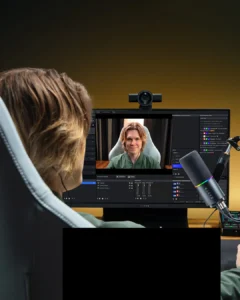
High-performance 4K60 streaming webcam pairing a low-light Sony STARVIS 2 sensor with intelligent AI auto-framing.
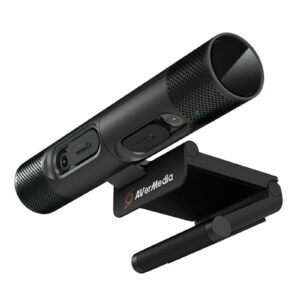
Dual independent camera modules with dedicated autofocus and physical shutters deliver versatile presentation utility, tempered by USB 2.0 bandwidth limitations that restrict simultaneous dual-HD streaming.
Mizex Comparative Audit Verdict
5-Pillar Engineering Telemetry
Detailed comparison across standardized normalized 1.0 – 5.0 engineering pillars.
Razer Kiyo V2 Pro: Strengths & Caveats
- Native 4K video capture and streaming at 60 FPS for fluid, broadcast-level motion
- Back-illuminated Sony STARVIS 2 sensor provides superior low-light sensitivity and reduced blur
- Expansive 86-degree field of view with integrated AI auto-framing
- Robust software calibration and image adjustment support via Camo Studio
- Wide 86-degree fixed optical field of view requires digital cropping or framing for narrower portrait shots
- Internal thermal dissipation and component-level assembly metrics remain pending retail physical teardown
AVerMedia DualCam PW313D: Strengths & Caveats
- Dual independent articulating camera modules enable simultaneous portrait and document capture
- Integrated physical privacy shutters on both lenses and detachable USB-C cabling
- Dual omnidirectional microphones featuring onboard AI noise reduction up to 3 meters
- 5 MP right sensor with f/2 aperture provides solid document scanning clarity
- Shared USB 2.0 bandwidth forces one video stream down to 720p during concurrent use
- Maximum capture rate is capped at 30 FPS with no 60 FPS mode supported
- Auto-exposure induces noticeable motion blur under challenging low-light conditions
Technical Specification Comparison
Side-by-side spec alignment. Rows highlighted with subtle shading denote differing specifications.
| Specification | Razer Kiyo V2 Pro | AVerMedia DualCam PW313D |
|---|---|---|
| Brand DIFF | Razer | AVerMedia |
| Model DIFF | Razer Kiyo V2 Pro | AVerMedia DualCam PW313D |
| Sensor Type DIFF | Sony STARVIS 2 | — |
| Sensor Architecture DIFF | Back-illuminated (BSI) | — |
| Maximum Resolution DIFF | 4K (3840 x 2160) | — |
| Maximum Framerate DIFF | 60 FPS | — |
| Field Of View DIFF | 86° | — |
| Framing Technology DIFF | AI auto-framing | — |
| Software Controls DIFF | Camo Studio | — |
| Mounting Support DIFF | Tripod mount compatible | — |
| Camera Configuration DIFF | — | Dual independent rotating webcam modules |
| Left Sensor DIFF | — | 2 MP CMOS (1920x1080 @ 30 FPS) |
| Left Lens Fov DIFF | — | 71° diagonal (63° horizontal, 38° vertical) |
| Left Rotation Range DIFF | — | 90° upward, 15° downward |
| Right Sensor DIFF | — | 5 MP CMOS (2592x1944 @ 30 FPS, f/2 aperture) |
| Right Lens Fov DIFF | — | 76° diagonal (67° horizontal, 52° vertical) |
| Right Rotation Range DIFF | — | 195° backward, 75° forward |
| Focus Mechanism DIFF | — | Independent autofocus on both modules |
| Audio Microphones DIFF | — | Dual mono omnidirectional with AI noise reduction |
| Microphone Pickup Range DIFF | — | Up to 3 m (9.8 ft) |
| Physical Privacy Controls DIFF | — | Dual independent sliding shutters |
| Connectivity DIFF | — | USB 2.0 via detachable USB-C to USB-A cable (2 m) |
| Mounting System DIFF | — | Universal monitor clamp with integrated 1/4" tripod mount |
| Software Support DIFF | — | AVerMedia CamEngine 4 |
| Supported Platforms DIFF | — | Windows, macOS, iPadOS |
Need to evaluate a different configuration?
🔍 Compare Other Hardware