Side-by-Side Comparison
Omada Flex Bridge 5 Review: Weatherproof Point-to-Point Wireless Bridging vs Ubiquiti Max 5G Modem Review: Automated Cellular Failover With Fiber Support
Standardized 5-pillar engineering audit, thermal telemetry, verified longevity metrics, and complete technical specification diff.
★ Recommended Winner
▲ DOCUMENTED QUIRKS
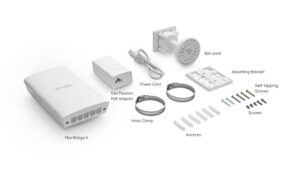
Omada Flex Bridge 5 Review: Weatherproof Point-to-Point Wireless Bridging
Composite Score:
4.3
/ 5.0
Weatherproof IP66 wireless bridge delivering reliable PtP/PtMP backhauls over Wi-Fi 5.
▲ DOCUMENTED QUIRKS
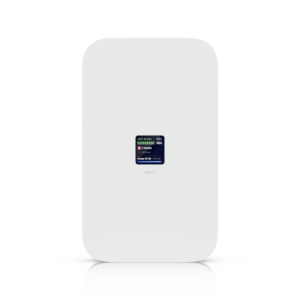
Ubiquiti Max 5G Modem Review: Automated Cellular Failover With Fiber Support
Composite Score:
4.2
/ 5.0
Integrated 5G cellular gateway pairing tri-band Wi-Fi, SFP fiber capability, and automated failover in a unified UniFi OS desktop platform.
⚖️
Mizex Comparative Audit Verdict
The Omada Flex Bridge 5 Review: Weatherproof Point-to-Point Wireless Bridging earns the higher Mizex Composite Score (4.3 vs 4.2), leading across 4 of 5 engineering pillars. With superior ratings in Build Quality & Materials, Thermal, Power & Acoustics, Real-World Reliability, Buyer Value & Upgrades, it represents the superior reliability choice.
5-Pillar Engineering Telemetry
Detailed comparison across standardized normalized 1.0 – 5.0 engineering pillars.
Omada Flex Bridge 5 Review: Weatherproof Point-to-Point Wireless Bridging
Ubiquiti Max 5G Modem Review: Automated Cellular Failover With Fiber Support
Engineering & Architecture
(30%)
Winner: Ubiquiti Max 5G Modem Review: Automated Cellular Failover With Fiber Support (+0.3)
4.1
4.4
Build Quality & Materials
(20%)
Winner: Omada Flex Bridge 5 Review: Weatherproof Point-to-Point Wireless Bridging (+0.2)
4.4
4.2
Thermal, Power & Acoustics
(20%)
Winner: Omada Flex Bridge 5 Review: Weatherproof Point-to-Point Wireless Bridging (+0.3)
4.3
4.0
Real-World Reliability
(20%)
Winner: Omada Flex Bridge 5 Review: Weatherproof Point-to-Point Wireless Bridging (+0.2)
4.5
4.3
Buyer Value & Upgrades
(10%)
Winner: Omada Flex Bridge 5 Review: Weatherproof Point-to-Point Wireless Bridging (+0.1)
4.2
4.1
Omada Flex Bridge 5 Review: Weatherproof Point-to-Point Wireless Bridging: Strengths & Caveats
✔ Advantages
- IP66-certified weather-sealed enclosure built for indoor and outdoor environments
- Gigabit PoE interface enables simultaneous power delivery and data transmission over a single cable
- Flexible support for both Point-to-Point and Point-to-Multipoint bridge topologies
- Up to 867 Mbps wireless throughput on the 5 GHz band
✖ Documented Caveats
- Limited to Wi-Fi 5 (802.11ac) protocol, yielding lower peak bandwidth than Wi-Fi 6 or 60 GHz solutions
- Single Ethernet port precludes direct daisy-chaining of local IP cameras without an auxiliary switch
Ubiquiti Max 5G Modem Review: Automated Cellular Failover With Fiber Support: Strengths & Caveats
✔ Advantages
- Integrated 5G cellular modem supporting both physical SIM and eSIM for flexible carrier provisioning
- Tri-band Wi-Fi capability spanning 2.4 GHz, 5 GHz, and 6 GHz spectrums
- Built-in SFP slot allowing direct fiber-optic WAN connectivity
- Integrated front display delivering immediate real-time telemetry on signal quality and data usage
✖ Documented Caveats
- Multi-gigabit throughput support across the four RJ45 Ethernet ports was unconfirmed at announcement
- SFP optical transceiver is not included in the chassis package and must be sourced separately
Technical Specification Comparison
Side-by-side spec alignment. Rows highlighted with subtle shading denote differing specifications.
| Specification | Omada Flex Bridge 5 Review: Weatherproof Point-to-Point Wireless Bridging | Ubiquiti Max 5G Modem Review: Automated Cellular Failover With Fiber Support |
|---|---|---|
| Brand DIFF | Omada | Ubiquiti |
| Model DIFF | Flex Bridge 5 | Max 5G Modem |
| Wireless Standard DIFF | Wi-Fi 5 (IEEE 802.11a/n/ac) | — |
| Frequency Bands DIFF | 2.4 GHz, 5 GHz | — |
| Maximum Data Rate DIFF | 867 Mbps (5 GHz) | — |
| Antenna Configuration DIFF | 3 internal antennas | — |
| Ethernet Interface DIFF | 1x Gigabit Ethernet (PoE) | 4x RJ45 ports |
| Ingress Protection Rating DIFF | IP66 | — |
| Deployment Environment DIFF | Indoor / Outdoor | — |
| Supported Topologies DIFF | Point-to-Point (PtP), Point-to-Multipoint (PtMP) | — |
| Dimensions DIFF | 8.40 x 4.70 x 2.00 in (21.34 x 11.94 x 5.08 cm) | — |
| Cellular Technology DIFF | — | 5G |
| SIM Support DIFF | — | Physical SIM and eSIM |
| Cellular Deployment Modes DIFF | — | Primary connection, failover, or redundancy |
| Wi Fi Frequency Bands DIFF | — | Tri-band (2.4 GHz, 5 GHz, 6 GHz) |
| Fiber Optic Interface DIFF | — | 1x SFP slot |
| Storage Expansion DIFF | — | MicroSD card slot |
| Integrated Display DIFF | — | Status display (signal quality, throughput, total data usage) |
| Operating System DIFF | — | UniFi OS |
Need to evaluate a different configuration?
🔍 Compare Other Hardware