Microsoft Surface Pro 512GB Replacement SSD M.2 2230 Model 1912 vs AtlasBase Thalia
Standardized 5-pillar engineering audit, thermal telemetry, verified longevity metrics, and complete technical specification diff.
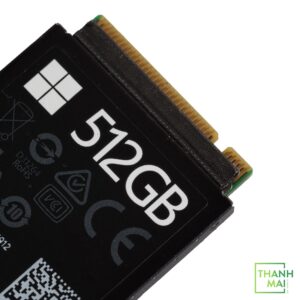
Microsoft Surface Pro 512GB Replacement SSD M.2 2230 Model 1912
Official M.2 2230 replacement drive offering flawless Surface integration, silent solid-state operation, and simplified fleet data security.

AtlasBase Thalia
A groundbreaking bio-silicon archival platform delivering exabyte-scale density in a hermetic stainless steel form factor, trading biochemical read latency for unmatched longevity.
Mizex Comparative Audit Verdict
5-Pillar Engineering Telemetry
Detailed comparison across standardized normalized 1.0 – 5.0 engineering pillars.
Microsoft Surface Pro 512GB Replacement SSD M.2 2230 Model 1912: Strengths & Caveats
- Official OEM compatibility with native Windows Update firmware servicing
- Ultra-compact M.2 2230 form factor enables modular, accessible storage upgrades
- Completely silent solid-state operation with zero acoustic noise
- Compact 2230 surface area concentrates thermal loads during sustained writes
- Form factor restricts direct installation to compatible ultra-compact M.2 slots
AtlasBase Thalia: Strengths & Caveats
- Ultra-dense storage delivering up to 1 PB in a 7x18 mm capsule and scaling to 5 EB
- Native in-memory molecular computation directly within the DNA storage medium
- Hermetically sealed stainless steel encapsulation ensuring multi-decade physical durability
- Lossless data duplication enabled by biological Polymerase Chain Reaction
- Read and write operations constrained by biochemical reaction and sequencing speeds
- Requires specialized external sequencing hardware for binary data reconstruction
- Distribution currently restricted to enterprise early-access partner programs
Technical Specification Comparison
Side-by-side spec alignment. Rows highlighted with subtle shading denote differing specifications.
| Specification | Microsoft Surface Pro 512GB Replacement SSD M.2 2230 Model 1912 | AtlasBase Thalia |
|---|---|---|
| Brand DIFF | Microsoft | AtlasBase |
| Model DIFF | Surface Pro 512GB Replacement SSD M.2 2230 Model 1912 | AtlasBase Thalia |
| Form Factor DIFF | M.2 2230 | — |
| Capacity DIFF | 512 GB | — |
| Interface DIFF | PCIe NVMe | — |
| Model Number DIFF | 1912 | — |
| Acoustic Noise DIFF | 0 dB (Solid State) | — |
| PCB Layout DIFF | Single-sided M.2 | — |
| Host Compatibility DIFF | Microsoft Surface Pro Series (with removable SSD bay) | — |
| Firmware Integration DIFF | Native Windows Update Servicing | — |
| Architecture DIFF | — | Bio-Silicon molecular computing and synthetic DNA platform |
| Synthesis Engine DIFF | — | Proprietary CMOS electrochemical synthesis chip |
| Synthesis Sites DIFF | — | 560 million to 5.6 billion active sites |
| Storage Capacity DIFF | — | 100 TB to 5 EB |
| Capsule Dimensions DIFF | — | 7 x 18 mm |
| Capsule Enclosure DIFF | — | Hermetically sealed stainless steel |
| Storage Medium DIFF | — | Dehydrated synthetic DNA (A, C, T, G bases) |
| Duplication Mechanism DIFF | — | Polymerase Chain Reaction (PCR) |
| Storage Density DIFF | — | 10x LTO-10 magnetic tape equivalent |
| Synthesis Scaling DIFF | — | 700x write-unit throughput increase |
| Readout Interface DIFF | — | Specialized DNA sequencing to binary reconstruction |
| Processing Mode DIFF | — | In-memory molecular computation |
Need to evaluate a different configuration?
🔍 Compare Other Hardware