Microsoft Surface Pro 12 vs Framework Laptop 13 Pro
Standardized 5-pillar engineering audit, thermal telemetry, verified longevity metrics, and complete technical specification diff.
A modern, highly efficient 2-in-1 convertible platform pairing dual silicon choices and modular PCIe storage with measurable battery gains.
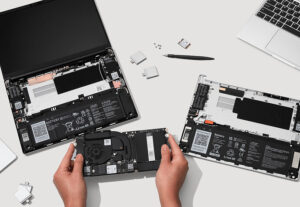
A triumph in modular ultraportable design featuring socketed LPCAMM2 memory and marathon battery life, offset modestly by early-batch touchpad grounding quirks.
Mizex Comparative Audit Verdict
5-Pillar Engineering Telemetry
Detailed comparison across standardized normalized 1.0 – 5.0 engineering pillars.
Microsoft Surface Pro 12: Strengths & Caveats
- Configurable with next-generation Qualcomm Snapdragon X2 Elite/Plus or Intel Panther Lake processors
- Modular and removable PCIe Gen SSD storage up to 1 TB
- Over 10% battery life enhancement over the previous generation
- Memory configurations scalable up to 32 GB
- Internal acoustic profile and peak thermal dissipation metrics pending retail teardown validation
- Base configurations start at 256 GB storage
Framework Laptop 13 Pro: Strengths & Caveats
- Industry-benchmark 10/10 repairability with modular daughterboards and socketed LPCAMM2 memory
- Exceptional battery endurance exceeding 19 hours of Wi-Fi usage from the 74.5 Wh cell
- Bright 700-nit 2.8K 120 Hz matte touchscreen with full DCI-P3 color gamut
- Acoustically quiet cooling solution producing only 35.8 dB under maximum compute load
- Initial production units required PCB revisions to resolve an electrical grounding reset bug on the haptic touchpad
- Premium pricing tiers on top-spec prebuilts and individual modular components
- 74.5 Wh battery requires a dedicated upgrade kit to fit original Framework Laptop 13 enclosures
Technical Specification Comparison
Side-by-side spec alignment. Rows highlighted with subtle shading denote differing specifications.
| Specification | Microsoft Surface Pro 12 | Framework Laptop 13 Pro |
|---|---|---|
| Brand DIFF | Microsoft | Framework |
| Model DIFF | Microsoft Surface Pro 12 | Framework Laptop 13 Pro |
| Form Factor DIFF | 2-in-1 Convertible | — |
| Processor Options DIFF | Intel Panther Lake (Business edition) / Qualcomm Snapdragon X2 Elite (12-core) / Qualcomm Snapdragon X2 Plus | Intel Core Ultra 5 325 / Core Ultra X7 358H / Core Ultra X9 388H |
| Memory Capacity DIFF | Up to 32 GB | — |
| Storage Interface DIFF | Removable PCIe Gen SSD | — |
| Storage Capacities DIFF | 256 GB, 512 GB, 1 TB | — |
| Battery Efficiency Gain DIFF | >10% over Surface Pro 11 | — |
| Chassis Material DIFF | — | CNC Aluminum |
| Dimensions DIFF | — | 296.63 x 228.98 x 15.85 mm (11.68 x 9.01 x 0.62 in) |
| Weight DIFF | — | 1.41 kg (3.11 lbs) |
| Display DIFF | — | 13.5" IPS LCD touchscreen, 2880 x 1920 (3:2), 120 Hz, 700 nits, 100% DCI-P3, Matte |
| Graphics DIFF | — | Intel Arc B390 / Intel Xe3 Graphics |
| Memory DIFF | — | 16GB / 32GB / 64GB LPCAMM2 LPDDR5X (7467 MT/s) |
| Storage DIFF | — | 512GB to 8TB M.2 NVMe PCIe SSD |
| Battery Capacity DIFF | — | 74.5 Wh |
| Charging DIFF | — | USB-PD up to 140W (100W standard) |
| Input Devices DIFF | — | Backlit keyboard, Haptic touchpad |
| Repairability Rating DIFF | — | 10/10 (iFixit) |
| Acoustic Noise Load DIFF | — | 35.8 dB |
| Peak Operating Temp DIFF | — | 100°C |
Need to evaluate a different configuration?
🔍 Compare Other Hardware