Microsoft Surface Laptop (2026) vs Microsoft Surface Pro (2026)
Standardized 5-pillar engineering audit, thermal telemetry, verified longevity metrics, and complete technical specification diff.
A well-crafted, highly efficient ARM laptop with exceptional battery runtime and chassis rigidity, tempered by soldered memory and proprietary port selection.
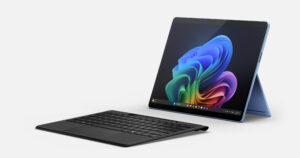
A refined 2-in-1 convertible pairing Snapdragon X2 efficiency and calibrated OLED visuals with modular SSD serviceability.
Mizex Comparative Audit Verdict
5-Pillar Engineering Telemetry
Detailed comparison across standardized normalized 1.0 – 5.0 engineering pillars.
Microsoft Surface Laptop (2026): Strengths & Caveats
- Up to 19–20 hours of battery life powered by efficient Qualcomm Snapdragon X2 silicon
- Bright 600-nit PixelSense IPS touchscreen with zero PWM flicker
- Rigid, premium unibody construction from 100% recycled aluminum alloy
- Modern connectivity featuring dual USB4 ports and Wi-Fi 7 wireless
- Soldered LPDDR5X RAM completely prevents aftermarket memory upgrades
- Retains proprietary Surface Connect port over an additional standard USB-C interface
- Lacks an integrated SD or microSD card reader
Microsoft Surface Pro (2026): Strengths & Caveats
- High-brightness OLED touchscreen reaching up to 930 nits HDR with calibrated sRGB and DCI-P3 color accuracy
- Efficient Qualcomm Snapdragon X2 platform with dedicated Windows 11 Copilot+ NPU processing
- Sturdy 165-degree integrated friction kickstand for flexible viewing and sketching angles
- Removable and upgradeable M.2-2230 solid-state drive form factor
- No 3.5 mm audio jack or built-in SD/microSD card reader
- Limited physical I/O configuration with only two USB-C ports and proprietary Surface Connect
- Standard consumer configurations omit 5G cellular connectivity
Technical Specification Comparison
Side-by-side spec alignment. Rows highlighted with subtle shading denote differing specifications.
| Specification | Microsoft Surface Laptop (2026) | Microsoft Surface Pro (2026) |
|---|---|---|
| Brand | Microsoft | Microsoft |
| Model DIFF | Surface Laptop (2026) | Surface Pro (2026) |
| Processor DIFF | Qualcomm Snapdragon X2 Plus (10-core, X2P-64-100) / Qualcomm Snapdragon X2 Elite (12-core) | — |
| Graphics DIFF | Qualcomm Adreno X2-45 | — |
| Display Size DIFF | 13.8 in (351 mm) / 15.0 in (381 mm) | — |
| Display Type DIFF | PixelSense IPS touchscreen | — |
| Display Resolution DIFF | 2304 x 1536 (13.8-inch) | — |
| Aspect Ratio DIFF | 3:2 | — |
| Display Brightness DIFF | 600 nits | — |
| Pixel Density DIFF | 262 ppi (15-inch) | — |
| PWM Flicker DIFF | None (flicker-free) | — |
| Memory DIFF | 16GB LPDDR5X (soldered) | — |
| Storage DIFF | 512GB / 1TB SSD | — |
| Ports DIFF | 2x USB-C (USB4), 1x Surface Connect port | — |
| Wireless DIFF | Wi-Fi 7 | — |
| Chassis Material DIFF | 100% recycled aluminum alloy | — |
| Battery Life Rating DIFF | Up to 19–20 hours | — |
| Form Factor DIFF | — | 2-in-1 detachable convertible tablet |
| Processor DIFF | — | Qualcomm Snapdragon X2 Elite (12-core, X2E-78-100) / Qualcomm Snapdragon X2 Plus (10-core) |
| Graphics DIFF | — | Qualcomm Adreno X2-85 |
| Neural Processing Unit DIFF | — | Integrated NPU for Windows 11 Copilot+ |
| Memory DIFF | — | 16 GB RAM |
| Storage DIFF | — | 256 GB / 512 GB / 1 TB removable M.2-2230 SSD |
| Display Size DIFF | — | 13-inch |
| Display Technology DIFF | — | OLED / LCD touchscreen |
| Display Brightness DIFF | — | 600 nits SDR, up to 930 nits HDR |
| Color Gamut DIFF | — | Calibrated sRGB and DCI-P3 color profiles |
| Kickstand DIFF | — | Integrated 165-degree friction hinge |
| Ports DIFF | — | 2x USB-C 4.0, 1x Surface Connect port |
| Wireless DIFF | — | Wi-Fi 7 |
| Operating System DIFF | — | Windows 11 |
Need to evaluate a different configuration?
🔍 Compare Other Hardware