Logitech G Blue Yeti 2 Review: Spatial Tracking Meets Onboard DSP vs Nothing Headphone 1 Pro Review: Innovative xMEMS Acoustics Meet Premium Glass
Standardized 5-pillar engineering audit, thermal telemetry, verified longevity metrics, and complete technical specification diff.
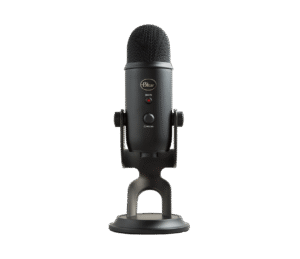
Logitech G Blue Yeti 2 Review: Spatial Tracking Meets Onboard DSP
A sensor-driven USB broadcast microphone pairing real-time 3D spatial gain tracking and onboard AI noise filtering with driverless hardware profiles.
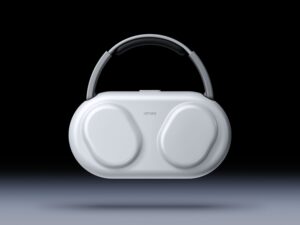
Nothing Headphone 1 Pro Review: Innovative xMEMS Acoustics Meet Premium Glass
A technologically advanced flagship headphone pairing innovative triple-driver xMEMS acoustics with premium aluminum-and-glass construction.
Mizex Comparative Audit Verdict
5-Pillar Engineering Telemetry
Detailed comparison across standardized normalized 1.0 – 5.0 engineering pillars.
Logitech G Blue Yeti 2 Review: Spatial Tracking Meets Onboard DSP: Strengths & Caveats
- Integrated 3D proximity sensor automatically compensates for user movement by dynamically adjusting gain, EQ, and pickup patterns
- Hardware-level AI de-noising filters out ambient keyboard keystrokes and mouse clicks before reaching the host stream
- Embedded 1.3 in (33 mm) color LED screen provides real-time level monitoring and directional pickup telemetry
- Onboard non-volatile memory retains five complete configuration presets for driverless multi-system deployment
- Audio resolution tops out at broadcast-standard 24-bit / 48 kHz rather than high-resolution 96 kHz or 192 kHz sample rates
- Integrated capsule array and sealed chassis design preclude modular repair or field replacement of individual transducers
Nothing Headphone 1 Pro Review: Innovative xMEMS Acoustics Meet Premium Glass: Strengths & Caveats
- Innovative triple-driver acoustic system featuring dedicated bass, midrange, and solid-state xMEMS high-frequency drivers
- High-density 10-microphone adaptive array powering dynamic Active Noise Cancellation and natural transparency
- Extended battery life offering up to 60 hours of continuous playback per charge cycle
- Rigid aluminum and scratch-resistant glass chassis backed by IP52 dust and drip resistance
- Full internal driver baffling and dampening material verification remains pending physical retail teardown
- Achieving the maximum 60-hour battery life requires turning off both LDAC codec streaming and Active Noise Cancellation
Technical Specification Comparison
Side-by-side spec alignment. Rows highlighted with subtle shading denote differing specifications.
| Specification | Logitech G Blue Yeti 2 Review: Spatial Tracking Meets Onboard DSP | Nothing Headphone 1 Pro Review: Innovative xMEMS Acoustics Meet Premium Glass |
|---|---|---|
| Brand DIFF | Logitech G | Nothing |
| Model DIFF | Blue Yeti 2 | Nothing Headphone 1 Pro |
| Acoustic Principle DIFF | Redesigned three-capsule condenser array | — |
| Audio Resolution DIFF | 24-bit / 48 kHz | — |
| Polar Patterns DIFF | Adaptive multi-pattern | — |
| Spatial Tracking DIFF | Integrated 3D voice proximity sensor | — |
| Digital Signal Processing DIFF | Onboard AI de-noiser, automated gain control, dynamic EQ adjustment | — |
| Integrated Display DIFF | 1.3 in (33 mm) color LED screen | — |
| Hardware Controls DIFF | Capacitive touch mute, physical rotary dial | — |
| Onboard Memory DIFF | 5 hardware preset profiles | — |
| Audio Monitoring DIFF | Headphone monitoring jack | — |
| Host Interface DIFF | USB | — |
| Configuration Software DIFF | Logitech G HUB | — |
| Available Finishes DIFF | Black, White | — |
| Acoustic Architecture DIFF | — | Triple-driver system per ear cup (dedicated bass, midrange, and xMEMS high-frequency driver) |
| Active Noise Cancellation DIFF | — | Adaptive ANC with Transparency mode |
| Microphone Array DIFF | — | 10 adaptive microphones |
| Wireless Connectivity DIFF | — | Bluetooth 6.1 |
| Audio Codecs DIFF | — | LDAC, Hi-Res Audio |
| Spatial Audio DIFF | — | Head-tracked spatial audio |
| Acoustic Tuning DIFF | — | Metropolis Studios tuning with Flat EQ mode |
| Wired Interfaces DIFF | — | 3.5mm audio jack, USB-C port |
| Battery Runtime DIFF | — | Up to 60 hours (ANC and LDAC off) |
| Ingress Protection DIFF | — | IP52 |
| Chassis Materials DIFF | — | Aluminum and scratch-resistant glass |
Need to evaluate a different configuration?
🔍 Compare Other Hardware