HPE ProLiant DL145 Gen11 vs Lenovo ThinkSystem ST650 V3
Standardized 5-pillar engineering audit, thermal telemetry, verified longevity metrics, and complete technical specification diff.
Ruggedized 2U short-depth edge platform balancing high-efficiency AMD EPYC compute with robust environmental endurance.
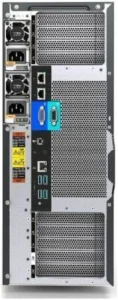
A modular 4U tower server balancing versatile high-density storage configurations with robust XClarity remote administration for demanding enterprise workloads.
Mizex Comparative Audit Verdict
5-Pillar Engineering Telemetry
Detailed comparison across standardized normalized 1.0 – 5.0 engineering pillars.
HPE ProLiant DL145 Gen11: Strengths & Caveats
- Compact 2U short-depth chassis roughly 50% smaller than standard enterprise 2U servers
- Dense compute scaling up to 64-core AMD EPYC 8004 processors with efficient 200W TDP limits
- Ruggedized operational tolerance from -5°C to +55°C with shock and vibration resistance
- Accommodates up to three single-slot PCIe accelerators for on-premise AI inferencing
- Compact chassis constraints prevent installation of larger dual-slot enterprise accelerators
Lenovo ThinkSystem ST650 V3: Strengths & Caveats
- Modular 4U architecture customizable for high-capacity or dense storage configurations
- Tiered systems management and remote deployment support via Lenovo XClarity
- Expansive internal volume facilitates efficient front-to-back chassis cooling
- Substantial 4U physical footprint requires dedicated floor or bench space in non-rack environments
- Enterprise deployment workflows require familiarity with Lenovo XClarity infrastructure
Technical Specification Comparison
Side-by-side spec alignment. Rows highlighted with subtle shading denote differing specifications.
| Specification | HPE ProLiant DL145 Gen11 | Lenovo ThinkSystem ST650 V3 |
|---|---|---|
| Brand DIFF | HPE | Lenovo |
| Model DIFF | HPE ProLiant DL145 Gen11 | ThinkSystem ST650 V3 |
| Form Factor DIFF | 2U short-depth edge server (381 mm x 507 mm) | 4U tower |
| Processor Architecture DIFF | AMD EPYC 8004 Series (Siena), up to 64 cores | — |
| Processor Socket DIFF | Single socket (1P) | — |
| Processor Maximum TDP DIFF | 200W | — |
| Memory Type DIFF | DDR5 ECC Registered | — |
| Memory Subsystem DIFF | 6-channel, up to 4800 MT/s | — |
| PCIe Expansion DIFF | Supports up to 3x single-slot PCIe accelerators | — |
| Storage Interface DIFF | E3.S NVMe drive bays | — |
| Management Controller DIFF | HPE Integrated Lights-Out (iLO) | — |
| Operating Temperature Range DIFF | -5°C to +55°C | — |
| Chassis Ruggedization DIFF | Shock and vibration resistant | — |
| Load Power Draw DIFF | 196W - 301W | — |
| Machine Types DIFF | — | 7D7A, 7D7B |
| Systems Management DIFF | — | Lenovo XClarity |
Need to evaluate a different configuration?
🔍 Compare Other Hardware