Hagibis 2K@30Hz Video Capture Card with 100W PD vs ezcap334P 4K PCIe Video Capture Card
Standardized 5-pillar engineering audit, thermal telemetry, verified longevity metrics, and complete technical specification diff.
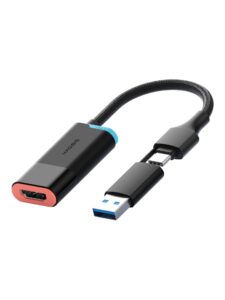
Versatile dual-connector USB 3.0 capture card with dedicated 100W PD pass-through, tempered by a 30fps refresh limit at 2K.
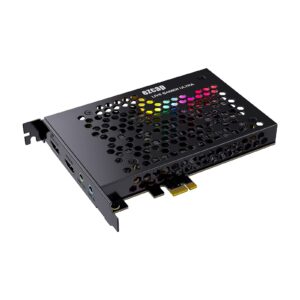
A driverless PCIe Gen3 x1 capture card offering fluid 4K60 and high-refresh HDMI 2.0 passthrough with VRR and HDR, though recording at maximum resolutions relies on compressed MJPG encoding.
Mizex Comparative Audit Verdict
5-Pillar Engineering Telemetry
Detailed comparison across standardized normalized 1.0 – 5.0 engineering pillars.
Hagibis 2K@30Hz Video Capture Card with 100W PD: Strengths & Caveats
- Integrated 100W USB-C Power Delivery pass-through eliminates battery drain during capture sessions
- Dual-connector output design natively supports both USB Type-C and Type-A host ports
- Broad plug-and-play compatibility across PC, gaming consoles, and handhelds
- 2K capture resolution is restricted to 30fps rather than 60fps
ezcap334P 4K PCIe Video Capture Card: Strengths & Caveats
- HDMI 2.0 passthrough supporting up to 4Kp60, 1440p144, and 1080p240 with VRR and HDR
- UVC class compliance enables driverless plug-and-play operation across Windows streaming applications
- Sub-50ms capture latency with dedicated 3.5mm line-in and line-out hardware audio routing
- Capturing at 4Kp60, 1440p144, or 1080p240 relies on compressed MJPG encoding
- Uncompressed true-color RGB24 capture is restricted to 1080p60
- Demands significant host decoding resources with a minimum Intel Core i7 or AMD Ryzen 7 requirement
Technical Specification Comparison
Side-by-side spec alignment. Rows highlighted with subtle shading denote differing specifications.
| Specification | Hagibis 2K@30Hz Video Capture Card with 100W PD | ezcap334P 4K PCIe Video Capture Card |
|---|---|---|
| Brand DIFF | Hagibis | ezcap |
| Model DIFF | CC10P | ezcap334P 4K PCIe Video Capture Card |
| Host Interface DIFF | USB 3.0 | — |
| Output Connectors DIFF | USB Type-C, USB Type-A | — |
| Capture Resolutions DIFF | 2K @ 30fps, 1080p @ 60fps | — |
| Power Delivery DIFF | 100W USB-C PD Pass-Through | — |
| Dimensions DIFF | 6.06 x 3.07 x 0.98 in (154 x 78 x 25 mm) | 5.94 x 4.76 x 0.87 in (151 x 121 x 22 mm) |
| Weight DIFF | 2.3 oz (65 g) | — |
| Color DIFF | Black | — |
| Hardware Compatibility DIFF | Steam Deck, ROG Ally, Meta Quest VR, Gaming Consoles, PC | — |
| Interface DIFF | — | PCIe Gen3 x1 |
| Video Input DIFF | — | HDMI 2.0 |
| Video Output (Passthrough) DIFF | — | HDMI 2.0 |
| Audio Input DIFF | — | HDMI, 3.5mm Line-In (TRS) |
| Audio Output DIFF | — | HDMI, 3.5mm Line-Out (TRS) |
| Max Passthrough Resolutions DIFF | — | 2160p60, 1440p144/120, 1080p240 |
| Variable Refresh Rate (VRR) DIFF | — | Supported |
| High Dynamic Range (HDR) DIFF | — | Supported |
| Max Recording Resolutions DIFF | — | 3840x2160 (60fps MJPG, 30fps NV12/I420), 2560x1440 (144fps MJPG, 60fps NV12/I420, 50fps YUY2), 1920x1080 (240fps MJPG, 120fps NV12/I420, 60fps YUY2/RGB24) |
| Supported Video Formats DIFF | — | MJPG, NV12, I420, YUY2, RGB24 |
| RGB24 Maximum Resolution DIFF | — | 1080p60 |
| Capture Latency DIFF | — | <50ms |
| Driver Standard DIFF | — | UVC (Driver-Free) |
| Status Indicator DIFF | — | Multi-Color LED |
| Operating System Compatibility DIFF | — | Windows 10 / Windows 11 (64-bit) |
| Minimum System CPU DIFF | — | Intel Core i7-6xxx / AMD Ryzen 7 |
| Minimum System GPU DIFF | — | NVIDIA GeForce GTX 10-series |
Need to evaluate a different configuration?
🔍 Compare Other Hardware