Elecrow ThinkNode M9 vs Walnut Pi CM2
Standardized 5-pillar engineering audit, thermal telemetry, verified longevity metrics, and complete technical specification diff.
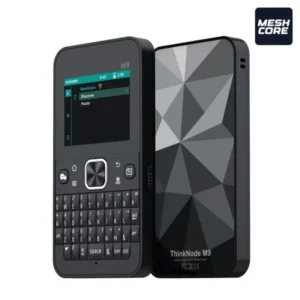
A niche portable SBC with solid build quality that suffers from critical design flaws preventing standard expansion and specific iOS connectivity issues.
An integrated octa-core system-on-module featuring onboard NPU acceleration and Wi-Fi 6, tempered by multiplexed high-speed lanes and partial Raspberry Pi CM5 ecosystem compatibility.
Mizex Comparative Audit Verdict
5-Pillar Engineering Telemetry
Detailed comparison across standardized normalized 1.0 – 5.0 engineering pillars.
Elecrow ThinkNode M9: Strengths & Caveats
- Fully standalone operation without smartphone pairing
- Solid build quality for a handheld SBC
- Internal antennas for convenience in carrying
- microSD card slot is inaccessible due to adhesive tape on back cover
- Display is not a touchscreen
- Bluetooth discoverability issues reported with iOS Meshtastic app
Walnut Pi CM2: Strengths & Caveats
- Integrated 2 TOPS NPU and dedicated HiFi4 audio DSP for edge machine learning workloads
- On-module Gigabit Ethernet PHY and Wi-Fi 6/Bluetooth 5.0 with integrated ceramic antenna
- Heterogeneous computing architecture combining an 8-core CPU cluster with an auxiliary RISC-V core
- PCIe Gen2 x1 interface is hardware-multiplexed with USB 3.0, preventing concurrent utilization
- Only partial electrical compatibility with Raspberry Pi CM5 carrier boards and unsupported by official Raspberry Pi OS
- Lower overall CPU compute performance compared to Cortex-A76-based compute modules
Technical Specification Comparison
Side-by-side spec alignment. Rows highlighted with subtle shading denote differing specifications.
| Specification | Elecrow ThinkNode M9 | Walnut Pi CM2 |
|---|---|---|
| Brand DIFF | Elecrow | Walnut |
| Model DIFF | Elecrow ThinkNode M9 | Walnut Pi CM2 |
| Dimensions Mm DIFF | 126 x 67 x 12 | — |
| Display Type DIFF | 2.4-inch TFT LCD | — |
| Display Resolution DIFF | 240 x 320 | — |
| Touchscreen DIFF | — | |
| Keyboard Keys DIFF | 37 | — |
| Battery Capacity Mah DIFF | 2300 | — |
| Connectivity Ports DIFF | USB-C (charging/programming), LoRa (internal antenna), Wi-Fi (internal antenna), Bluetooth (internal antenna), GNSS/GPS (internal antenna) | — |
| Storage Support DIFF | microSD (inaccessible slot, held by adhesive tape) | — |
| Power Switch DIFF | 1 | — |
| Reset Button DIFF | 1 | — |
| Firmware DIFF | MeshCore | — |
| SoC DIFF | — | Allwinner T527 |
| CPU Architecture DIFF | — | Octa-core Arm Cortex-A55 (4x 1.80 GHz + 4x 1.42 GHz) |
| Coprocessor DIFF | — | E906 RISC-V core up to 200 MHz |
| Digital Signal Processor DIFF | — | 600 MHz HiFi4 Audio DSP |
| GPU DIFF | — | Arm Mali-G57 MC1 (OpenGL ES 3.2, OpenCL 2.2, Vulkan 1.3) |
| NPU DIFF | — | 2 TOPS Neural Processing Unit |
| System Memory DIFF | — | 1 GB, 2 GB, or 4 GB LPDDR4 |
| Onboard Storage DIFF | — | Optional 16 GB eMMC (hardware provisions for 32 GB, 64 GB, 128 GB), 8 MB SPI flash |
| Networking DIFF | — | On-module Gigabit Ethernet PHY, Dual-band 802.11ax Wi-Fi 6 and Bluetooth 5.0 (AW869 with onboard ceramic antenna) |
| Board Interconnect DIFF | — | 2x 100-pin high-density board-to-board connectors |
| Display Interfaces DIFF | — | HDMI up to 4Kp60, 4-lane MIPI DSI up to 1080p60 |
| Camera Interface DIFF | — | 4-lane MIPI CSI |
| Audio Interfaces DIFF | — | HPOUT speaker output, 2x microphone interfaces |
| USB Support DIFF | — | 1x USB 3.0, 3x USB 2.0 |
| Expansion Bus DIFF | — | PCIe Gen2 x1 (multiplexed with USB 3.0) |
| General I/O DIFF | — | GPIO, Infrared Rx, User key, BOOT, UART debug |
| Power Input DIFF | — | 5V/2A DC |
| Physical Dimensions DIFF | — | 55 x 40 mm (2.17 x 1.57 in) |
| Weight DIFF | — | 9.6 g (0.3 oz) |
| Supported Operating Systems DIFF | — | Debian 12-based Walnut Pi OS, Ubuntu, Android, Home Assistant |
Need to evaluate a different configuration?
🔍 Compare Other Hardware