ASUS ROG Astral RTX 5090 White OC vs NVIDIA GeForce RTX 5090
Standardized 5-pillar engineering audit, thermal telemetry, verified longevity metrics, and complete technical specification diff.
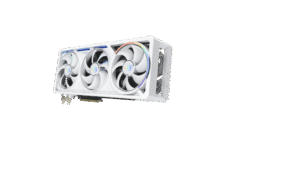
Despite premium materials and advanced cooling, severe firmware and driver compatibility issues have led to verified IC burns and system instability, rendering the card unsafe for standard deployment.
Unrivaled Blackwell computational density and GDDR7 throughput tempered by extreme 575W power consumption and delicate modular interconnects.
Mizex Comparative Audit Verdict
5-Pillar Engineering Telemetry
Detailed comparison across standardized normalized 1.0 – 5.0 engineering pillars.
ASUS ROG Astral RTX 5090 White OC: Strengths & Caveats
- All-metal cooler construction with triple-fan design and large vapor-chamber base
- Support for DisplayPort 2.1b with UHBR20 and HDMI 2.1a interfaces
- Dual BIOS switch allowing users to toggle between performance and silent modes
- High power draw requiring a single 16-pin connector with 600W max limit
- Reports of driver-induced hardware damage including IC burns and black screens
- Heavy weight exceeding 3kg creates compatibility issues with standard four-slot chassis
NVIDIA GeForce RTX 5090: Strengths & Caveats
- Substantial 20% to 50% rasterization and ray-tracing performance uplift over previous-generation flagships
- Massive 32 GB GDDR7 VRAM across a 512-bit bus delivering up to 1,792 GB/s of bandwidth
- Comprehensive display pipeline with native DisplayPort 2.1b and HDMI 2.1b support
- Immense 575W power envelope with documented 12V-2x6 connector melting risks under extreme sustained load
- Fragile internal modular ribbon interconnect complicates servicing and block installations
- Premium $1,999 MSRP paired with mandatory high-wattage power supply upgrades
Technical Specification Comparison
Side-by-side spec alignment. Rows highlighted with subtle shading denote differing specifications.
| Specification | ASUS ROG Astral RTX 5090 White OC | NVIDIA GeForce RTX 5090 |
|---|---|---|
| Brand DIFF | ASUS | NVIDIA |
| Model DIFF | ASUS ROG Astral RTX 5090 White OC | NVIDIA GeForce RTX 5090 |
| Gpu Chip DIFF | GB202-300-A1 (Blackwell) | — |
| Memory Size Gb DIFF | 32 | — |
| Memory Type DIFF | GDDR7 | — |
| Memory Bandwidth Gbs DIFF | 1792 | — |
| Max Power Draw Watts DIFF | 600 | — |
| Power Connector DIFF | Single 16-pin | — |
| Dimensions Cm DIFF | 35.0 x 15.0 | — |
| Weight G DIFF | 3038 | — |
| Fan Configuration DIFF | Triple-fan | — |
| Backplate Material DIFF | Metal | — |
| Bios Modes DIFF | Performance, Silent | — |
| Peak Operating Temp C DIFF | 80 | — |
| Acoustic Noise Load Db DIFF | 39.3 | — |
| Architecture DIFF | — | Blackwell |
| GPU Die DIFF | — | GB202-300-A1 |
| Process Node DIFF | — | TSMC 4N FinFET |
| CUDA Cores DIFF | — | 21,760 |
| Tensor Cores DIFF | — | 680 (5th Gen) |
| Ray Tracing Cores DIFF | — | 170 (4th Gen) |
| Base Clock DIFF | — | 2.01 GHz |
| Boost Clock DIFF | — | 2.41 GHz |
| VRAM Capacity DIFF | — | 32 GB |
| Memory Type DIFF | — | GDDR7 |
| Memory Bus DIFF | — | 512-bit |
| Memory Bandwidth DIFF | — | 1,792 GB/s |
| Interface DIFF | — | PCIe 5.0 x16 |
| TGP DIFF | — | 575 W |
| Power Connector DIFF | — | 1x 16-pin (12V-2x6) |
| Display Outputs DIFF | — | 1x HDMI 2.1b, 3x DisplayPort 2.1b |
Need to evaluate a different configuration?
🔍 Compare Other Hardware