AMD Ryzen 5 5500F Review: PCIe 4.0 Revitalizes Budget AM4 vs Apple A20 Pro Review: Desktop Tier Silicon Meets Thermal Constraints
Standardized 5-pillar engineering audit, thermal telemetry, verified longevity metrics, and complete technical specification diff.
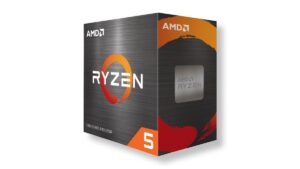
AMD Ryzen 5 5500F Review: PCIe 4.0 Revitalizes Budget AM4
A targeted Zen 3 revision that remedies the PCIe bandwidth bottlenecks of budget AM4 silicon with native PCIe 4.0 lanes and a 4.4 GHz boost clock.
Apple A20 Pro Review: Desktop Tier Silicon Meets Thermal Constraints
A 2nm architectural tour de force pairing class-leading single-core compute and WMCM memory integration with desktop-tier graphics, limited only by passive thermal headroom under prolonged stress.
Mizex Comparative Audit Verdict
5-Pillar Engineering Telemetry
Detailed comparison across standardized normalized 1.0 – 5.0 engineering pillars.
AMD Ryzen 5 5500F Review: PCIe 4.0 Revitalizes Budget AM4: Strengths & Caveats
- Native PCIe 4.0 support eliminates bus bandwidth constraints of prior entry AM4 silicon
- Delivers up to 16.1% higher gaming performance in discrete GPU workloads over the standard 5500
- Elevated 4.4 GHz boost clock provides a 200 MHz uplift for single-threaded tasks
- Lacks integrated graphics, mandating a discrete graphics card for display output
- Features a reduced 3.0 GHz base clock compared to predecessor specifications
Apple A20 Pro Review: Desktop Tier Silicon Meets Thermal Constraints: Strengths & Caveats
- Pioneering TSMC 2nm process node delivering class-leading single-core benchmark throughput and high energy efficiency
- Wafer-Level Multi-Chip Module (WMCM) packaging with a 96-bit memory bus offering 50% wider bandwidth and integrated heat spreading
- Powerful 7-core GPU with hardware ray tracing capable of desktop-class emulation performance
- Thermal throttling and thermal wall limitations during prolonged AAA gaming workloads under passive cooling
Technical Specification Comparison
Side-by-side spec alignment. Rows highlighted with subtle shading denote differing specifications.
| Specification | AMD Ryzen 5 5500F Review: PCIe 4.0 Revitalizes Budget AM4 | Apple A20 Pro Review: Desktop Tier Silicon Meets Thermal Constraints |
|---|---|---|
| Brand DIFF | AMD | Apple |
| Model DIFF | Ryzen 5 5500F | Apple A20 Pro |
| Architecture DIFF | Zen 3 | ARM64 (64-bit) |
| Die Silicon DIFF | Cezanne | — |
| Socket DIFF | AM4 | — |
| Core Count DIFF | 6 | — |
| Thread Count DIFF | 12 | — |
| Base Clock DIFF | 3.0 GHz | — |
| Boost Clock DIFF | 4.4 GHz | — |
| L3 Cache DIFF | 16 MB | — |
| Thermal Design Power (TDP) DIFF | 65W | — |
| PCIe Interface DIFF | PCIe 4.0 | — |
| Integrated Graphics DIFF | None (Requires Discrete GPU) | — |
| Process Node DIFF | — | TSMC 2nm |
| CPU Configuration DIFF | — | 6 cores (2 Performance + 4 Efficiency) |
| Max CPU Clock Rate DIFF | — | 4.93 GHz |
| GPU Cores DIFF | — | 7-core |
| GPU Features DIFF | — | Neural Accelerators and hardware-accelerated ray tracing |
| Neural Engine DIFF | — | Dual 16-core |
| Memory Capacity DIFF | — | 12 GB |
| Memory Interface Width DIFF | — | 96-bit |
| Packaging Technology DIFF | — | Wafer-Level Multi-Chip Module (WMCM) |
| Thermal Interface DIFF | — | Integrated Heat Spreader (IHS) |
Need to evaluate a different configuration?
🔍 Compare Other Hardware